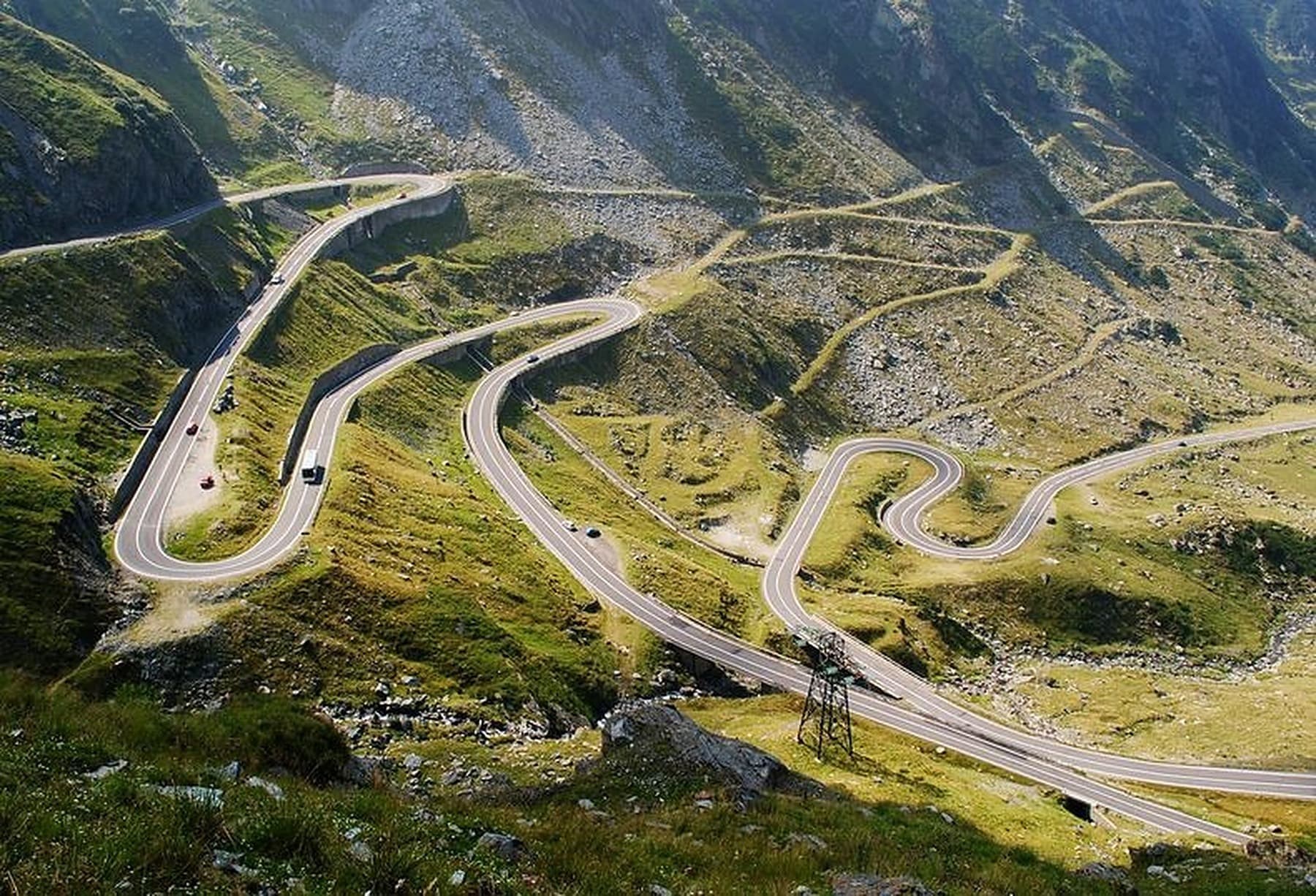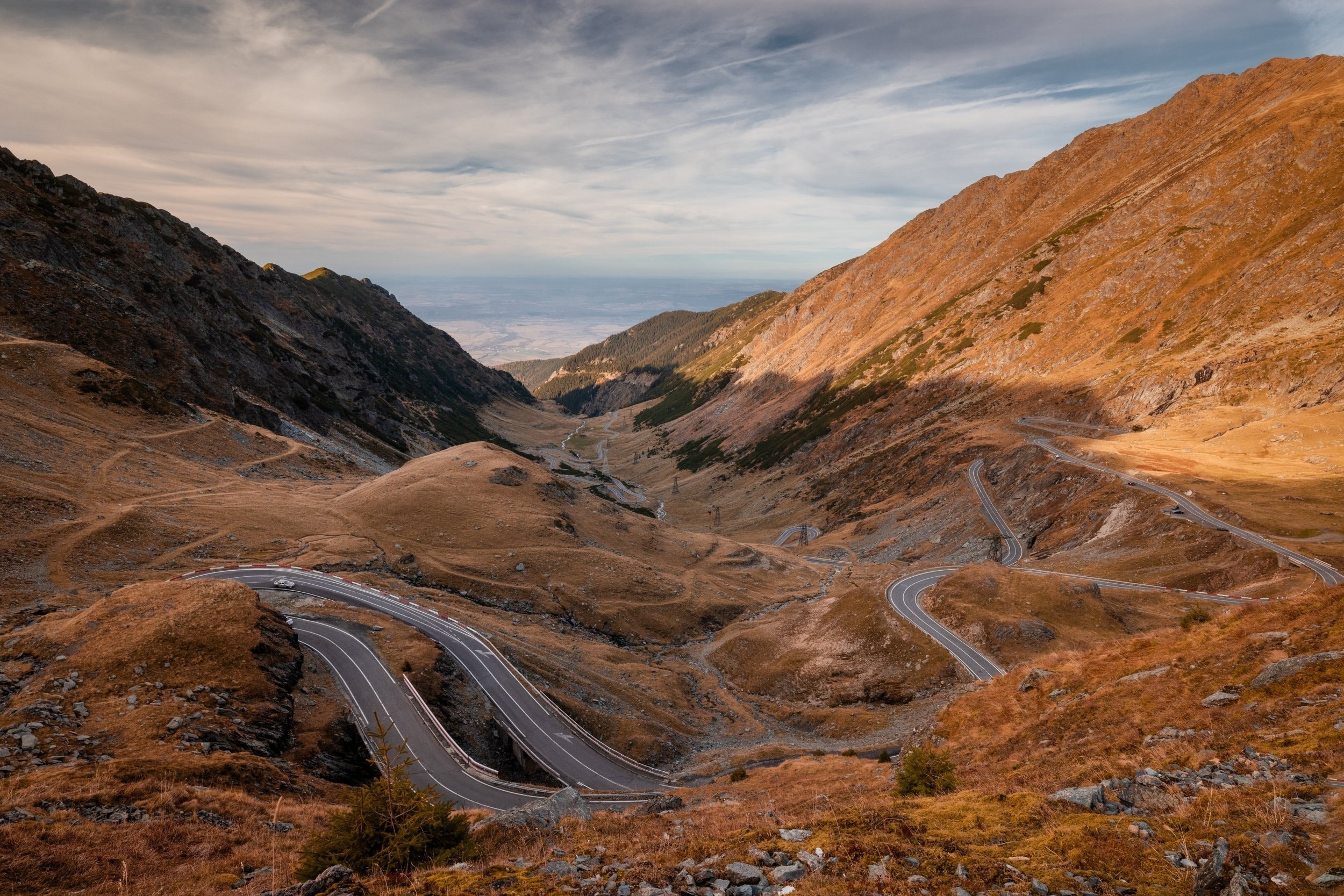

The Transfagarasan and Transalpina are Romania's twin mountain masterpieces — two highways that cross the Carpathian Mountains through landscapes of extraordinary drama. Together, they offer some of the finest mountain driving in Europe.
The Transfagarasan (DN7C) was built in the 1970s by Nicolae Ceausescu as a military road, using an estimated 6,000 tonnes of dynamite to blast through the Fagaras Mountains. It climbs to 2,042 metres at the Balea Lake tunnel, passing through 833 bridges and 27 viaducts. Jeremy Clarkson famously declared it "the best road in the world" on Top Gear, and while that claim is debatable, the road's combination of hairpin bends, glacial lakes, and sheer mountain walls is genuinely breathtaking.
The Transalpina (DN67C) is the higher, wilder, and arguably better-surfaced of the two. It climbs to 2,145 metres — the highest paved road in Romania — through landscapes that feel genuinely remote. Where the Transfagarasan is dramatic and engineered, the Transalpina is organic and flowing, with long sweeping curves through alpine meadows and shepherds' huts.
Between the two roads, the Olt Valley and the medieval towns of Sibiu and Curtea de Arges provide cultural richness — fortified churches, Saxon architecture, and a food scene that is rapidly gaining international recognition. Romania is one of Europe's last great undiscovered driving destinations, and these two roads are its crown jewels.
Both roads are open only from late June to October, depending on snow conditions. Check road status before departure.