
Planning a Cross Country Road Trip: A Luxury Driver's Guide
TL;DR
Planning a cross-country road trip requires more than picking a route - it means choosing roads that reward the car you're driving, timing each day around light and traffic, and building in the kind of stops that make the journey as memorable as the destination. The Stable's Route Packs and bespoke planning service are built for classic and sports car owners who want a curated, car-forward cross-country experience. This guide covers route selection, daily mileage, accommodation, packing, and the specific planning considerations for a luxury cross-country drive in 2026.
Introduction
There are two kinds of cross-country road trips. The first is a logistics exercise: get from one coast to the other as efficiently as possible, rack up miles, and arrive exhausted. The second is something else entirely - a journey designed around the roads themselves, the landscapes they pass through, and the experiences they connect. This guide is about the second kind.
Planning a cross-country road trip in a car you love - a classic sports car, a grand tourer, a performance EV - requires a different approach than a generic road trip app provides. The decisions that matter most aren't which highway to take; they're which roads to avoid, how many miles per day keeps the drive enjoyable rather than exhausting, and where to stay in a way that matches the spirit of the journey.
Choosing Your Cross-Country Route
The United States offers three primary cross-country corridors, each with a distinct character.
The Northern Route
The northern corridor - roughly following I-90 from Seattle to Boston - is the most dramatic in terms of landscape variety. It crosses the Cascades, the Montana Rockies, the Badlands, the Great Lakes shoreline, and the Berkshires. For a driver who wants genuine variety, this is the most rewarding option.
Key scenic detours on the northern route:
- Going-to-the-Sun Road (Glacier National Park) - one of the most spectacular mountain roads in North America, open mid-June to mid-October
- Beartooth Highway (Montana/Wyoming) - 68 miles of switchbacks reaching 10,947 feet, connecting Red Lodge to Cooke City
- The Black Hills Loop (South Dakota) - Iron Mountain Road, Needles Highway, and Custer State Park combine for a full day of exceptional driving
The Central Route
The central corridor - roughly Route 66 and I-40 - is the most historically significant. It passes through the Ozarks, the Texas Panhandle, New Mexico's high desert, and the Mojave before reaching the California coast. For drivers who want the classic American road trip experience, this is the route.
Key scenic detours on the central route:
- The Turquoise Trail (New Mexico) - the scenic alternative to I-40 between Albuquerque and Santa Fe
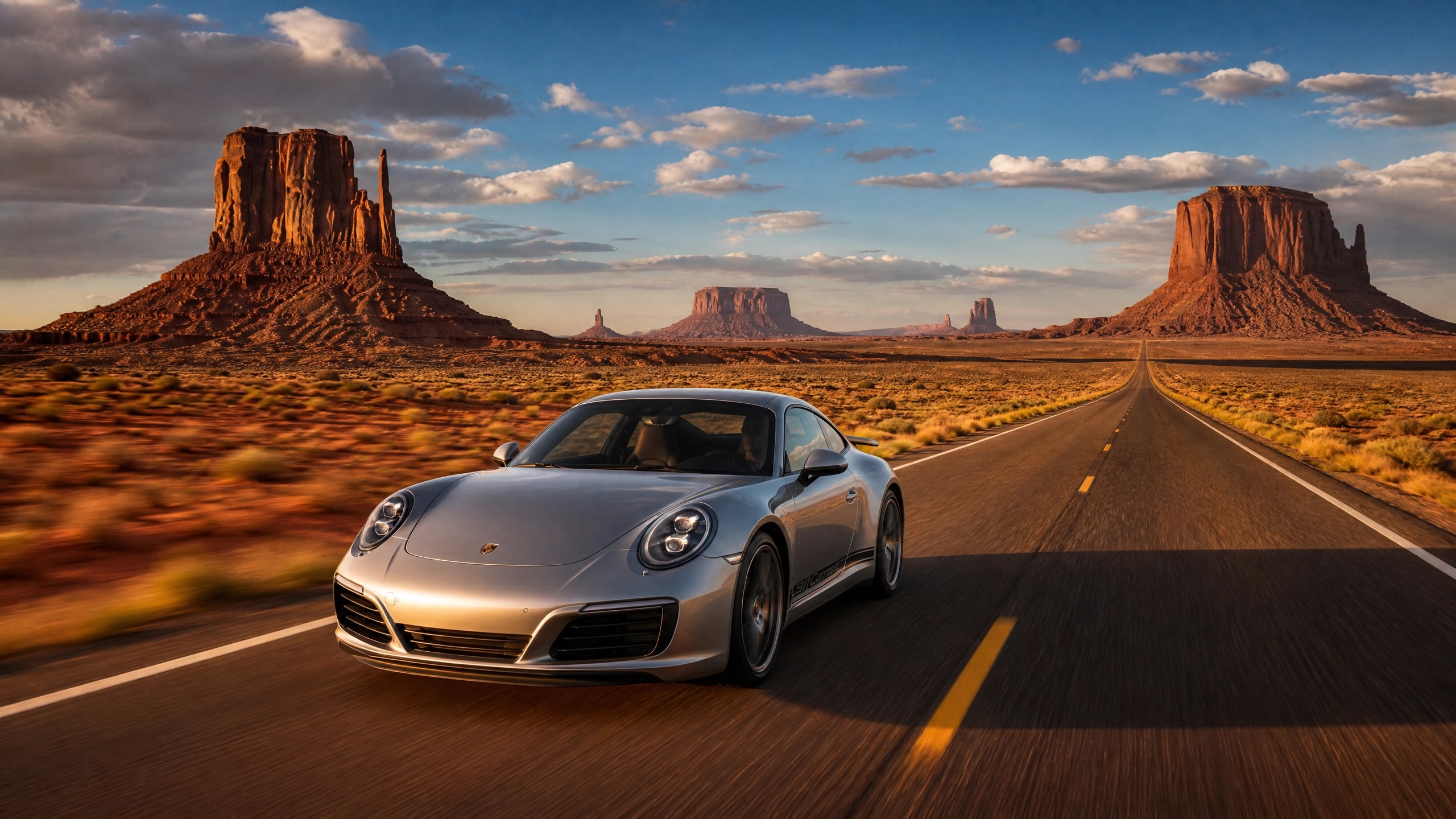
- Monument Valley - the 17-mile Valley Drive is unpaved but manageable in most cars; the approach on US-163 from Kayenta is one of the most iconic drives in the world
- Joshua Tree to Palm Springs - the descent from the high desert into the Coachella Valley via Twentynine Palms Highway
The Southern Route
The southern corridor - roughly I-10 from Los Angeles to Jacksonville - is the warmest and most accessible year-round. It passes through the Sonoran Desert, the Texas Hill Country, the Gulf Coast, and the Florida Panhandle. For a winter cross-country drive, this is the most practical option.
Key scenic detours on the southern route:
- The Texas Hill Country Loop - US-290 through Fredericksburg and Kerrville, with vineyard stops and exceptional barbecue
- The Natchez Trace Parkway - 444 miles of no-commercial-traffic, no-traffic-light driving through Mississippi, Alabama, and Tennessee
- The Florida Keys - US-1 from Miami to Key West is a natural extension of a southern cross-country route
How Many Miles Per Day?
The most common mistake in cross-country road trip planning is overestimating daily mileage. In a car you care about, 250–350 miles per day is a comfortable maximum for a focused driving day. Beyond that, fatigue accumulates, the drive becomes a commute, and the car becomes a source of stress rather than pleasure.
For a luxury cross-country drive, plan around 200–250 miles per day with a full afternoon and evening at each stop. This means a coast-to-coast crossing takes 12–15 days rather than 7–8 - but the difference in experience is significant.
The North America Road Trip Planner guide covers daily mileage planning in detail, including how to structure days around driving time, meal stops, and accommodation check-in windows.
Planning Your Accommodation
Cross-country accommodation planning has two distinct approaches: the fixed-base model and the rolling model.
Fixed-base model: Choose 4–5 base cities and stay 2–3 nights in each. This reduces packing and unpacking, allows for longer day drives without luggage, and gives you time to explore each region properly. Ideal for drivers who want to combine driving with food, wine, and culture.
Rolling model: Move every night, maximizing driving variety. This works well for drivers who are primarily focused on the roads themselves and are comfortable with the logistics of daily hotel changes.
For a luxury cross-country drive, the fixed-base model is almost always more satisfying. Suggested bases for a northern route crossing:
- Seattle (2 nights) - gateway to the Cascades and Olympic Peninsula
- Missoula or Whitefish (2 nights) - base for Glacier and the Beartooth Highway
- Rapid City (2 nights) - base for the Black Hills and Badlands
- Chicago (2 nights) - midpoint rest and culture stop
- Boston or New York (2 nights) - eastern terminus
For accommodation that matches the spirit of a car-forward journey, The Stable's curated stays include properties with secure garages, scenic approaches, and the kind of design sensibility that makes arriving feel like part of the experience.
Packing for a Cross-Country Drive
Packing for a cross-country drive in a sports car or grand tourer is a genuine constraint. Boot space is limited, and the temptation to overpack is real. The principles:
Pack for the car, not the trip: A Porsche 911's front boot holds approximately 128 litres - roughly equivalent to a large carry-on bag. A Ferrari California's boot is similar. Plan accordingly. Soft bags pack more efficiently than hard cases in most sports car boots.
Layer for climate variation: A northern route crossing will take you from Pacific Northwest rain to Montana mountain cold to Midwest heat to New England autumn. Pack in layers rather than for a single climate.
Protect the car: A good set of car travel essentials - microfibre cloths, a portable tyre inflator, a basic tool kit, and a quality car cover for overnight stops - is worth the boot space.
Documentation: For a US cross-country drive, carry your registration, insurance documents, and roadside assistance membership card. If you're crossing into Canada (a natural extension of a northern route), ensure your insurance covers Canadian driving.
The gear guide covers specific recommendations for sports car travel bags, packing systems, and car protection products.
Timing Your Cross-Country Drive
The best time for a US cross-country drive depends on your chosen route:
| Route | Best Timing | Avoid |
|---|---|---|
| Northern | June–September | October–May (mountain passes) |
| Central | April–June, September–October | July–August (extreme desert heat) |
| Southern | November–March | June–August (Gulf Coast heat and humidity) |
For a northern route crossing, June is ideal: mountain passes are open, wildflower season peaks in the Rockies, and the Pacific Northwest is at its best before summer crowds arrive. The website for planning a road trip guide covers seasonal timing in more detail.
Fuel, Charging, and Service Planning
Petrol/gasoline: On the northern and central routes, fuel stops can be 80–100 miles apart in Montana, Wyoming, and New Mexico. Fill up whenever you're below half a tank in remote sections. The Stable's route notes flag fuel availability on all US routes.
EV charging: Cross-country EV driving has improved dramatically with the expansion of Tesla Supercharger and Electrify America networks. For a Porsche Taycan or Tesla Model S cross-country drive, plan charging stops around scenic detours rather than highway stations. The PlugShare network is the most comprehensive tool for non-Tesla EVs.
Service: For a classic car cross-country drive, carry a basic toolkit and know the location of marque-specific specialists along your route. The Porsche Club of America, Jaguar Clubs of North America, and similar organizations maintain member directories that can be invaluable in a breakdown situation.
The Bespoke Option: Cross-Country Planning as a Service
For drivers who want a fully planned cross-country itinerary - routes, accommodation, dining, and timing all handled - The Stable's bespoke planning service builds custom cross-country drives from scratch.
The process starts with a conversation about your car, your schedule, your priorities, and your budget. We then build a day-by-day itinerary with Rally Point navigation files, accommodation recommendations with direct booking links, dining guidance, and seasonal notes. The result is a cross-country drive that feels curated rather than improvised.
Bespoke builds are particularly well-suited to:
- Drivers relocating cross-country who want to make the move memorable
- Groups of 2–4 cars driving in convoy
- Anniversary or milestone trips where the experience needs to be exceptional
- Drivers who want to combine a cross-country crossing with specific regional drives (the Beartooth Highway, the Natchez Trace, the Texas Hill Country)
Frequently Asked Questions
How long does a cross-country road trip take? A comfortable cross-country drive - coast to coast - takes 12–15 days at 200–250 miles per day. A faster crossing (7–8 days) is possible but sacrifices the scenic detours and regional experiences that make the journey worthwhile.
What's the best car for a cross-country road trip? A grand tourer - a car with comfortable seats, reasonable boot space, and long-distance capability - is the ideal cross-country car. The Porsche 911 Carrera, Aston Martin DB11, BMW M5 Touring, and Mercedes-AMG GT 4-Door are all excellent choices. For classic car enthusiasts, a well-prepared E-Type or 911 Targa is entirely feasible with proper mechanical preparation.
What's the most scenic cross-country route? The northern route - Seattle to Boston via Glacier, the Beartooth Highway, and the Black Hills - offers the most dramatic landscape variety. The central route via Route 66 and Monument Valley is the most historically significant. The choice depends on what you want from the journey.
How much does a luxury cross-country road trip cost? Budget $400–$800 per night for quality accommodation, $150–$300 per day for dining, and $100–$200 for fuel. A 14-day luxury cross-country drive typically costs $8,000–$15,000 in travel expenses, excluding the car.
Conclusion
Planning a cross-country road trip well is the difference between a journey you'll remember for the rest of your life and one you'll remember as exhausting. The roads, the timing, the accommodation, and the daily rhythm all matter - and they all reward careful planning.
Browse The Stable's Route Packs for curated regional drives along the cross-country corridors, or reach out about a bespoke build if you want a fully planned cross-country itinerary tailored to your car and schedule. The Journal has detailed guides for specific regions, roads, and experiences along all three major cross-country routes.
The Stable is a luxury road trip planner built for classic and sports car owners. All routes are personally researched and regularly updated.