
The best 997 to buy is the one whose specification, condition and maintenance history suit the way you want to use it. Start by separating the earlier 997.1 Carrera from the revised 997.2 Carrera, then compare individual cars. A generation badge cannot replace an inspection.
This guide concentrates on the naturally aspirated Carrera range. Turbo, GT and limited-production cars need variant-specific advice; do not apply a Carrera engine checklist to every 997.
997.1 vs 997.2: the differences that matter
| Carrera models | 997.1 | 997.2 |
|---|---|---|
| Introduction | Original 997 introduced in 2004 | Model update introduced in 2008, generally associated with the 2009 model year |
| Engine | Earlier M96/M97-family, port-injected flat-six | Newer MA1/9A1-family, direct-injected flat-six |
| Carrera / Carrera S | 3.6 / 3.8 litres | 3.6 / 3.8 litres |
| Transmission choices | Six-speed manual or five-speed Tiptronic S | Six-speed manual or seven-speed PDK |
| Buying focus | Identify the engine and IMS arrangement; inspect cylinder condition and maintenance history | Inspect engine condition, direct-injection system and gearbox history; do not assume the later car is fault-free |
Porsche’s 997 history dates the facelift to July 2008. Registration year, model year and production date can differ, so confirm a car’s identity from its VIN, build information and engine records rather than the advertisement alone.
Both generations retain hydraulic power steering. Electrically assisted steering arrived with the succeeding 991, described in Porsche’s 2011 launch announcement. The 997.2 was also not the last naturally aspirated base Carrera: the early 991 Carrera remained naturally aspirated before the later change to turbocharging, as Porsche’s 911 history records.
The Stable’s own 997.2 Carrera
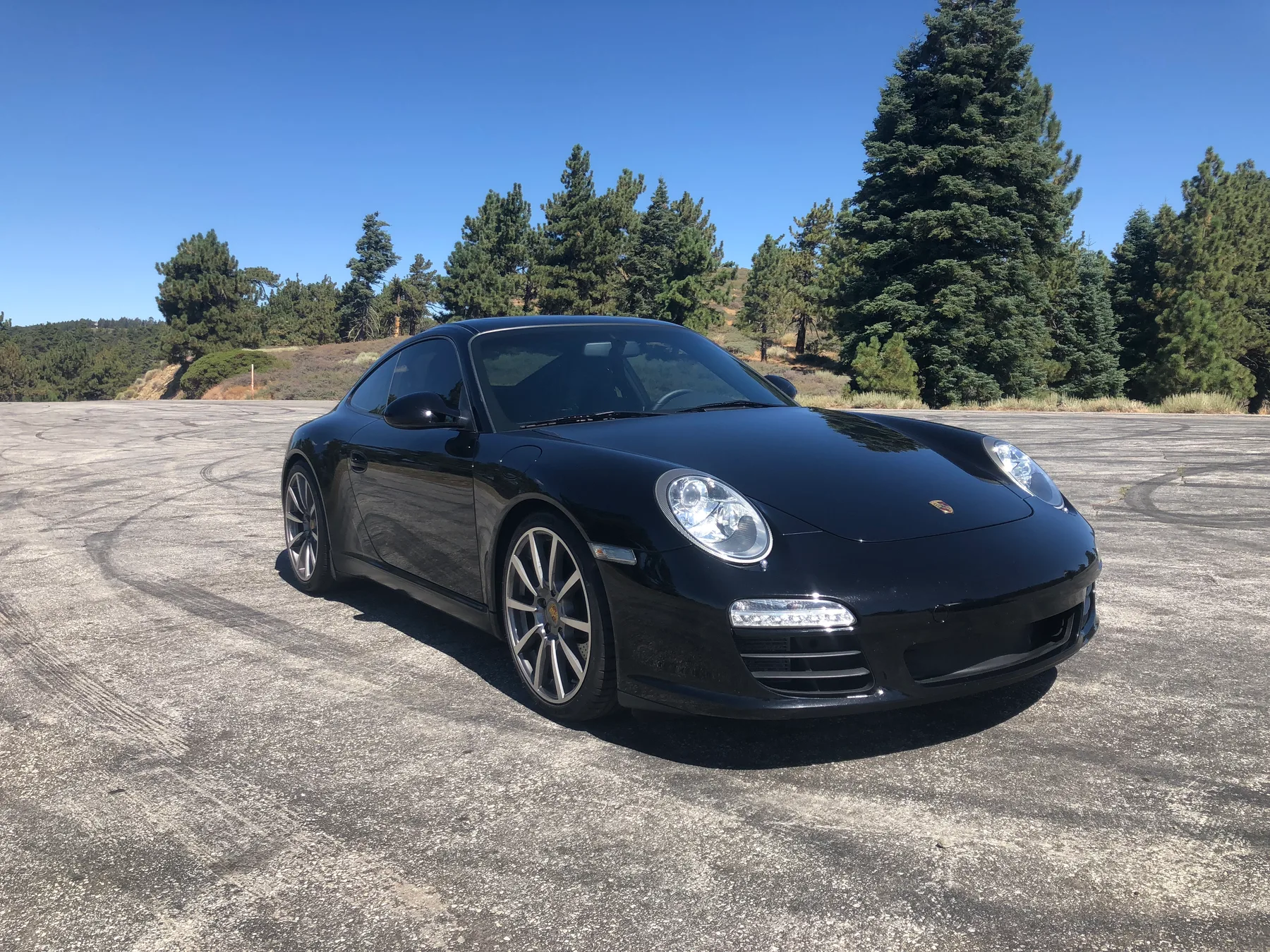
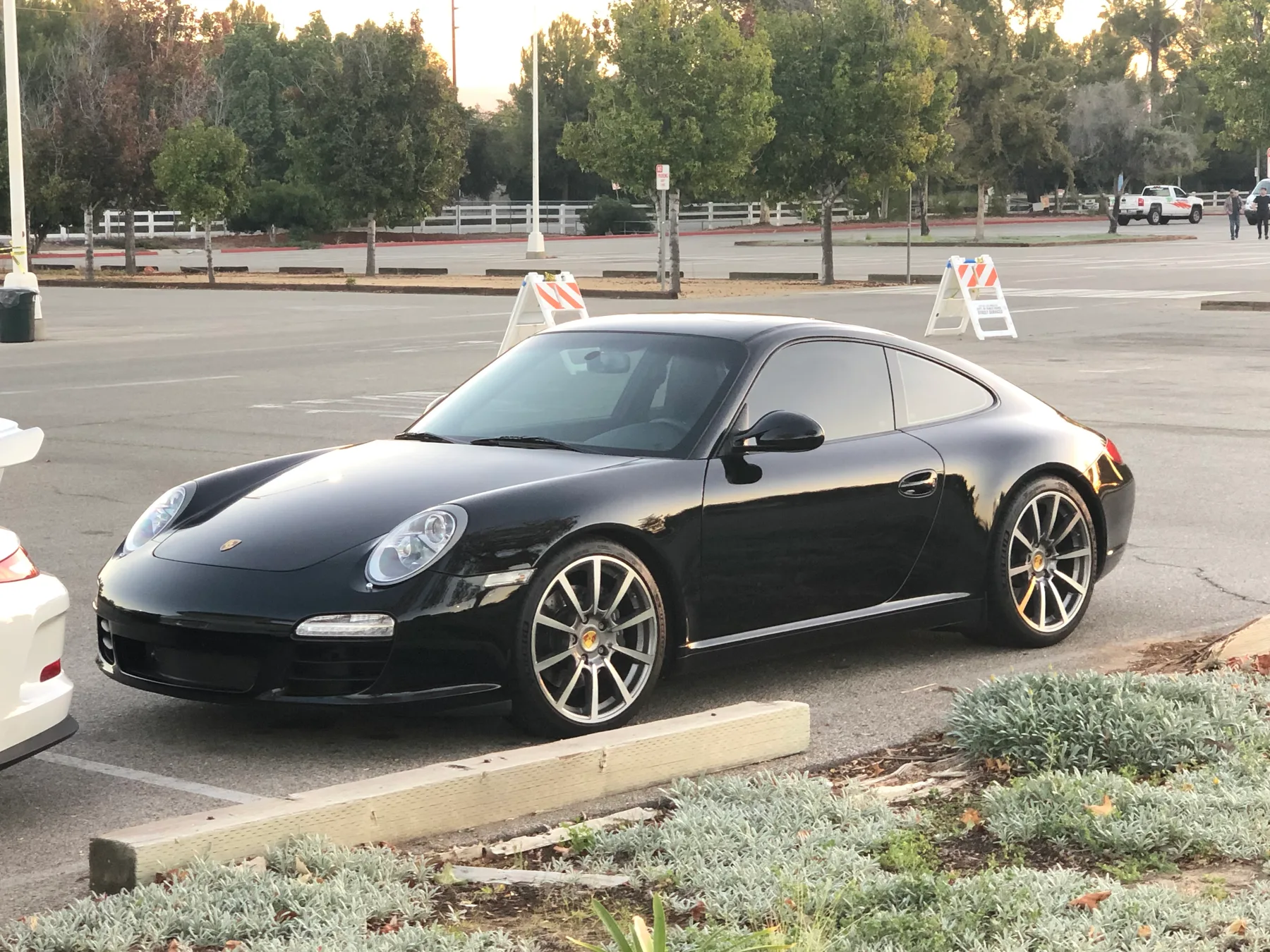
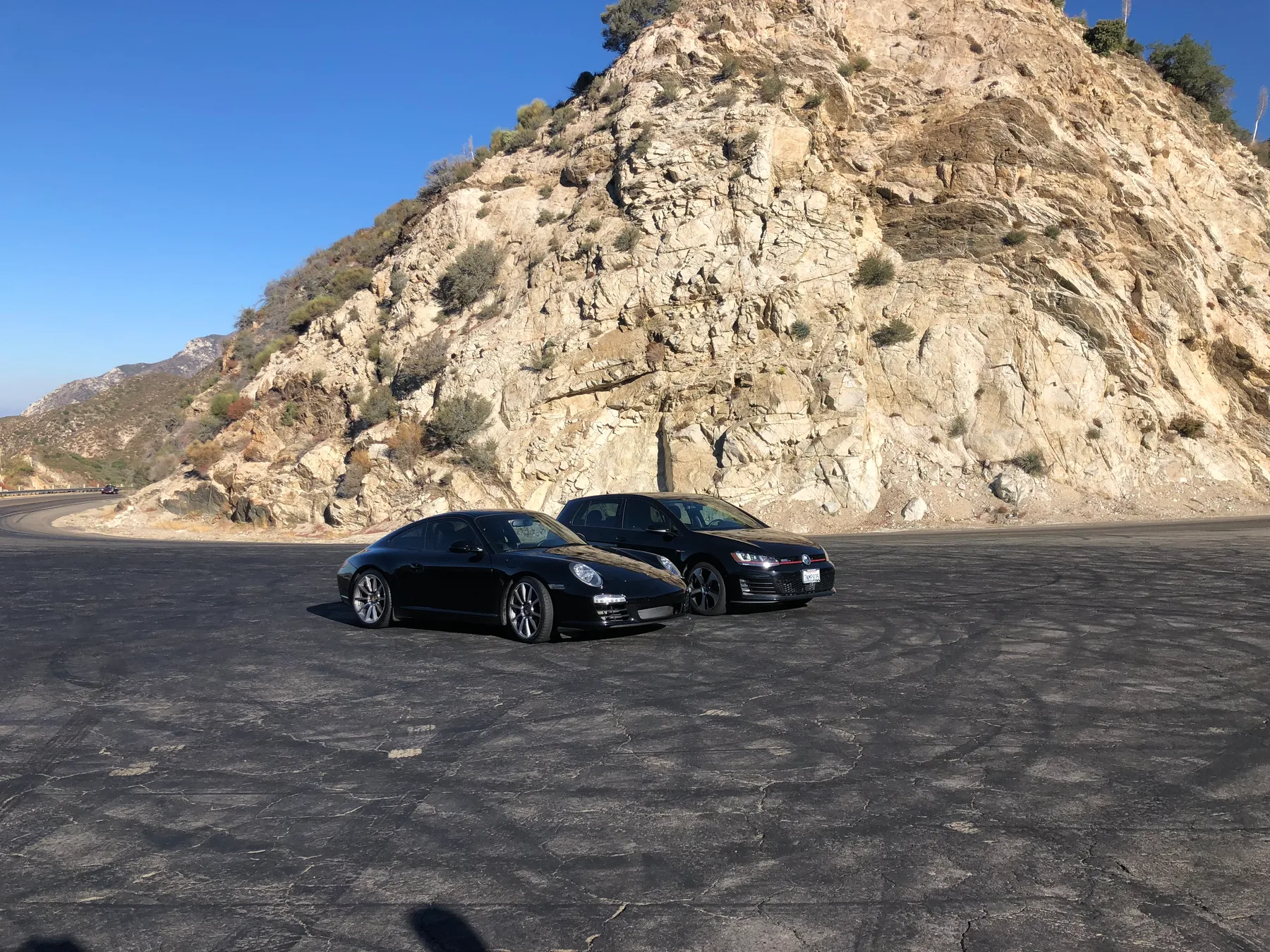
We owned the black 2008 Porsche 911 Carrera coupe pictured here: a 997.2 with a six-speed manual gearbox. These photographs are from our own car’s time with The Stable. Visit its dedicated Garage page for the car’s place in our collection.
Which Carrera and gearbox should you choose?
Carrera or Carrera S
Start with the standard Carrera if you want a road-focused 911 and the right example meets your needs. Compare an S when its engine, equipment and condition justify the difference in total ownership cost. Check the build specification: seats, suspension, wheel sizes and options can matter as much to your everyday comfort as the badge.
Carrera 4 and 4S add all-wheel drive; Cabriolet and Targa versions add roof systems to the inspection. Operate the roof through its full cycle, check seals and drains, and look for signs of water ingress. Choose a body style around how you will use the car, not an assumed resale premium.
Manual, Tiptronic or PDK
A manual suits a buyer who wants to make each shift. During the test drive, assess clutch take-up, engagement and shifts when cold and warm. A specialist should interpret any diagnostic over-rev record alongside the car’s history rather than treating a single number as a verdict.
Tiptronic is a conventional automatic; PDK is a dual-clutch transmission. Drive the exact car in traffic, while parking and on an open road before choosing. Ask for the maintenance requirements for that gearbox and evidence they have been followed. Porsche’s 2011 Carrera specification sheet lists the later Carrera’s manual and PDK options.
IMS bearings, bore scoring and the inspection conversation
997.1: identify the engine before discussing an IMS remedy
Do not assume every 997.1 needs the same bearing replacement. Early engines and later engines have different arrangements, and a replacement engine can complicate identification. Ask a Porsche specialist to identify what is fitted and check invoices for any previous work.
LN Engineering’s technical guidance for 2006–2008 engines explains the larger bearing and why it should not be treated like the earlier serviceable arrangement. Agree any work with the inspecting specialist rather than ordering a generic “IMS upgrade” from the car’s registration year.
997.2: a different engine is not an inspection exemption
The Carrera’s MA1/9A1 engine dispenses with the intermediate shaft, as explained in LN Engineering’s technical training guide. That does not mean every later engine is healthy. Specialist rebuilder LN Engineering documents bore-scoring repairs for later MA1/9A1 engines as well as earlier engines. This establishes that damage can occur, not a population-wide failure rate.
Discuss a borescope inspection, oil consumption, service history, leaks and cold-start behaviour with the inspector. A clean exhaust tip or a quiet short test drive cannot establish cylinder condition. Ask for the inspection findings in writing and an explanation of anything inconclusive.
On direct-injected cars, starting or running faults need diagnosis of the relevant fuel and ignition systems. Do not assume that every fault is a high-pressure fuel pump, or that every car needs a fixed carbon-cleaning schedule. Get a diagnosis and a written estimate for the individual car.
A practical Porsche 997 pre-purchase checklist
- Identity and history: match VIN and build specification to the advertised variant. Review service invoices, mileage records, accident history, modifications and any engine replacement documentation.
- Independent inspection: book a Porsche specialist who is independent of the sale. Agree whether the fee includes diagnostics, a road test, underside inspection and cylinder inspection before the appointment.
- Engine and cooling: inspect cold and fully warm operation, fluid leaks, cooling-system condition and diagnostic faults. Request further investigation where symptoms or records warrant it.
- Gearbox and driveline: check operation, maintenance invoices, clutch condition where applicable and any abnormal vibration or noise.
- Chassis and consumables: inspect tyres and their age, brakes, dampers, suspension joints, alignment and underbody damage. Price required replacements before negotiating.
- Cabin and body: operate air conditioning, windows, seats, infotainment and roof mechanisms. Inspect for corrosion, poor repairs, damp carpets and blocked drains.
- Written decision: separate urgent faults, upcoming maintenance and cosmetic preferences. Walk away if the seller will not allow a reasonable independent inspection.
Turbo, GT and special editions need a separate shortlist
The 997 range includes mechanically different Turbo and GT models. Do not assume that the later Turbo simply retained the earlier Turbo engine with direct injection added, or that a GT2 RS shares a Carrera’s powertrain. Porsche’s model-specific technical archive is a starting point for checking the exact variant. A specialist familiar with that model should assess cooling hardware, brakes, modifications and evidence of track use.
For a first road-focused 997 purchase, comparing a few well-documented Carreras is a more manageable starting point than treating every variant as one market.
What should you budget?
Build a budget for the actual car and market in which you will buy. Compare recent completed sales with matching generation, body style, gearbox, mileage and condition. Asking prices alone do not establish value.
Add inspection, local taxes and registration, insurance, transport, immediate maintenance and a repair reserve to the purchase price. Have the inspector obtain or recommend written local estimates. A cheaper car with deferred maintenance can cost more than a stronger example; equally, a higher asking price is not evidence of a healthy engine.
Recheck comparable sales close to purchase and do not buy on an expectation of appreciation.
Choose the car, then plan the road
Our recommendation is to choose the generation and gearbox you enjoy, then buy on documented condition. Leave enough budget to make the car ready for the journeys you want to take.
For a California trip, compare our California Drive Packs by location and time available. Before buying luggage for the car, use our road-trip bag guide to check dimensions and packing needs.
Technical sources and editorial guidance reviewed 20 September 2026. Photography and ownership confirmed by The Stable. This is buying guidance, not a mechanical inspection of any car offered for sale.