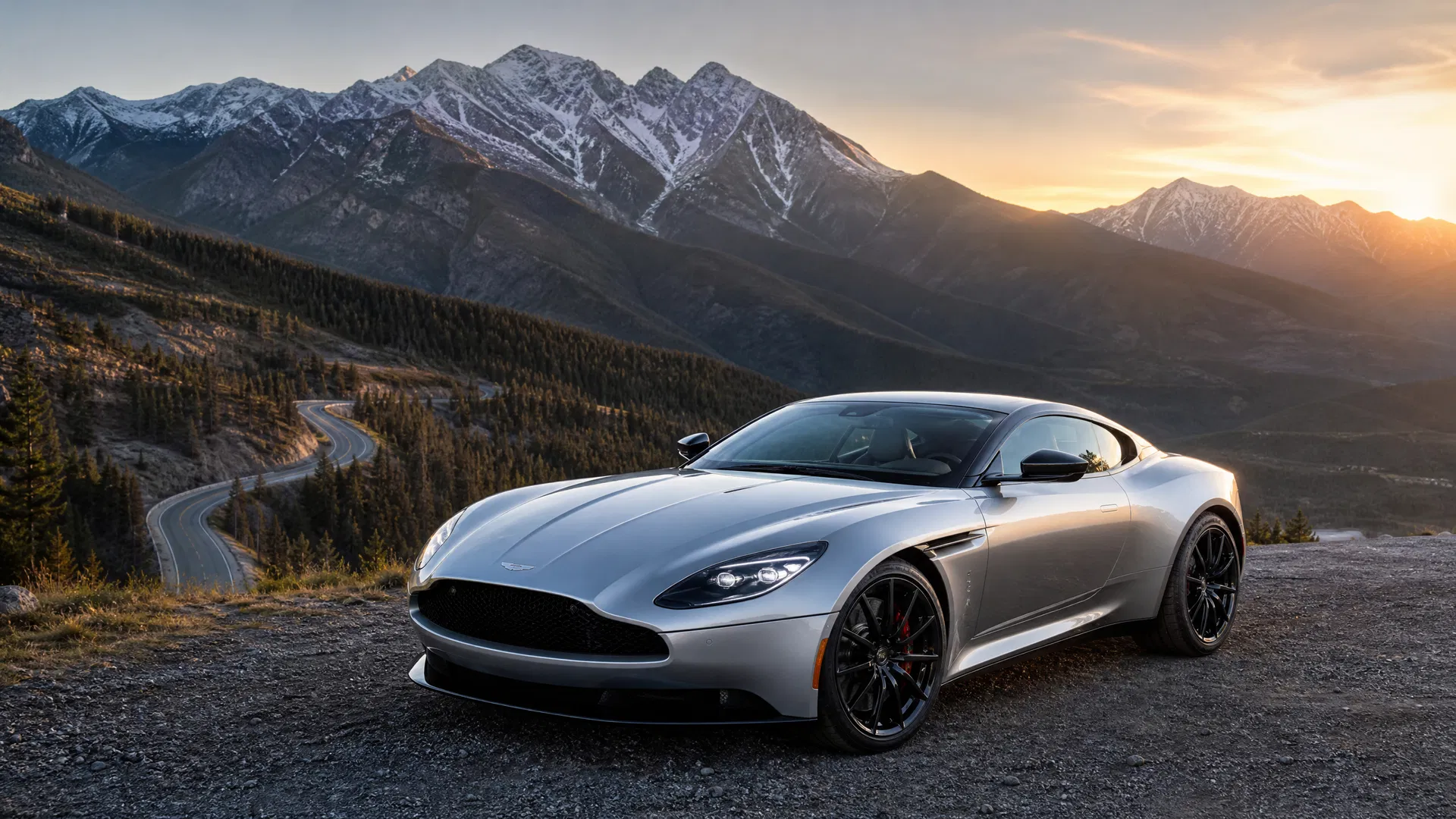

There is a particular kind of freedom that only the open road delivers. Not the antiseptic efficiency of a flight, but the slow accumulation of landscapes - Appalachian ridgelines giving way to plains, plains dissolving into desert, desert rising into granite peaks before the Pacific finally appears on the horizon. A cross country road trip across America is one of the great driving adventures on earth, and 2026 is a remarkably good year to do it.
In practice, a coast-to-coast crossing covers roughly 2,800 to 3,300 miles - though a cross country road trip averages 3,000–6,000 miles once detours and scenic loops are factored in. Duration ranges from a brisk eight days to a leisurely three weeks or more, typically between May and October.
At The Stable, we approach this differently from mass-market trip planners. We exist for drivers who care about the road itself - the surface, the rhythm, the view through the windscreen - as much as the destinations at either end. This article is a strategic road trip planner: not turn-by-turn GPS, but a framework you can adapt to your car, your tastes, and your calendar, or hand off to us for a bespoke build.
TL;DR
This guide gives you a ready-made framework to plan a cross country road trip in 2026 - with concrete mileage targets, seasonal advice, and budgeting benchmarks you can act on today. You'll learn how to choose between a northern route, central route, and southern route, and how to weave in national parks and wine regions without overdriving. Fuel and EV charging strategy, boutique stays, dining, and packing guidance are all tailored for enthusiast drivers in sports cars, GTs, and performance EVs. Whether you plan every detail yourself or hand it off to a professional road trip planner like The Stable, this article gives you the strategic foundation to turn a dream into a departure date.
Step 1: Define Your Cross Country Road Trip Goals
Before opening any map or app, answer a deceptively simple question: why this trip? Choose destinations before planning your route - the "what" and "why" should always precede the "how."
Common archetypes to consider:
- The 7–9 day point-to-point: A fast, interstate-heavy crossing for drivers who want the achievement of coast-to-coast without burning three weeks of leave.
- The 14–18 day grand tour: The sweet spot for most enthusiasts - enough time to hit national parks, wine regions, and memorable back roads without rushing.
- The 21+ day slow road: Deep immersion in small towns, secondary highways, and the kind of spontaneous detours that become the best stories.
Pick a dominant theme early. Are you chasing wild scenery and parks? Food and wine? Design and architecture? Americana and Route 66 nostalgia? Your theme shapes every subsequent decision.
Car choice influences goals directly. A low-slung vintage Porsche demands good pavement and moderate daily mileage. A modern GT can cover ground more comfortably. A performance EV adds charging logistics but slashes fuel costs. Each vehicle defines what roads you can enjoy and how far you'll want to push each day.
Finally, decide whether this is a one-way drive with a return flight and vehicle shipping, or a loop back to your starting point. One-way crossings let you explore more new ground; plan for at least 20 days for a round trip to avoid retracing your steps in a fatigued blur.
Step 2: Choose Your Cross Country Route (Northern, Central, or Southern)
There is no single "best" cross country road. Instead, there are three classic frameworks - and the right one depends on your season, your car, and what you want to feel at the end.
Northern route: Think Seattle or Portland to Boston or New York via Montana, South Dakota, Minnesota, and the Great Lakes. Cooler summer weather, stunning mountain passes, and proximity to marquee parks like Glacier and Yellowstone. The trade-off: some roads and high passes are closed until late June, and lodging in gateway towns fills fast.
Central route: San Francisco to Washington, D.C. (or the reverse) via Utah, Colorado, Kansas, Missouri, and West Virginia. This is the terrain-contrast route - canyon country to plains to Appalachian twisties - and it offers some of the best driving roads in America. The challenge is managing altitude and long, less inspiring plains stretches.
Southern route: San Diego or Los Angeles to Savannah or Miami via Arizona, New Mexico, Texas Hill Country, Louisiana, and the Deep South. Ideal in shoulder seasons to dodge extreme heat. Culinary diversity is unmatched, but mid-summer brings brutal temperatures and hurricane risk along the coast.
A handy starting method: sketch a straight "spine" between your start and finish on a map, then fan out to interesting detours rather than building from a scattered wish list.
Step 3: Decide How Long You'll Be on the Road
The tension between ambition and available time will define your entire trip. How many days you have in 2026 dictates whether you're on interstates or slower country roads.
Limit driving time to 6 hours a day for exploration - that translates to roughly 220–320 miles if you prioritize scenic back roads over freeways. Here's how pacing plays out in practice:
| Trip Length | Daily Average | Total Miles | Full Rest Days |
|---|---|---|---|
| 10 days | ~300 mi/day | ~3,000 | 1–2 |
| 14 days | ~240 mi/day | ~3,360 | 2–3 |
| 21 days | ~200 mi/day | ~4,200 | 4–5 |
Budget two to three weeks to drive coast-to-coast comfortably. Build at least one full rest day every four to five days - anchor these in cities like Denver, Santa Fe, Chicago, or Portland where you can walk the town, enjoy a long dinner, and let the car cool down.
Classic cars or older vehicles may need shorter days and occasional "mechanical margin" days in case of tinkering or minor repairs. For more on planning a trip across country, our dedicated guide covers the full logistics.
Step 4: Budgeting a Cross Country Trip (Fuel, Stays, and Experiences)
Even affluent travelers benefit from a clear budget. Without one, "silent stress" creeps in - the low-grade worry about spending that erodes enjoyment on a long road trip.
Estimate expenses for fuel, lodging, and food as your three primary buckets, then layer in experiences and contingency:
| Category | 14-Day Estimate (Two People) |
|---|---|
| Fuel / Charging | $400–$700 (ICE) or $200–$400 (EV) |
| Lodging (mid-to-boutique) | $2,300–$4,500 |
| Dining | $1,400–$2,100 |
| Experiences & Parks | $300–$600 |
| Contingency (10–20%) | $500–$1,000 |
| Total | $4,900–$8,900 |
Plan for $200 per week for unexpected expenses - a flat tire, a detour dinner, an irresistible antique shop. A simple shared spreadsheet or a travel budgeting app keeps both travelers aligned without awkward conversations mid-trip.
Planning the Driving: Back Roads vs Interstate Highways
Arrow-straight interstates were designed for speed. Older country roads were built around the landscape - following ridgelines, tracing rivers, carving through valleys. The Stable will almost always favor the latter, because a cross country road trip is about driving, not just transit.
The smart approach is to blend both. Use interstates to cross less inspiring stretches - certain plains segments, suburban sprawl, or areas where the back roads are rough - then dive onto scenic two-lanes in mountain, coastal, and canyon regions.
A tangible comparison: 350 interstate miles at 70–75 mph takes roughly five hours with stops. Driving on back roads averages 40–45 mph, so 220–260 miles of two-lane roads with sweeping bends and small towns takes a similar amount of time - but delivers an incomparably richer experience.
Performance EVs and low-slung sports cars should prefer good pavement and avoid unpaved shortcuts that generic mapping tools sometimes suggest. Ground clearance matters; so does tire width on gravel. For the best road trip planning tools to help you navigate, we've reviewed the top options.
Incorporating National Parks and Landscapes Without Overloading the Itinerary
National parks are natural trip anchors, but overloading too many into your itinerary leads to rushed visits and parking frustration. For a cross country road trip, aim for three to five marquee parks - not ten.
Strong pairings by route:
- Northern route: Glacier, Yellowstone, Grand Teton, Badlands
- Central route: Shenandoah, Rocky Mountain, Arches or Canyonlands, Yosemite
- Southern route: Great Smoky Mountains, Big Bend, Saguaro, Joshua Tree
Space them no closer than one "big" park every three to four days. This prevents scenery fatigue and leaves room for state parks and quieter landscapes that often surprise.
Book key park-adjacent accommodations 4–6 months ahead for peak dates. Rocky Mountain National Park has reinstated its timed entry reservation system starting May 22, 2026, and similar systems apply at other high-traffic parks. Know before you go.
Designing a Northern Route: Sample West–East Framework
An illustrative northern route runs from Seattle to Boston over 14–18 days, threading through some of the most dramatic landscapes on the continent.
Key waypoints:
- Seattle → ferry or coastal drive north
- Glacier National Park vicinity (Going-to-the-Sun Road)
- Beartooth Pass into Yellowstone and Grand Teton (Beartooth & Yellowstone)
- South Dakota: Black Hills and Badlands National Park
- Minneapolis or Milwaukee for a city rest day
- Great Lakes corridor through northern Wisconsin or Michigan's Upper Peninsula into New England
The northern route delivers long summer days and cooler temperatures, but demands advance planning. Standout driving segments include Beartooth Pass (weather-permitting, usually open late June through mid-September) and the Going-to-the-Sun Road - both roads that justify the entire trip for a car enthusiast.
Designing a Central Route: Sample East–West Framework
A central cross country trip from Washington, D.C. to San Francisco mixes Appalachian twisties, open plains, and Rocky Mountain passes into a single, varied journey.
Key stops and regions:
- Shenandoah and Blue Ridge Parkway: Virginia's ridge-running classic - one of the finest driver's roads in the east. The Stable's Appalachian Grand Tour covers this in detail.
- Kentucky bourbon country: a cultural and culinary detour
- St. Louis, Missouri: gateway to the west, worth an overnight
- Colorado Front Range: Denver, then up to Independence Pass (when open) or over Loveland Pass. The Colorado High Country Route Pack covers the best mountain driving.
- Utah canyon country: Moab, Arches, Capitol Reef - red rock at its most dramatic. The Utah Red Rock Grand Tour is the definitive guide.
- Sierra Nevada into the Bay Area, possibly via Tioga Pass and Yosemite
Altitude considerations matter for both cars and passengers. Above 8,000 feet, naturally aspirated engines lose power. Turbocharged cars fare better but cooling systems work harder. Stay hydrated - altitude dehydration is real and affects concentration.
Designing a Southern / Sunbelt Route: Sample Coastal-to-Coastal Framework
A southern route from Miami or Charleston to San Diego or Los Angeles is ideal for late spring or fall cross country road trips, sidestepping the brutal midsummer heat.
Key regions:
- Gulf Coast: easy access to coastal drives and fresh seafood
- New Orleans: 48 hours minimum for food, music, and atmosphere
- Texas Hill Country: rolling ranch roads, Hill Country wineries, and barbecue. The Stable's Texas Hill Country Route Pack covers this region.
- Desert Southwest: New Mexico's turquoise trail, Arizona's Monument Valley, and segments of historic Route 66
- Pacific finish: San Diego, or north up the California coast to Los Angeles
Attractive driving periods are March through May and October through early November 2026, when temperatures are manageable and wildfire risk is lower.
Weaving in Food, Wine, and Design-Led Stays
For The Stable's audience, the road is half the story. The other half is where you eat and sleep each night.
Wine regions that dovetail with common cross country routes include Willamette Valley (Oregon), Napa and Sonoma (California), Texas Hill Country, Finger Lakes (New York), and Virginia wine country. Structure days around a long lunch or a considered dinner in places with genuine culinary scenes - Charleston, Santa Fe, Portland, Denver, Chicago.
The type of lodging we prioritize: boutique hotels, design-forward inns, and car-friendly locations with secure or visible parking for special vehicles. Booking strategies for 2026: lock in "destination" stays early, keep some nights flexible to follow weather or mood, and align major stays with non-driving or light-driving days.
Fuel, Gas Stations, and EV Charging Strategy
For combustion cars: Gas costs average $3–$4 per gallon in the US, though California often exceeds $4.80 and Gulf states dip under $3.50. Top up at half tank in remote states like Nevada, Utah, and parts of Wyoming - 100-plus-mile gaps between gas stations are common.
For EVs: A performance EV running on DC fast chargers costs approximately $0.05–$0.08 per mile, compared to around 14 cents for a typical gas car. Tesla's Supercharger network dominates with roughly 3,000 stations and 36,700 ports, covering over 50% of US DC fast-charge capacity. Map charger chains across your chosen corridor, plan charging near meal stops, and avoid running the battery below 10–15% in sparse regions.
Always have an offline backup plan: screenshots of fuel and charging locations, plus knowledge of fallback towns along the route if a charger or station is unexpectedly offline.
Daily Rhythm: Structuring a Perfect Driving Day
A model driving day on a cross country road trip looks something like this:
- 7:30–8:00 a.m.: Depart. Roads are empty, light is golden.
- 9:00–9:30 a.m.: First stop - strong coffee, proper breakfast at a local spot.
- 9:30 a.m.–12:00 p.m.: Drive in 90–120 minute blocks. Plan for breaks every 2–3 hours to stretch and refresh.
- 12:00–1:30 p.m.: Lunch at a recommended restaurant or scenic picnic.
- 1:30–4:00 p.m.: Afternoon driving, shorter blocks, targeting your evening destination.
- 4:00–5:00 p.m.: Arrive before dusk. Walk the town, find a viewpoint, settle in.
- 7:00 p.m.: Aperitif and dinner - the reward for a well-paced day.
This rhythm avoids arriving exhausted at 10 p.m. after driving in the dark. The Stable's Route Packs are designed around exactly this kind of pacing, giving drivers confidence that the day's distance is realistic and the stops are worth the pause.
Navigation and Route Planning Tools
A luxury cross country road trip benefits from a blend of curated routes, in-car nav, and phone-based apps - not single-app reliance.
Save core routes in multiple formats: a primary navigation app (Google Maps or Apple Maps works for most), a secondary offline map app, and a printable PDF overview. Download offline maps for areas with no cell service - the Mountain West and remote northern corridors are notorious for dead zones.
The Stable uses Rally Point navigation within its Route Packs to simplify following complex scenic back road combinations without constant reprogramming. For more on choosing the right tools, see our guide to the best road trip planning tools.
Packing for a Cross Country Road Trip in a Driver's Car
Packing for a GT or sports car is fundamentally different from packing for an SUV. Space and weight affect both comfort and driving dynamics.
For the car itself:
- Emergency roadside kit (flares, reflective triangle, basic tools)
- Tyre inflator and sealant
- Jump starter
- Fluids appropriate to the vehicle
- Model-specific spares that are hard to source en route
Personal packing:
- Capsule wardrobe focused on layers and wrinkle-resistant fabrics
- Compact footwear for both driving and dining out
- Use packing cubes to stay organized - they're especially valuable in shallow sports car trunks
For EVs, bring charging cables and adapters. For cherished classics, pack weather covers, quick detailer, and microfibre cloths. The right travel bags make a measurable difference when trunk space is measured in liters, not cubic feet.
Car Preparation and Maintenance on the Open Road
A cross country road trip may add 3,000–6,000 miles in a short window - equivalent to a full year of normal driving for many cars. The vehicle must be prepared accordingly.
Perform a full vehicle inspection before departing, ideally 2–4 weeks before departure day. Cover tyres, brakes, fluids, belts, battery, lights, and any outstanding service items or recalls.
Create a simple "mechanical log" for the journey: fuel consumption, any new noises or warning lights, and the names of trusted specialist garages along the route. For imported classics or less common marques, research and bookmark specialist shops in major cities you will pass through.
Seasonal Timing: When to Drive Cross Country in 2026
Timing shapes everything - the roads available to you, the crowds you'll encounter, and the light you'll drive in.
| Season | Pros | Cons |
|---|---|---|
| Late spring (May–June) | Wildflowers, mild temps, fewer crowds | Some mountain passes still closed |
| High summer (Jul–Aug) | All roads open, long days | Crowded and hot; wildfire smoke |
| Early fall (Sep–Oct) | Stunning foliage, thinning crowds | Shorter days; early snow risk on high passes |
| Winter (Nov–Mar) | Southern routes only; solitude | Limited route options; many parks closed |
Late spring is ideal for cross country road trips, and mid-fall offers pleasant weather. Plan trips for mid-May or mid-September for fewer visitors at major parks. In 2026, wildfire risk is forecasted above normal in Texas, the Southeast, and Washington State during July and August. Hurricane season (August–October) affects Gulf and Atlantic coast routing.
Using a Professional Road Trip Planner vs DIY
The trade-off is time versus control. DIY planning can be rewarding but absolutely time-consuming - weeks of research for a route that may still miss the best roads.
DIY works well for: simple interstate-heavy routes, flexible backpacker-style trips, and families primarily focused on major attractions rather than driving quality.
Professional curation shines when: you want to align great driver's roads with boutique hotels, hard-to-book restaurants, and realistic daily pacing across unfamiliar regions. This is where The Stable operates.
What we specifically bring: road-tested Route Packs, Rally Point navigation files, printed roadbooks, and bespoke cross country builds tuned to the car and driver's preferences. Start with the high-level decisions from this article, then either flesh out the details yourself or brief The Stable for a custom design.
How The Stable Can Help Plan Your Cross Country Road Trip
The Stable exists for drivers who want a cross country trip that feels like a curated grand tour - not a logistical exercise. We've driven these roads, vetted these stays, and built the routing that puts the best driving at the center of every day.
Our off-the-shelf Route Packs cover classic American regions - Pacific Coast weekends, mountain escapes, wine-country loops - that can be stitched into a larger cross country plan. Our bespoke planning service starts with an intake consultation: understanding your car, your time frame, and your tastes, then designing a tailored route with Rally Point navigation, dining recommendations, and car-forward stays.
Deliverables include digital maps, navigation files, and printable PDF roadbooks with turn-by-turn instructions, daily overviews, and curated notes. Bring the car you already love. We'll handle the scenery, the pacing, and the details.
Frequently Asked Questions
How far can I realistically drive each day on a cross country road trip without burning out?
For most enthusiast drivers, 220–320 miles per day - about 4–6 hours of wheel time - is sustainable, with occasional shorter or longer days depending on terrain and stops. Driving on back roads averages 40–45 mph, which is markedly different from interstate cruising at 70–75 mph. Mixing both within a single day keeps you engaged without exhausting you.
Is it better to ship my car one way and fly back, or drive a round-trip route?
A one-way coast-to-coast drive with vehicle shipping maximizes new landscapes and eliminates the dread of repeated corridors on the return. Open transport shipping runs about $0.60–$0.80 per mile for distances over 2,500 miles - so expect $1,800–$2,500 for a cross-country shipment. A round trip from your home city is simpler logistically and potentially lower in overall cost if you have the time.
Can I do a cross country road trip in an EV performance car in 2026?
It is increasingly practical on major corridors. Tesla's Supercharger network - with roughly 3,000 stations controlling over half of US DC fast-charge capacity - forms the backbone, and newer networks like IONNA and Electrify America are filling gaps. Plan meal and overnight stops around chargers to minimize downtime, and avoid running below 10–15% state of charge in remote areas.
How far in advance should I start planning a cross country trip?
Start high-level planning - route choice, dates, general budget - 4–9 months before departure, especially if you want peak-season national parks or specific boutique hotels. Book anchor accommodations and key restaurants 3–6 months ahead for popular 2026 travel windows.
What if I only have 7–9 days - does a cross country road trip still make sense?
A true coast-to-coast drive in under 10 days is possible but will be heavily interstate-based and leave minimal time for detours and long stays. A stronger alternative: focus on a single region - Pacific Coast and Sierras, Rockies and canyon country, or New England and the Appalachians - that delivers a "cross country" feel and the thrill of the open road without the full distance.
Conclusion
The great American cross country road trip rewards the driver who approaches it with preparation, curiosity, and a car worth driving. Whether you're threading the northern corridor through Glacier and Yellowstone, carving through Utah's canyon country on the central route, or savoring the Gulf Coast and Texas Hill Country on the southern run, the framework is the same: choose your roads deliberately, pace your days generously, and let the journey be the destination.
Browse The Stable's Route Packs for curated US driving itineraries, explore the Journal for regional guides and road stories, or reach out about a bespoke cross country build if you have a specific route in mind.