
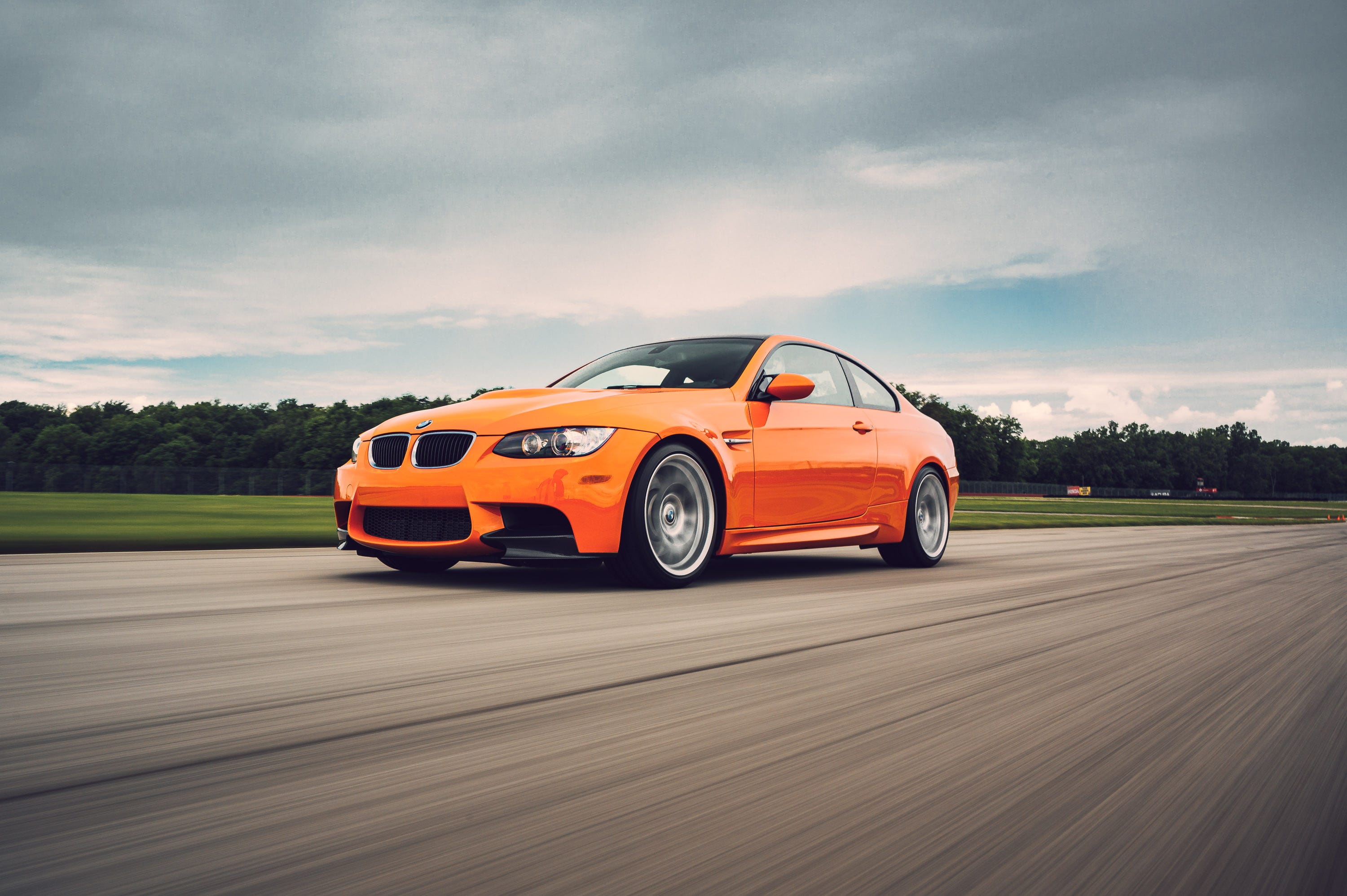
- The E92 M3 is the only M3 ever built with a naturally aspirated V8 — the 4.0-litre S65 producing 414bhp at 8,300rpm. It will never be repeated.
- Rod bearing replacement is non-negotiable preventative maintenance. Confirm it has been done ($1,500–$2,300) before buying any example.
- Throttle actuators fail on all cars eventually — budget $850–$1,100 for replacement. Check for fault codes 2B15/2B16 at inspection.
- Manual cars command a $3,800–$8,900 premium over DCT equivalents and will always be worth more. DCT cars are faster but less engaging.
- Post-LCI (2011+) cars are the sweet spot — better iDrive, later rod bearing revisions, and Competition Package availability.
- The Competition Package (ZCP) adds 10mm lower ride height, revised EDC, and MDM mode. It is the most desirable standard-production variant.
- Avoid early 2007–2008 cars without documented valve spring replacement and rod bearing service. Avoid the E93 Convertible for dynamic driving.
- 2025 UK prices: standard coupe manual $25,500–$57,000; Competition Package $35,500–$63,500; GTS $102,000–$381,000+.
BMW M3 E92 Buying Guide: Everything You Need to Know Before You Buy
The BMW E92 M3 occupies a singular position in automotive history: it is the only M3 ever built around a naturally aspirated V8 engine, and almost certainly the last. Produced from 2007 to 2013, it arrived at a moment when BMW's engineers had access to Formula 1-derived technology, an unlimited development budget, and a brief window before turbocharged engines became the only viable path to meeting emissions legislation. What they produced was a 414bhp, 8,300rpm V8 that sounds unlike anything else wearing a blue and white roundel — a car that, in the years since its discontinuation, has come to be regarded as one of the defining driver's cars of its generation.
Prices have risen steadily throughout the early 2020s and continue to climb for the best examples. The window for buying a clean, well-maintained E92 M3 at a sensible price is narrowing. This guide covers everything you need to know to buy one well.
Model History and Significance
The E9x M3 programme — encompassing the E90 Sedan, E92 Coupe, and E93 Convertible — was unveiled in stages between 2007 and 2008. The E92 Coupe concept debuted at the Geneva Motor Show in March 2007, with the production version following at Frankfurt in September 2007. The E90 Sedan appeared at Tokyo in October 2007, and the E93 Convertible completed the range at Geneva in March 2008.
The decision to fit a V8 was deliberate and, at the time, controversial. BMW's M division had spent decades perfecting the inline-six formula — the S14 four-cylinder of the original E30 M3 aside — and the S54 of the E46 M3 was widely regarded as the finest expression of that philosophy. The S65 V8 was a different proposition: shorter, lighter, and capable of revving to heights that no production inline-six could match. Its architecture was directly influenced by BMW's P84/5 Formula 1 V10, with the V8 configuration chosen over a comparable inline-six because it allowed for a more compact engine bay, better weight distribution, and a higher natural redline.
Total worldwide production across all three body styles reached 57,627 units. The E92 Coupe was by far the most popular, accounting for 40,092 of those cars. Of those, 25,326 were fitted with the M-DCT dual-clutch transmission and 14,766 with the six-speed manual — a ratio that reflects the DCT's popularity in the US market, where it was heavily promoted.
The E92 underwent a Life Cycle Impulse (LCI) facelift from 2011, with production of LCI models beginning in April 2010. Changes were subtle: revised LED taillights (pre-LCI cars had non-LED units), an updated iDrive module and controller, revised HVAC buttons, and relocated seat heat controls. From the 2011.5 model year, a revised Combox added Bluetooth music streaming and auto start/stop. The 2011.75 model year added BMW Apps to the iDrive system. For buyers, the LCI cars are generally preferred — they benefit from all the early-production lessons learned, and the later iDrive system is meaningfully better to live with.
The S65 V8 Engine
The S65B40 is a 3,999cc naturally aspirated V8 with a bore of 92mm and a stroke of 75.2mm. This oversquare configuration — wider bore than stroke — is the hallmark of a high-revving motorsport engine. It produces 414bhp (420PS) at 8,300rpm and 295lb-ft (400Nm) of torque at 3,900rpm, with a redline of 8,400rpm. North American cars were rated at 414bhp in standard trim.
The block is cast from an aluminium-silicon alloy (Alusil) with a bedplate design for rigidity. The crankshaft, connecting rods, and pistons are all forged. Each of the eight cylinders has its own individual throttle body — a technology borrowed directly from motorsport that provides instantaneous throttle response and a distinctive intake sound that no single-throttle-body engine can replicate. The lubrication system is a quasi-dry-sump design, using two scavenger pumps to maintain oil supply under the sustained high-G cornering loads the car was designed to handle. BMW's Double VANOS system continuously varies the timing of both intake and exhaust camshafts across the entire rev range.
The S65 is not related to the M54 or N52 road engines. It is a bespoke motorsport-derived unit that shares its basic architecture with the S85 V10 of the E60 M5 and E63 M6. The family resemblance to those engines extends to their shared known issues — most notably the rod bearing problem, which is discussed in detail below.
The S65 won the International Engine of the Year award five consecutive times between 2008 and 2012. It is, by any objective measure, one of the finest naturally aspirated production engines ever built. It is also an engine that demands attentive maintenance and rewards that attention with one of the most visceral driving experiences of its era.
Variants
Coupe (E92) — Manual and DCT
The E92 Coupe is the variant most buyers should target. It is the lightest and most structurally rigid of the three body styles, benefits from a carbon fibre reinforced plastic (CFRP) roof panel as standard — a feature unique to the E92 among the E9x generation — and offers the full 414bhp in a package that weighs approximately 1,655kg. The CFRP roof lowers the centre of gravity and reduces unsprung weight, contributing to the E92's more focused dynamic character compared to the E90 and E93.
The choice between the six-speed manual and the seven-speed M-DCT is discussed separately below.
Sedan (E90)
The E90 M3 Sedan is mechanically identical to the E92 Coupe but uses a conventional steel roof and a four-door body. It weighs approximately 1,680kg — 25kg more than the coupe — and lacks the CFRP roof. The chassis is marginally less rigid. For buyers who need four doors, the E90 is an excellent car; for those who don't, the E92 is the better driver's machine. The E90 was produced in smaller numbers (9,674 units globally) and can occasionally be found at a slight discount to equivalent E92s.
Convertible (E93)
The E93 Convertible uses the same S65 engine and mechanical package but weighs 1,795kg — 140kg more than the E92 Coupe. The additional weight comes from the retractable hardtop mechanism and the structural reinforcement required to compensate for the absent fixed roof. The result is a car that is measurably less dynamic, with greater scuttle shake and a less composed chassis under hard driving. It is a pleasant open-top grand tourer and commands a modest premium in some markets due to its rarity, but it is not the car to buy if driving dynamics are the priority.
Competition Package (ZCP)
Introduced in 2010 for post-LCI models, the Competition Package (ZCP) was available for an additional $2,500 in the US market and added a meaningful suite of chassis enhancements. These included 19-inch 359M alloy wheels (spun cast, not forged — worth noting for pothole-prone roads), a 10mm reduction in ride height, revised Electronic Damping Control (EDC) with greater variability between modes, and a revised Dynamic Stability Control (DSC) system with an MDM (M Dynamic Mode) that permits more slip before intervening. Competition Package cars are the most desirable standard-production E92 M3s and command a premium of approximately $3,800–$10,000 over comparable non-ZCP examples.
M3 GTS
The M3 GTS is the definitive E92 M3. Produced in 2010 exclusively for European markets, only 135 examples were built (some sources cite 138, accounting for a small number of additional units). It is distinguished from the standard car by a larger 4.4-litre S65B44 engine producing 450bhp, a fixed roll cage, a single rear seat replaced by a fire extinguisher mount, polycarbonate rear windows, a carbon fibre bonnet and boot lid, and a comprehensive aerodynamic package including a large fixed rear wing. The GTS was designed as a road-legal track car and was sold new for approximately $124,000.
Today, GTS values have risen dramatically. Examples in good condition are regularly offered at $102,000–$152,000 and serial number 001 sold at auction in 2025 for over $324,000. The GTS is a collector's car, not a daily driver, and should be evaluated accordingly.
M3 CRT
The M3 CRT (Carbon Racing Technology) was produced in 2012 in just 67 examples, all right-hand drive. It used the 4.4-litre S65B44 engine from the GTS (450bhp) in a body extensively reworked with carbon fibre components including the bonnet, boot lid, door panels, and roof. The result was a kerb weight of 1,580kg — 75kg less than the standard E92 Coupe — making it the lightest E9x M3 ever produced. The CRT was sold new for approximately $108,000 and is now among the most valuable E92 M3 variants, with examples regularly exceeding $254,000 at auction.
M3 DTM Champion Edition
Produced in 2012 to celebrate BMW's return to DTM racing and Augusto Farfus's championship victory, the DTM Champion Edition was limited to 54 units. It was based on the standard E92 M3 Coupe with M-DCT and featured a unique Frozen Silver Metallic paint finish (the first time BMW offered a frozen paint option on the M3), a DTM-inspired interior with Alcantara trim, and a numbered plaque. Values have risen steadily and examples now trade at a meaningful premium over standard cars.
M3 Lime Rock Park Edition (US)
The Lime Rock Park Edition was a US-market special produced in 2012 to mark the final year of E92 M3 production. Limited to 200 units, it was offered exclusively in Frozen Silver Metallic paint with a Competition Package, M-DCT, and a numbered dashboard plaque. It is the US-market equivalent of the DTM Champion Edition and commands similar premiums.
Transmission: M-DCT vs. Six-Speed Manual
The transmission question is the most consequential decision a prospective E92 M3 buyer faces, and the answer is not straightforward.
The M-DCT is the Getrag GS7D36SG, a seven-speed dual-clutch unit with two hydraulically operated wet multi-plate clutches. It is genuinely impressive: shifts are measured in milliseconds, the system pre-selects the next gear in the unused sub-transmission, and the launch control function produces consistent, optimal starts. In competitive driving scenarios, the M-DCT is measurably faster than any human operating the manual. The unit is rated to handle 520Nm and 9,000rpm, and its reliability record is generally good — better, certainly, than the SMG of the E46 M3 that it replaced.
The six-speed manual is a ZF unit. It is simpler, more robust, and provides the direct mechanical connection between driver and drivetrain that many enthusiasts consider essential to the E92 M3 experience. The throw is precise and well-weighted. It is the transmission that rewards skill and involvement.
In the used market, manual cars command a meaningful premium — typically $3,800–$8,900 over equivalent DCT examples — and that premium has widened as manual transmissions have become increasingly rare in performance cars. If driving engagement is the priority, the manual is the correct choice. If outright performance and convenience matter more, the DCT is the better tool.
For DCT cars, the critical maintenance item is fluid changes. BMW initially described the DCT fluid as lifetime, but the enthusiast consensus — and the evidence of failed units — is that fluid changes every 30,000–40,000 miles are essential. Verify this has been done on any car you consider. The DCT oil pan on earlier cars is also known to leak and should be inspected.
Known Issues
Rod Bearing Failure
This is the most serious and well-documented issue with the S65 engine, and it must be the first question asked of any seller. The root cause lies in the engine's design: bearing clearances on the original specification were approximately 0.001 inches — considerably tighter than the industry standard of 0.0025 inches. This restricts the formation of the oil film that prevents metal-to-metal contact between the connecting rod journals and the crankshaft. Under sustained high-rpm use, or with oil that has degraded beyond its service interval, the bearings wear prematurely. Failure can be sudden and catastrophic — a spun bearing typically means a destroyed engine.
All S65 engines are considered susceptible, regardless of mileage, though the risk increases with higher mileage and aggressive driving. Failure has been reported at as few as 40,000 miles on cars that were driven hard and maintained poorly, and some engines have exceeded 150,000 miles on original bearings with careful stewardship. The consensus among specialists is that preventative replacement is not optional — it is essential maintenance.
The cost of preventative rod bearing replacement by a specialist is typically $1,500–$2,300 in the UK, including uprated bearings, OE rod bolts, a sump gasket, and an oil and filter change. ARP rod bolts are often recommended as an additional measure. For S65 engines produced between 2007 and May 2011, oil analysis showing elevated lead and copper parts per million indicates bearing wear. For engines from May 2011 onwards, BMW switched to aluminium-based bearings due to environmental legislation, so elevated aluminium ppm is the indicator.
At purchase, confirm whether the rod bearings have been replaced, by whom, and with what parts. A car with documented rod bearing replacement by a reputable specialist, using quality uprated bearings, is significantly lower risk than one without.
Throttle Actuator Failure
The S65's individual throttle body system uses two electrical throttle-valve actuators — one per cylinder bank — to control the eight throttle butterflies. The actuators contain internal plastic gears that wear over time, causing inconsistent throttle positioning. Symptoms include a rough or surging idle, a hesitant or 'soggy' throttle response (particularly noticeable when blipping for downshifts), and ultimately limp mode with DSC and EML warning lights illuminated. Diagnostic fault codes 2B15 and 2B16 (throttle valve actuator control monitor, banks 1 and 2) are the definitive indicators.
OEM replacement actuators from BMW cost upwards of $1,000 each. Rebuilt units from specialists — typically using upgraded brass or polymer gears in place of the original plastic — are available for $400–$650 each and are generally considered reliable, with many suppliers offering lifetime warranties. A full replacement of both actuators by a specialist costs approximately $850–$1,100 fitted.
At purchase, a BMW-specific diagnostic scan (ISTA) will reveal stored fault codes. During the test drive, pay attention to idle quality and throttle response at all RPM ranges. A cold start is particularly revealing — a rough or bouncing idle on a cold engine is an early warning sign.
VANOS System
The S65's Double VANOS system adjusts the timing of all four camshafts continuously. Common failure symptoms include a cold start rattle (a metallic sound lasting a few seconds after starting from cold, caused by insufficient oil pressure in the actuators), rough idle, loss of low-end torque, and reduced high-rpm power. Diagnostic codes 2A82 (VANOS intake slow) and 2A87 (VANOS exhaust slow) are the key indicators.
The most common and least expensive VANOS failure is a faulty solenoid. Individual solenoids cost approximately $200–$250 and are straightforward to replace. Full VANOS actuator replacement is significantly more expensive — specialist quotes typically start at $2,500–$5,100 for the complete job. The S65 is also susceptible to VANOS hub bolt failure: the original bolts were prone to shearing, which can cause cam timing to jump and result in catastrophic piston-to-valve contact. BMW issued a service bulletin addressing this, and any prospective buyer should verify that this preventative work has been carried out.
Cooling System and Thermostat
The S65's cooling system is adequate for road use but can be marginal on cars that have seen regular track use. The thermostat is a known wear item — a failing thermostat typically causes the engine to run hotter than normal or to take longer to reach operating temperature. Replacement is inexpensive (approximately $100–$200 fitted) but should be on the inspection checklist. On track-driven cars, look for evidence of upgraded radiators and oil coolers.
Valve Springs
Early S65 engines (primarily 2007–2008 production) were affected by a valve spring failure issue. Broken valve springs can cause misfires, rough running, and in severe cases, engine damage. BMW issued a service bulletin and replacement programme for affected cars. Verify whether this work has been carried out on any early-production example.
Subframe and Differential Bushings
The E92 M3's rear subframe and differential bushings are wear items that degrade over time, particularly on cars that have been driven hard or used on track. Symptoms include vague or imprecise rear-end behaviour and clunking under load. Replacement is not catastrophically expensive (typically $400–$750 fitted) but should be factored into the purchase negotiation if evidence of wear is found.
Pre-Purchase Inspection Checklist
| Area | What to Check | Red Flags |
|---|---|---|
| Engine | Rod bearing replacement history | No documentation; high mileage with no service record |
| Engine | Oil analysis results | Elevated lead/copper (pre-May 2011) or aluminium (post-May 2011) ppm |
| Engine | Cold start behaviour | Ticking, rattling, or knocking on cold start |
| Throttle | Actuator fault codes (ISTA scan) | Codes 2B15, 2B16 present |
| Throttle | Idle quality | Rough, surging, or bouncing idle |
| VANOS | Cold start rattle | Metallic rattle lasting more than 2–3 seconds |
| VANOS | Hub bolt service | No record of preventative bolt replacement |
| Transmission (DCT) | Fluid change history | No record of DCT fluid change; oil pan leak |
| Transmission (Manual) | Clutch condition | Slipping, heavy, or notchy engagement |
| Cooling | Thermostat function | Slow warm-up; overheating |
| Valve springs | Service bulletin completion | Early car (2007–2008) with no record of spring replacement |
| Subframe | Rear-end behaviour | Clunking under load; vague rear-end feel |
| Body | Accident history | Misaligned panels; overspray; non-standard paint |
| Track use | Evidence of modification | Roll cage, harness mounts, stripped interior |
Running Costs
| Item | Typical Cost |
|---|---|
| Rod bearing preventative replacement | $1,500–$2,300 |
| Throttle actuator replacement (both units, fitted) | $850–$1,100 |
| VANOS solenoid replacement (per unit) | $200–$300 fitted |
| Full VANOS actuator replacement | $2,500–$5,100 |
| Oil and filter change (specialist) | $200–$250 |
| Full service (independent specialist) | $500–$750 |
| Tyres (set of four, quality brand) | $1,100–$1,800 |
| Brake discs and pads (OEM, full set) | $1,900–$3,200 |
| DCT fluid change | $300–$500 |
| Annual road tax (UK, post-March 2006) | $750 |
| Annual maintenance budget (excluding fuel/insurance) | $3,800–$7,600 |
Fuel consumption in real-world mixed driving typically ranges from 20–25mpg. Spirited driving will see this drop to 12–15mpg. A full 63-litre tank of premium unleaded at current prices costs approximately $150–$150 and will yield 220–280 miles in mixed use.
2025 Price Guide (UK)
| Variant | Condition | Price Range |
|---|---|---|
| E92 Coupe Manual, standard | Good, 60,000–90,000 miles | $25,500–$40,500 |
| E92 Coupe Manual, standard | Excellent, below 50,000 miles | $40,500–$57,000 |
| E92 Coupe DCT, standard | Good, 60,000–90,000 miles | $23,000–$35,500 |
| E92 Coupe DCT, Competition Package | Good to excellent | $35,500–$63,500 |
| E90 Sedan Manual | Good to excellent | $23,000–$44,500 |
| E93 Convertible | Good to excellent | $25,500–$48,500 |
| M3 GTS | Any condition | $102,000–$381,000+ |
| M3 CRT | Any condition | $191,000–$318,000+ |
| M3 DTM Champion Edition | Good to excellent | $57,000–$89,000 |
Verdict: What to Buy
The best all-round choice is a post-LCI (2011 onwards) E92 Coupe with the six-speed manual and the Competition Package. This combination gives you the lightest body style, the CFRP roof, the best iDrive system, the enhanced chassis of the ZCP, and the transmission that enthusiasts will always prefer. Documented rod bearing replacement and throttle actuator service are non-negotiable requirements.
If budget is the primary constraint, a 2009–2010 E92 Coupe with M-DCT in good condition with documented maintenance represents excellent value. The DCT discount relative to manual cars is real, and the transmission itself is a fine unit when properly maintained.
Avoid early 2007–2008 cars without documented valve spring replacement and rod bearing service. Avoid the E93 Convertible unless open-top motoring is specifically what you want. Avoid any car with evidence of track use that has not been subsequently rebuilt to road specification — the rod bearing issue is significantly accelerated by sustained high-rpm track driving.
The E92 M3 is the last naturally aspirated V8 M3 that will ever be built. That fact alone gives it a significance that transcends its objective performance credentials. Buy the best example you can afford, maintain it properly, and it will reward you with a driving experience that no turbocharged successor can replicate.
Plus de Guides d'Achat
Recherches approfondies sur les voitures qui comptent
mars 2026
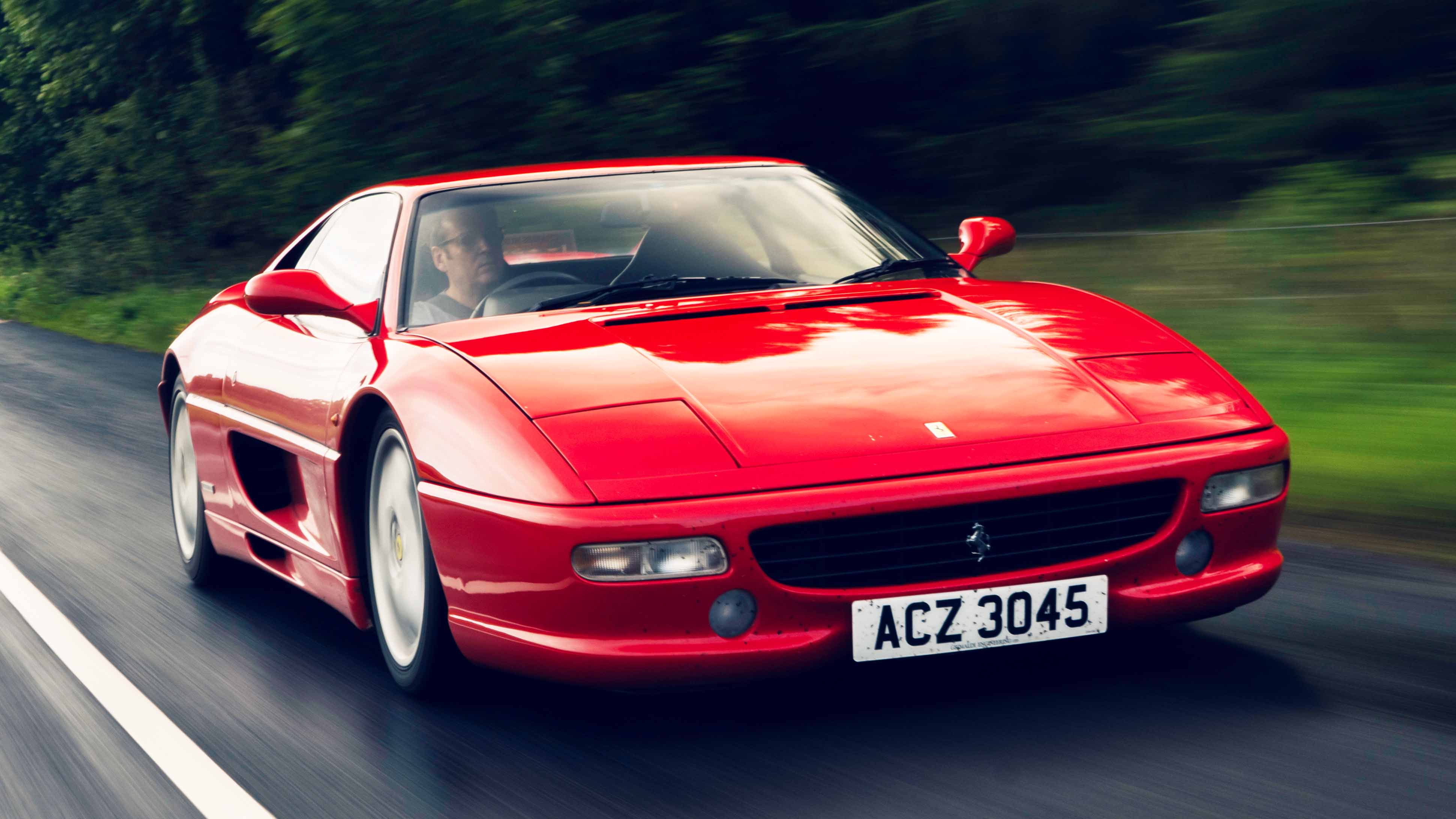
Guide d'achat - Ferrari F355, la dernière Ferrari pure
La F355 est la dernière Ferrari pure — un chef-d'œuvre V8 de 375 ch à 8 250 tr/min qui a défini la supercar à moteur central. Voici tout ce que vous devez savoir avant d'en acquérir une.
mars 2026
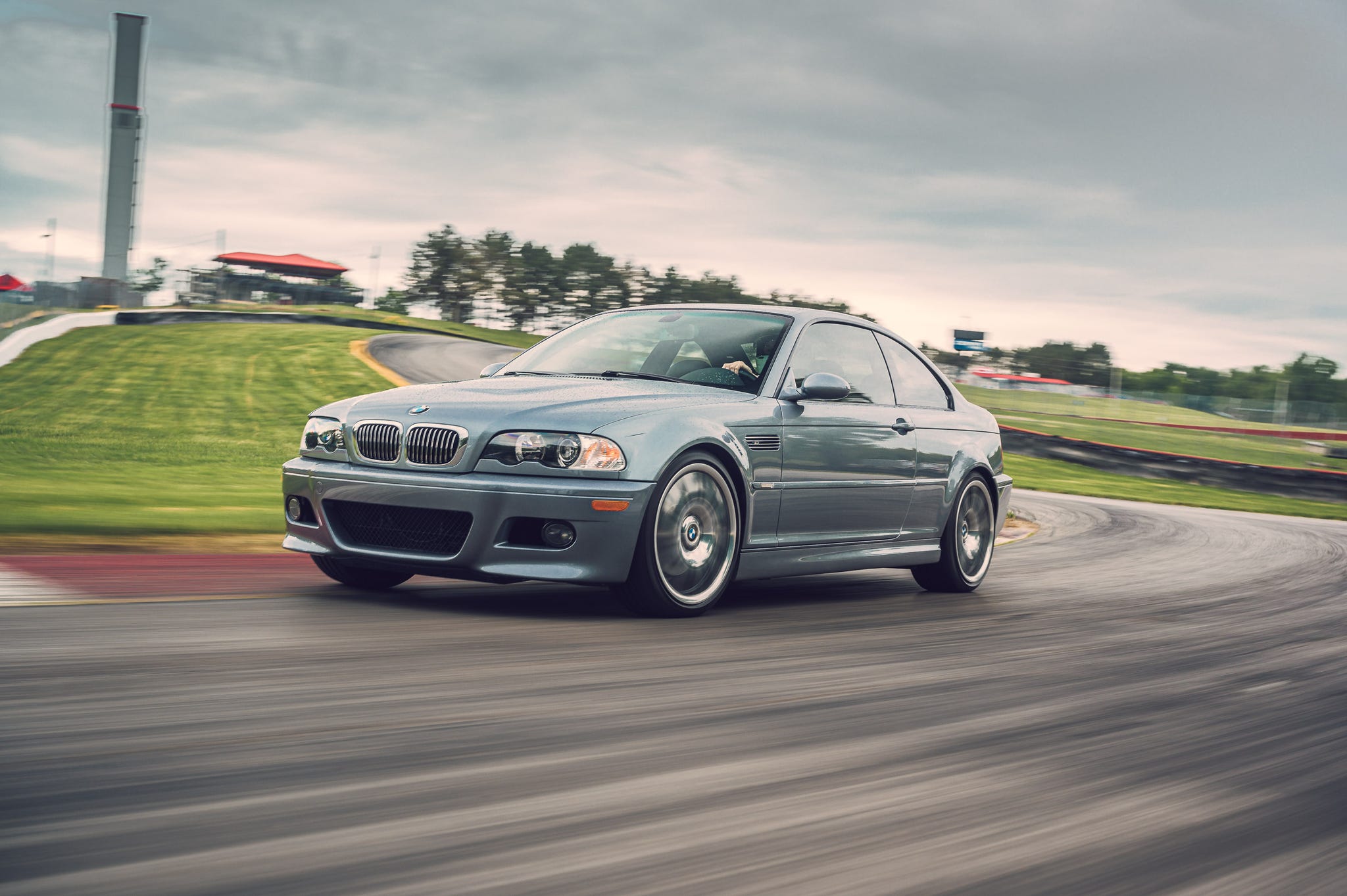
Guide d'Achat - BMW M3 E46, Tout ce que Vous Devez Savoir Avant d'Acheter
La E46 M3 est la dernière M3 véritablement analogique — moteur S54 à haut régime, boîte de vitesses manuelle précise et un châssis réglé pour les sensations. Voici tout ce que vous devez savoir pour en acheter une en toute connaissance de cause : fissures du sous-châssis, coussinets de bielle, VANOS, SMG vs manuelle, variantes et prix actuels du marché.
mars 2026
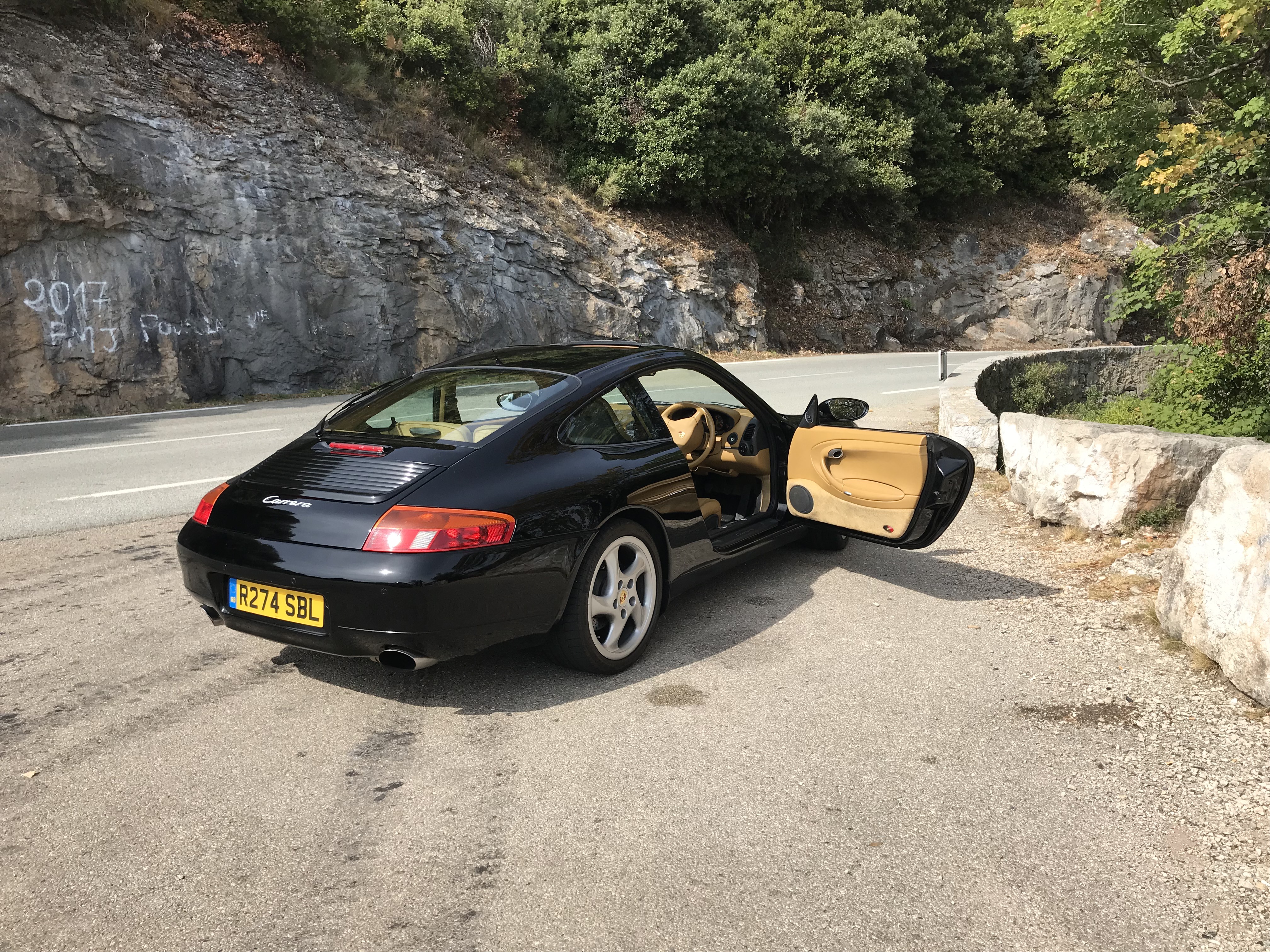
Guide d'Achat - Porsche 911 996, Tout ce que Vous Devez Savoir Avant d'Acheter
La 996 est la voiture la plus incomprise de la lignée 911. Ce guide complet couvre l'historique du modèle, les variantes de moteur, le problème du roulement IMS, le bore scoring, l'inspection avant l'achat, les coûts d'entretien, et quelles variantes acheter — et éviter.
Parcourez les routes que vous venez de lire
L'adhésion The Stable arrive bientôt — un abonnement pour chaque itinéraire sélectionné de notre bibliothèque, avec points de rallye détaillés, guides gastronomie & vins et hébergements. À partir de $6.97/mois.