
BMW M3 E46 Buying Guide: Everything You Need to Know Before You Buy
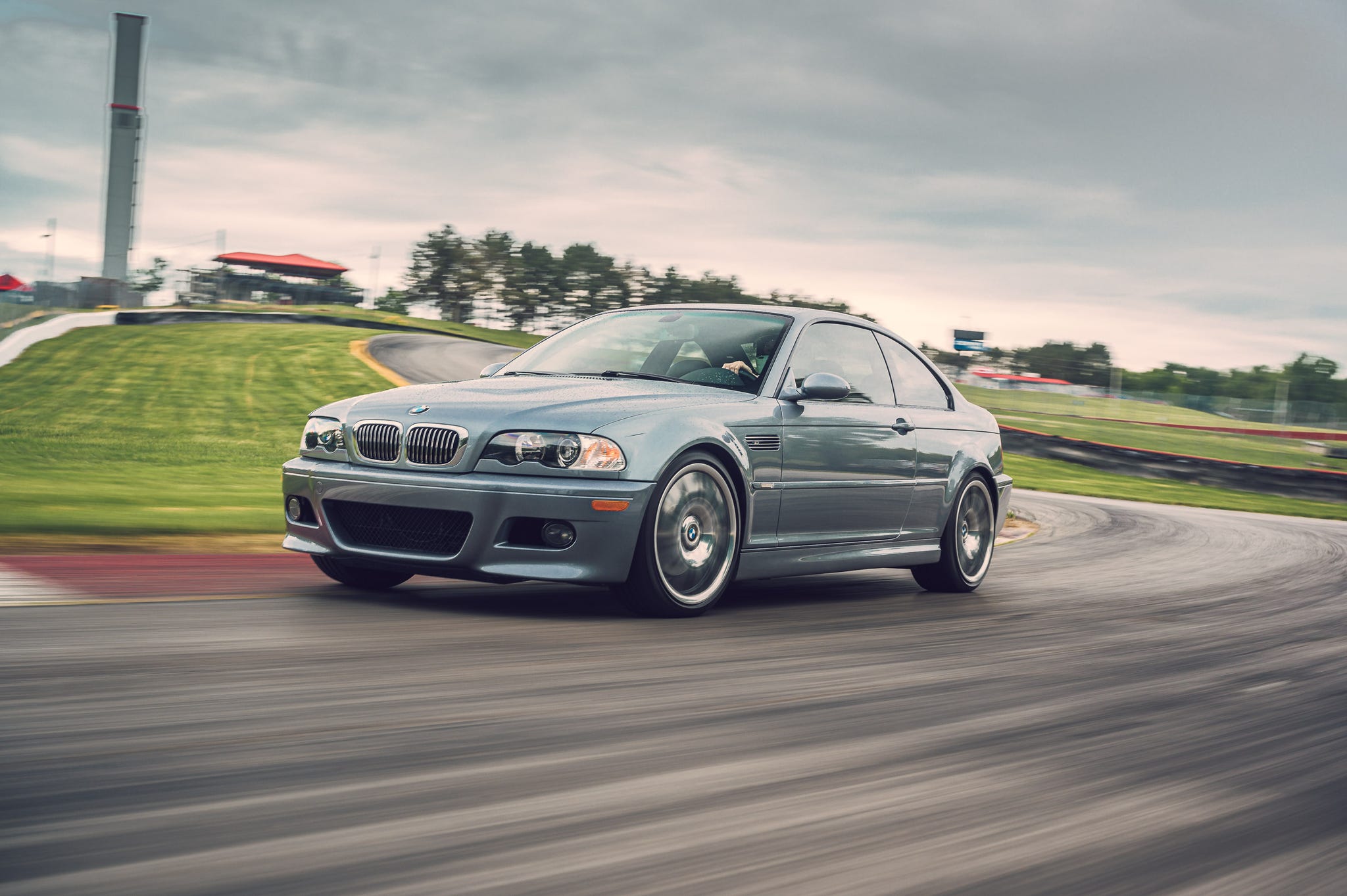
The E46 M3 is, by almost universal consensus, the last truly analogue M3. It arrived at the precise moment when BMW's engineers still believed that a naturally aspirated inline-six, a precise manual gearbox, and a chassis tuned for feel rather than lap times was the correct answer to the question of what a driver's car should be. Everything that came after - the turbocharged V8 of the E92, the twin-turbocharged inline-six of the F80 - was faster, more capable, and in many ways more accomplished. None of them felt quite like this.
Produced from 2000 to 2006 at BMW's Regensburg factory, the E46 M3 was built in sufficient numbers (84,383 examples) to be genuinely usable as a daily driver, yet rare enough in well-preserved form to have become a serious collector's car. Prices for the best examples have risen steadily throughout the 2020s, and the window for buying a clean, unmodified car at a sensible price is narrowing. This guide covers everything you need to know to buy one well.
Model History and Significance
The E46 M3 was unveiled as a prototype at the Frankfurt Motor Show in September 1999 and shown in production form at Geneva in March 2000. It replaced the E36 M3, a car that had been criticised in some quarters - particularly in the United States - for being somewhat softened compared to the original E30 M3 homologation special. BMW's response with the E46 was emphatic.
The new car used a platform that was 70 per cent more rigid than the E36, with a wheelbase extended by 31mm to 2,731mm. The suspension architecture - MacPherson struts at the front, multi-link at the rear - was shared with the standard E46 3 Series, but virtually every component was replaced or substantially uprated by BMW Motorsport. Stiffer springs and dampers, thicker anti-roll bars (26mm front, 21.5mm rear), and steel ball joints in the rear suspension links all contributed to a chassis that felt genuinely taut without being punishing on the road.
The brakes were equally serious: cross-drilled and vented discs measuring 325mm at the front and 328mm at the rear, with a two-piece construction to reduce thermal deformation under repeated hard use.
Production ran until August 2006, by which point BMW had delivered 84,383 customer cars. The breakdown by variant is instructive: 16,038 left-hand-drive coupes, 12,510 right-hand-drive coupes, and 26,202 US-market coupes, alongside 4,822 LHD convertibles, 7,234 RHD convertibles, and 17,577 US convertibles. The coupe was always the more popular and more dynamic choice; the convertible, while sharing the same mechanical package, carries a significant weight penalty.
The S54 Engine
The heart of the E46 M3 is the S54B32, a 3,246cc naturally aspirated inline-six that represents the ultimate expression of BMW's long-running M-series six-cylinder architecture. It produces 343PS (338bhp) at 7,900rpm and 365Nm (269lb-ft) of torque at 4,900rpm in European specification, with a redline of 8,000rpm. North American cars were rated at 333bhp due to emissions calibration differences, though the fundamental engine is identical.
The S54 achieves its outputs through a combination of technologies that were genuinely impressive for a production engine of the early 2000s. Six individual throttle bodies - one per cylinder - provide instantaneous throttle response that no single-throttle-body engine can match. BMW's Double VANOS system continuously adjusts the timing of both the intake and exhaust camshafts, optimising power delivery across the entire rev range. The compression ratio is a high 11.5:1, requiring premium fuel, and the bore and stroke of 87mm × 91mm give the engine a slightly undersquare character that favours torque at lower revs while still enabling the high-rpm power delivery the redline demands.
The block is cast iron - heavier than the aluminium M54 used in standard E46 models, but stronger and better suited to the stresses of high-rpm operation. The crankshaft, connecting rods, and pistons are all forged. The complete engine weighs approximately 148kg.
The S54 is not related to the M54 beyond sharing a displacement figure. Where the M54 is a refined, long-service-interval road engine, the S54 is a bespoke motorsport-derived unit that requires more attentive maintenance and rewards that attention with one of the most characterful driving experiences of its generation.
Variants
Coupe (Manual)
The standard E46 M3 Coupe with the Getrag 420G six-speed manual gearbox is the variant that most buyers should target. It weighs approximately 1,550kg, offers the full 343PS, and provides the direct mechanical connection between driver and drivetrain that defines the E46 M3 experience. The gearbox is precise and well-weighted, with a throw that rewards deliberate inputs rather than hurried ones.
Coupe (SMG)
The Sequential Manual Gearbox II (SMG II) was introduced in March 2001 and offered as an alternative to the manual. It is an electro-hydraulically actuated manual transmission - the same Getrag unit, with the clutch and gear selection automated by a hydraulic system controlled by paddle shifters or the gear lever. When functioning correctly, it shifts faster than any human can manage manually and offers eleven driving programmes including a launch control function.
The SMG's reputation among owners is, however, mixed. The system has multiple potential failure points, and repairs can be expensive. A standard manual is universally preferred by enthusiasts, and SMG cars command meaningfully lower prices on the used market - typically 25 to 30 per cent less than equivalent manual examples.
Convertible
The E46 M3 Convertible uses the same S54 engine and mechanical package as the coupe but weighs 1,686kg - 136kg more. The additional weight comes from the folding hood mechanism and the structural reinforcement required to compensate for the absence of a fixed roof. The result is a car that is measurably less dynamic than the coupe, with greater scuttle shake and less chassis rigidity. It is, nonetheless, a genuinely enjoyable open-top grand tourer and commands a modest price premium over equivalent coupes in some markets due to its relative rarity.
Competition Package (ZCP)
Introduced in 2005 for the North American market, the Competition Package (also known as the M3 CS in some markets) added a number of CSL-inspired enhancements to the standard coupe. These included 19-inch BBS alloy wheels, larger two-piece cross-drilled brake rotors, a quicker steering rack, Alcantara interior trim, M Track Mode for the Dynamic Stability Control system, and the exclusive Interlagos Blue paint option. ZCP cars are highly sought after by enthusiasts and command a premium of approximately $7,000 to $10,000 over comparable standard coupes.
CSL (Coupe Sport Lightweight)
The M3 CSL is the definitive E46 M3. Produced exclusively for European markets between September 2002 and December 2003, only 1,383 examples were built - 841 left-hand drive and 542 right-hand drive. It was offered in just two colours: Silver-Grey Metallic (935 units) and Black Sapphire Metallic (448 units).
The CSL shed 110kg compared to the standard coupe, achieving a kerb weight of 1,385kg. Weight was saved through a carbon fibre reinforced plastic (CFRP) roof - the first on a BMW M production car - an aluminium bonnet, thinner rear glass, and composite materials throughout the front apron, rear diffuser, and intake manifold. The interior was stripped of the radio and automatic climate control, with lightweight door panels and bucket seats fitted as standard.
The engine was tuned to 360PS through modified camshafts and valves, and the CSL was offered exclusively with the SMG II transmission. Its Nürburgring Nordschleife lap time of 7 minutes 50 seconds was a benchmark for road cars of its era.
CSL values have risen substantially. Current market prices range from approximately $79,500 to $121,000 in the UK, with low-mileage examples in exceptional condition exceeding $127,000. The CSL is a serious collector's car and should be purchased only with full specialist inspection and documented provenance.
M3 GTR Strassenversion
Ten road-legal M3 GTR Strassenversion cars were built in 2001 as homologation specials for the American Le Mans Series. Each was powered by a 3,997cc naturally aspirated V8 producing 350PS - an engine never used in any other BMW production car. With a kerb weight of 1,350kg and a price of $270,000 new, the GTR Strassenversion is effectively a racing car with number plates. It is mentioned here for completeness; it is not a car that prospective buyers will encounter.
Known Issues
The E46 M3 has a well-documented set of mechanical vulnerabilities. None of them are reasons to avoid the car, but all of them must be understood and either already addressed or factored into the purchase price.
Rear Subframe Cracking
This is the E46 M3's most significant structural issue and the one that requires the most careful pre-purchase investigation. The problem is not the subframe itself - a robust tubular steel component - but the sheet metal of the car's floorpan at the four main subframe mounting points. BMW's original design did not provide sufficient reinforcement at these points to handle the torsional forces generated by the suspension and differential under sustained use. Over time, fatigue cracks develop in the sheet metal around the mounting holes.
The issue affects all model years and both body styles. It is not limited to high-mileage or track-driven cars; examples with modest mileage and gentle use have been found to have cracking. Worn rear subframe bushings and rear trailing arm bushings (RTABs) accelerate the problem by allowing excessive movement of the subframe.
Early-stage cracking is often invisible without removing the subframe entirely, which makes a definitive pre-purchase inspection difficult. Symptoms of a developing problem include clunking or thudding from the rear under hard acceleration, rear-end instability over uneven surfaces, and imprecise handling. More advanced cracking may be visible with a bright light and a clean inspection of the mounting area, but should not be relied upon as a definitive check.
Repair involves removing the rear subframe, welding the cracked area, and installing a reinforcement kit - steel plates welded around the subframe mounts to distribute load over a larger area. Companies including BimmerWorld, Turner Motorsport, and Redish Motorsport produce well-regarded kits. Preventative reinforcement on a car with no existing cracks costs approximately $1,500 to $2,500 in labour and parts. If significant cracking has already occurred, costs can rise to $3,000 to $5,000 or more.
When buying, prioritise cars that have had this reinforcement professionally completed and can document it. If the car has not been reinforced, treat the repair as a near-certain future cost and negotiate accordingly.
S54 Rod Bearing Failure
The S54's rod bearings are a known wear item that, if neglected, can result in catastrophic engine failure. The causes are well understood: the engine's high-revving nature places significant stress on the bearings, and this stress is compounded by extended oil change intervals and the use of modern engine oils with reduced ZDDP (zinc dialkyldithiophosphate) content. BMW's original recommended service intervals of 8,000 to 11,000 miles are now widely considered too long for an engine of this specification.
The bearings were designed for oils meeting the older API SL standard, which contained higher levels of ZDDP. Modern oils, reformulated to protect catalytic converters, have lower ZDDP levels that are less effective at protecting the S54's bearings under sustained high-rpm use.
Symptoms of worn bearings include a metallic knocking sound under load, a drop in oil pressure, metal particles in the oil at service, and rough idling. If any of these symptoms are present, the engine requires immediate attention.
Preventative replacement is the correct approach. The consensus among specialists is that bearings should be inspected or replaced at 60,000 miles for street-driven cars, and earlier for cars with any track use. Parts cost approximately $500 to $1,000 for quality replacement bearings; labour adds $1,500 to $3,000 depending on location. Using a ZDDP oil additive at every oil change and shortening service intervals to 5,000 miles or fewer are both strongly recommended for ongoing maintenance.
When inspecting a prospective purchase, ask specifically whether the rod bearings have been replaced and at what mileage. A car with documented preventative bearing replacement is worth a meaningful premium over one without.
VANOS System Failure
The S54 uses BMW's Double VANOS system, which continuously adjusts the timing of both the intake and exhaust camshafts using hydraulic pressure. The system is effective when functioning correctly, providing the broad power delivery that makes the S54 tractable at low revs while still enabling its high-rpm performance.
VANOS failures are common on high-mileage S54 engines and typically result from seal deterioration, oil contamination, or solenoid failure. Symptoms include rough idling, power loss (particularly at higher revs), hesitation under acceleration, increased oil consumption, and illumination of the check engine light with VANOS-specific fault codes.
The leading specialist for S54 VANOS rebuild kits is Beisan Systems, whose kits address the inherent weaknesses of the original BMW seals and solenoids with upgraded components. A VANOS rebuild using a Beisan kit is a well-understood repair that can be performed by a competent independent BMW specialist. Costs vary by market, but budget approximately $800 to $1,500 for parts and labour combined.
Diagnosis involves an OBD scan for VANOS-specific fault codes, followed by physical inspection of the unit. The repair is not trivial - incorrect re-timing of the VANOS can result in bent valves - and should be entrusted to a specialist familiar with the S54 specifically.
SMG Transmission Issues (SMG-equipped cars only)
The SMG II system has multiple potential failure points. The most common include pump motor failure (caused by brush wear and carbon dust buildup), pump relay failure, clutch slave cylinder blowout, clutch position sensor (PLCD) failure, and sensor strip wiring degradation. Individual repairs range from relatively inexpensive (a relay replacement costs approximately $0 in parts) to substantial (a pump motor replacement costs around $300 in parts plus three hours of labour; a full hydraulic unit replacement from BMW costs approximately $3,200).
The cumulative cost of maintaining an SMG over many years can be significant, and the system requires a specialist familiar with its specific failure modes for accurate diagnosis. Many technicians misdiagnose SMG issues as clutch problems, leading to unnecessary and expensive clutch replacements.
If purchasing an SMG car, a manual gearbox conversion is a viable option and is popular among owners who want the E46 M3 experience without the SMG's complexity. The conversion cost is broadly comparable to a single major SMG repair.
Additional Items to Check
Beyond the headline issues, a thorough pre-purchase inspection should cover the following:
The cooling system is a known weak point on all E46 models. The expansion tank, thermostat housing, water pump, and associated plastic components are prone to failure and should be replaced as a set if not recently done. Budget approximately $500 to $800 for a comprehensive cooling system refresh.
The rear trailing arm bushings (RTABs) wear progressively and, when worn, contribute to the subframe cracking issue described above. Replacement is straightforward and inexpensive, but should be confirmed as recently completed.
The differential and gearbox mounts deteriorate with age and can cause clunking under load. Replacement is inexpensive and worthwhile on any car with high mileage or unknown service history.
Inspect the condition of the interior carefully. The M-specific Alcantara steering wheel and handbrake surround wear noticeably with use, and replacement parts are expensive. Check the condition of the seat bolsters, which show wear on frequently driven cars.
Pre-Purchase Inspection Checklist
The following items should be specifically addressed in any pre-purchase inspection, ideally by a BMW specialist with direct experience of the E46 M3:
| Area | What to Check |
|---|---|
| Rear subframe | Cracks at mounting points; evidence of reinforcement work |
| Engine | Rod bearing replacement history; oil pressure at idle and at speed |
| VANOS | Fault codes; idle quality; power delivery across rev range |
| SMG (if applicable) | All programmes functional; no error codes; clutch bite point correct |
| Cooling system | Expansion tank, thermostat housing, water pump condition and age |
| Rear suspension | RTAB condition; trailing arm condition; subframe bush condition |
| Differential | No leaks; no clunking under load |
| Bodywork | Panel gaps; paint consistency; evidence of accident damage |
| Interior | Steering wheel wear; seat bolster condition; all electrics functional |
| Service history | Oil change intervals; evidence of major work (bearings, VANOS, subframe) |
An oil analysis - sending a sample of the current engine oil to a laboratory for metal content testing - is a worthwhile additional step that can reveal bearing wear before it becomes audible.
Running Costs
The E46 M3 is not an expensive car to run by the standards of its performance, but it is not cheap either. The S54 engine requires premium fuel, shorter-than-standard oil change intervals (5,000 miles is the recommended maximum for a car used enthusiastically), and periodic attention to the items described above. Tyres are a meaningful ongoing cost: the car runs 225/45 R18 fronts and 255/40 R18 rears in standard specification, and quality performance tyres in these sizes are not inexpensive.
| Item | Approximate Cost |
|---|---|
| Oil service (every 5,000 miles) | $200–$350 |
| Cooling system refresh (one-off) | $500–$800 |
| Rod bearing replacement (preventative) | $2,000–$4,000 |
| VANOS rebuild (Beisan kit) | $800–$1,500 |
| Subframe reinforcement (preventative) | $1,500–$2,500 |
| Subframe repair + reinforcement | $3,000–$5,000+ |
| Rear tyre set | $400–$600 |
| Brake fluid flush (annual) | $100–$150 |
Price Guide (2025)
| Variant | Condition | Price Range (USD) |
|---|---|---|
| Coupe, Manual, high mileage | Fair–Good | $15,000–$25,000 |
| Coupe, Manual, low mileage | Very Good–Excellent | $30,000–$50,000 |
| Coupe, SMG | Fair–Good | $12,000–$22,000 |
| Convertible, Manual | Good–Excellent | $20,000–$40,000 |
| Competition Package (ZCP) | Good–Excellent | $35,000–$55,000 |
| CSL | Good | $80,000–$120,000 |
| CSL | Exceptional/low mileage | $120,000–$150,000+ |
Manual coupes command a consistent premium of approximately 25 to 30 per cent over equivalent SMG cars. The Competition Package adds approximately $7,000 to $10,000 over a comparable standard coupe. CSL values have risen substantially and continue to appreciate; exceptional examples are now trading above $127,000 in the UK market.
Which One to Buy
For most buyers, the answer is a manual coupe with a documented service history that specifically addresses the rod bearings and subframe. The ideal example has had its rod bearings replaced preventatively, its subframe reinforced, and its cooling system refreshed. It will have a full service history with oil changes at no more than 5,000-mile intervals, and it will be unmodified or sympathetically modified with reversible changes.
The Competition Package is worth seeking out if budget allows. The quicker steering rack, larger brakes, and 19-inch wheels make a meaningful difference to the driving experience, and ZCP cars have appreciated more strongly than standard coupes.
The CSL is a collector's car first and a driver's car second. Its SMG-only transmission and stripped interior make it less suited to regular road use than the standard coupe, and its price now places it firmly in the investment category. Buy one only if you can afford to hold it, maintain it properly, and accept that it will spend time with a specialist rather than in daily use.
Avoid SMG cars unless the price is sufficiently low to justify the potential repair costs, or unless you are specifically drawn to the SMG experience and have budgeted accordingly.
The Verdict
The E46 M3 is one of the great driver's cars of the modern era, and its reputation has only grown as the cars that followed it have become more powerful, more capable, and progressively more removed from the analogue experience it represents. The S54 engine is exceptional - linear, characterful, and rewarding in a way that turbocharged engines rarely are. The chassis is balanced and communicative. The manual gearbox is one of the best of its generation.
The known issues - subframe cracking, rod bearings, VANOS - are real and must be taken seriously, but they are also well understood and manageable. A car that has been properly maintained and has had its known vulnerabilities addressed is a reliable and deeply satisfying ownership proposition. The key is buying the right car in the first place: one with documented history, addressed maintenance items, and a specialist inspection behind it.
Buy the best car you can afford. The premium for a clean, well-maintained example over a neglected one is always worth paying.