
Ferrari F355 Buying Guide: The Last Pure Ferrari
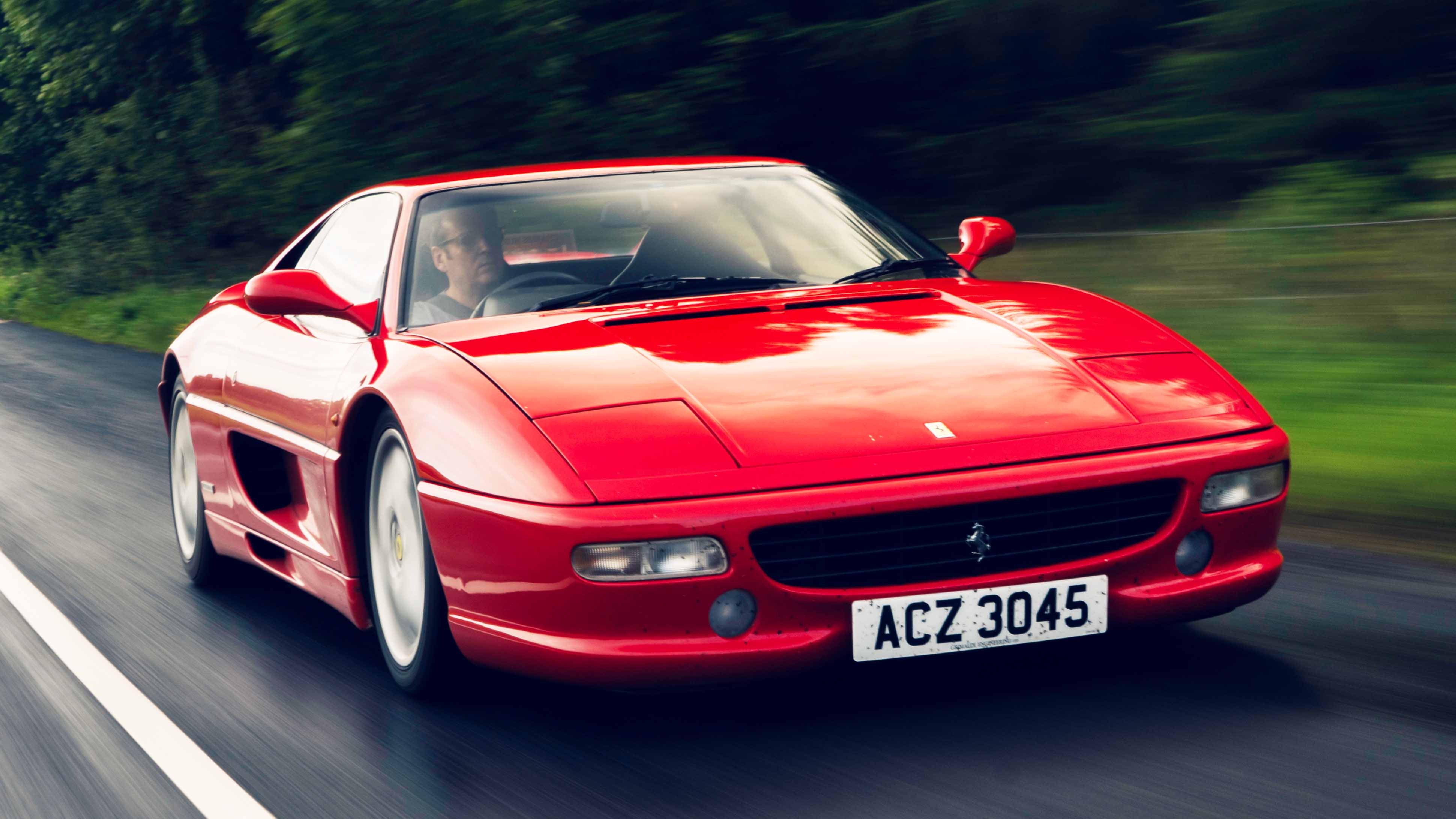
There is a school of thought - not without merit - that the Ferrari F355 represents the last pure Ferrari. It arrived in 1994 as the most comprehensively re-engineered V8 Ferrari in the model's history, addressed every legitimate criticism of its predecessor the 348, and delivered a driving experience so visceral and so precisely calibrated that it earned the kind of devotion usually reserved for cars costing three times as much. It was the car that made Jeremy Clarkson weep on television. It was the car that sold more than 11,000 examples in five years. And it was the car that, for many enthusiasts, defined what a mid-engined Italian supercar should be before electronics, turbos, and hybrid systems changed the formula permanently.
Today, the F355 is firmly in the collector tier. Values have been rising since 2024, manual examples command significant premiums over F1 cars, and the rarest variants - the GTS, the Serie Fiorano Spider - are approaching prices that would have seemed implausible a decade ago. For buyers approaching the market in 2025 and 2026, understanding the variant hierarchy, the mechanical realities of a 25-year-old high-performance car, and the inspection priorities is essential to making a sound purchase.
History and Significance
The F355 (internally designated Type F129) was introduced in May 1994 at the Geneva Motor Show, replacing the Ferrari 348 after five years of production. The 348 had been criticised for its handling - specifically a tendency towards snap oversteer at the limit - and for its engine, which felt strained compared to the 308 and 328 it had replaced. Ferrari's response was comprehensive: approximately 85 per cent of the F355 was new, including the engine, the suspension geometry, the aerodynamics, and the interior.
The design was by Pininfarina under Maurizio Corbi, and it involved over 1,300 hours of wind tunnel analysis. The result retained the classic mid-engined Ferrari silhouette - including the iconic flying buttress rear window, a styling cue traceable to the 1965 Dino 206 GT - while adding an underbody fairing and revised tail profile to generate meaningful downforce at speed. The car was longer, lower, and wider than the 348, and it looked it.
The F355 was initially launched as the Berlinetta coupe. The GTS targa and Spider convertible followed in 1995. In 1997, Ferrari introduced the F1 paddle-shift gearbox option - the first electrohydraulic automated manual transmission offered in a road car - making the F355 a landmark in automotive history as well as a driver's car. Production ran until 1999, with 11,273 examples built across all variants.
The F129 Engine: Five Valves and Titanium
The F129 engine is the heart of the F355 and the primary reason for its enduring reputation. It is a 3,495 cc naturally aspirated V8 with a 90-degree vee angle, a flat-plane crankshaft, and a dry-sump lubrication system. The bore is 85 mm and the stroke 77 mm, giving a compression ratio of 11:1. Power output is 375 hp (280 kW) at 8,250 rpm; torque is 268 lb-ft (363 Nm) at 6,000 rpm. Specific output is 109 bhp per litre - exceptional for a naturally aspirated road car in 1994.
The defining feature of the F129 is its five-valve-per-cylinder configuration: three intake valves and two exhaust valves per cylinder, for a total of 40 valves. This arrangement dramatically increases intake permeability at high engine speeds, allowing the engine to breathe freely to its 8,500 rpm redline. The result is an engine that rewards revving in a way that few road cars can match - the power builds progressively from 4,000 rpm and then surges with increasing urgency as the needle approaches the red line, accompanied by an intake howl that is among the most celebrated sounds in automotive history.
The connecting rods are forged from Ti6-Al-4V titanium alloy, reducing reciprocating mass and contributing to the engine's ability to rev freely. The engine management system was Bosch Motronic 2.7 on early cars, upgraded to the more refined M5.2 from 1996 onwards. The M5.2 cars are generally considered more driveable and less prone to flat spots.
The valve guide issue is the most serious mechanical concern on early F355s. Pre-1998 cars were fitted with bronze valve guides that are prone to wear, leading to oil consumption, loss of compression, and ultimately catastrophic engine failure. Ferrari issued a factory recall and replacement programme, but not all cars received the upgrade. The fix involves replacing the bronze guides with sintered steel items - a procedure requiring engine removal and a full valve train rebuild. Any buyer of a pre-1998 car must verify in writing that this work has been completed.
Variants: The Complete Hierarchy
| Variant | Production | Transmission | Key Characteristics |
|---|---|---|---|
| Berlinetta Manual | 3,829 | 6-speed manual | Purist's choice; highest structural rigidity |
| Berlinetta F1 | 1,042 | F1 paddle-shift | First road car with F1 gearbox (from 1997) |
| GTS Manual | 2,048 | 6-speed manual | Removable targa hardtop; most desirable variant |
| GTS F1 | 529 | F1 paddle-shift | Rarer than Berlinetta F1 |
| Spider Manual | 2,664 | 6-speed manual | Full convertible; slight structural compromise |
| Spider F1 | 1,053 | F1 paddle-shift | Open-top with paddle-shift |
| Spider Serie Fiorano | 104 | F1 (74) / Manual (26) | US-market limited edition; highest values |
| F355 Challenge | 108 | 6-speed manual | Factory race car; specialist ownership |
Berlinetta - The Purist's Entry Point
The Berlinetta is the most structurally rigid F355 and, for most buyers, the most rewarding to drive. The fixed roof eliminates the slight scuttle shake present in the Spider and provides a more direct, communicative driving experience. Manual Berlinettas are the most common F355 on the market and represent the most accessible entry point. The F1 Berlinetta commands a significant discount - approximately 30–40 per cent - reflecting the market's strong preference for the manual gearbox.
GTS - The Targa Icon
The GTS features a removable hardtop panel that stows behind the seats, providing open-air motoring without the structural compromises of a full convertible. It is the rarest of the three main body styles and commands the highest values of any standard F355 variant - approximately 15–20 per cent more than an equivalent Berlinetta. The GTS is the most visually distinctive F355 in profile, and its combination of open-air driving and structural rigidity makes it the most versatile variant.
Spider - The Open-Air Choice
The Spider is the most popular F355 in the US market and offers a full convertible roof. It is slightly heavier than the Berlinetta and has marginally less structural rigidity, but the driving experience remains exceptional. The roof mechanism is generally reliable but requires inspection; replacement hoods are expensive. Spider values sit below the GTS but above the Berlinetta at equivalent specification.
The F1 Gearbox - What You Need to Know
The F1 paddle-shift gearbox, introduced in 1997, was a genuine technological landmark - the first electrohydraulic automated manual transmission in a road car. It is not a dual-clutch system; it is a conventional six-speed manual gearbox with hydraulic and solenoid actuators replacing the clutch pedal and gear lever. Shifts are sequential and can be brutal at low speeds. The system requires a driving style adapted to its characteristics: smooth throttle inputs, anticipating gear changes, and avoiding the kind of stop-start urban driving that accelerates clutch wear.
The F1 gearbox has a reputation for reliability issues that, while manageable, require attention. The OEM F1 pump and accumulator are considered marginal by specialists; the standard upgrade is to replace the pump with the more robust unit from the Ferrari 360 Modena. An early indicator of accumulator failure is more than five flashes of the F1 warning light when the car is started after sitting overnight. Clutch wear is faster than on a manual car, particularly in urban use; replacement clutches are expensive. F1 cars are priced significantly below equivalent manual cars, and for buyers who value the driving engagement of a manual gearbox, the discount is well-earned.
F355 Challenge - The Race Car
The F355 Challenge was produced from 1995 for Ferrari's single-model Challenge racing series. Factory conversion kits were supplied to dealers at approximately $30,000 over the road car price. The Challenge cars feature revised suspension, enhanced braking, a stripped interior, and roll cage. A small number were converted for road legality. These are specialist collector's items requiring specialist ownership.
Known Issues and What to Inspect
Valve Guides (Pre-1998 Cars - Critical)
As described above, the bronze valve guides fitted to pre-1998 cars are a potential catastrophic failure point. This is the single most important item to verify before purchasing any F355 built before the 1998 model year. Demand written documentation from a specialist confirming the guides have been replaced with sintered steel items. If this cannot be confirmed, budget for the work immediately - it is an engine-out procedure costing $5,100–$10,000 in the UK.
Cam Belt (Critical for All Cars)
The F355 cam belt must be replaced every three years or 30,000 miles, whichever comes first. This is an interference engine: a snapped belt causes catastrophic valve-to-piston contact, destroying the engine. The service requires partial engine removal and costs $2,100–$4,400 in the UK or $7,000–$15,000 in the US depending on the extent of additional work. Verify the date and mileage of the last service in the documentation. If it cannot be confirmed, budget for immediate replacement.
Catalytic Converters
The factory ceramic catalytic converters are prone to core disintegration. The ceramic substrate breaks down and loosens within its housing, triggering the "Slow Down Light" (SDL) warning on the dashboard - a red warning indicating catalytic converter overtemperature. This warning should never be bypassed; it indicates a genuine problem requiring investigation. Later 1999 model year cars were fitted with more durable metal-core catalysts. Replacement catalysts are expensive; aftermarket options are available but vary in quality.
Exhaust Manifolds
The factory exhaust manifolds are known to crack, particularly at the collector welds. A ticking noise on cold start that fades as the engine warms is a classic symptom. Cracked manifolds also lean out the fuel mixture, increasing exhaust gas temperatures and accelerating catalytic converter degradation. Replacement manifolds - either OEM or aftermarket - cost several thousand pounds or dollars.
Engine Seal Leaks
Oil leaks from valve cover gaskets, camshaft seals, and various O-rings are common on cars of this age. Due to the F355's tight engine packaging, many seal replacements require partial or full engine removal, significantly increasing labour costs. Inspect the underside of the engine carefully; oil tracking down from higher points can be misleading about the actual leak source.
F1 Gearbox (F1 Cars)
Beyond the pump and accumulator issues described above, the F1 gearbox selector forks can wear, causing difficulty engaging odd-numbered gears (1st, 3rd, 5th). This is a known failure mode and requires gearbox removal to address. Worn engine mounts can exacerbate the problem by allowing the linkage to contact the crossmember. Test the F1 system thoroughly: all gears should engage cleanly, the system should not hesitate or hunt between gears, and the clutch engagement should be smooth and progressive.
Electrical System
The F355's electrical system is a source of intermittent gremlins. The fuse box is a known failure point, particularly if water has ingressed or if the car has been stored in damp conditions. Symptoms include malfunctioning headlights, indicator relays, and alarm systems. ECU issues - including intermittent dropping of an engine bank - can also occur, sometimes linked to poor battery or charging system health. The dashboard warning lights should all illuminate on start-up and extinguish within a few seconds; any that remain on or fail to illuminate require investigation.
Interior Degradation
The F355's interior uses soft-touch coatings on the switchgear that degrade with age, becoming sticky and unpleasant. The leather dashboard covering is also prone to shrinkage, causing unsightly wrinkling and separation. These are cosmetic issues but expensive to rectify properly; specialist interior restoration costs $2,500–$6,400 depending on the extent of the work.
Buttress Corrosion
On Berlinetta and GTS models, the flying buttress area where the rear window surround meets the rear deck is prone to corrosion. Fresh paint in this area is not necessarily a red flag - most cars will have had repairs - but untreated bubbling or poorly executed repairs indicate neglect. Inspect carefully.
Pre-Purchase Inspection Checklist
Documentation
- Full service history with specialist stamps and invoices
- Written confirmation of valve guide replacement (pre-1998 cars)
- Cam belt service date and mileage (must be within 3 years)
- Evidence of F1 pump and accumulator upgrade (F1 cars)
- MOT/inspection history with no advisory patterns suggesting deferred maintenance
Engine and Drivetrain
- Cold start: listen for exhaust manifold ticking (fades when warm = cracked manifold)
- Idle quality: smooth, no misfires, no smoke from exhaust
- Oil leaks: inspect underside and engine bay carefully
- Rev to 8,000 rpm: power should build progressively and cleanly
- Cam belt: verify date and mileage in documentation
- Valve guides: verify replacement in documentation (pre-1998)
- F1 system (F1 cars): all gears engage cleanly, no hesitation, no excessive flash count on start
Catalytic Converters and Exhaust
- No SDL warning light
- No white chalky residue from exhaust (indicates cat breakdown)
- No ticking on cold start (exhaust manifold crack indicator)
Chassis and Brakes
- Brake pedal feel: firm and progressive
- No pulling under braking
- Suspension: no clonks over bumps
Bodywork
- Panel gaps: consistent throughout
- Paint: check for colour variation, overspray, signs of respray
- Buttress area: inspect for corrosion or poor repairs
- Undertray: intact with correct rubber-tipped fasteners
Interior and Electrical
- All warning lights illuminate and extinguish correctly
- No SDL warning light
- Switchgear: check for stickiness (soft-touch coating degradation)
- Dashboard leather: check for shrinkage and separation
- A/C: cold air from all vents
- F1 system (F1 cars): smooth operation, correct flash count on start
Running Costs
| Item | Frequency | Estimated Cost (UK) |
|---|---|---|
| Annual service (oil, filters, inspection) | Annual | $900–$1,500 |
| Cam belt service (engine-out) | Every 3 years | $2,100–$4,400 |
| Brake fluid flush | Every 2 years | $200–$400 |
| Tyres (set of four) | As required | $750–$1,000 |
| Valve guide replacement (if required) | Once | $5,100–$10,000 |
| Exhaust manifold replacement | If required | $2,500–$6,400 |
| Catalytic converter replacement | If required | $1,900–$5,100 |
| F1 pump and accumulator upgrade | Once (F1 cars) | $1,000–$1,900 |
| F1 clutch replacement | As required (F1 cars) | $1,900–$3,800 |
| Interior restoration (sticky switches/dash) | Once | $2,500–$6,400 |
| Annual budget (well-sorted car) | Annual | $3,800–$6,400 |
2025 Market Price Guide
| Variant | Entry-Level | Mid-Range | Exceptional |
|---|---|---|---|
| Berlinetta Manual | $82,500 | $114,000–$152,000 | $203,000+ |
| Berlinetta F1 | $57,000 | $82,500–$108,000 | $140,000+ |
| GTS Manual | $114,000 | $152,000–$203,000 | $254,000+ |
| GTS F1 | $89,000 | $114,000–$152,000 | $191,000+ |
| Spider Manual | $95,500 | $127,000–$178,000 | $229,000+ |
| Spider F1 | $70,000 | $95,500–$127,000 | $165,000+ |
| Spider Serie Fiorano | $178,000 | $229,000–$279,000 | $356,000+ |
| F355 Challenge | $152,000 | $203,000–$254,000 | $318,000+ |
Prices are approximate UK market values. US dollar values are broadly equivalent at current exchange rates. Low-mileage (under 15,000 miles), single-owner, full-history examples command premiums of 20–40 per cent above mid-range values.
The Verdict
The F355 is one of the great driver's cars of the 1990s and, at current values, still represents extraordinary performance and character per pound. The engine is a masterpiece - the five-valve V8 at 8,000 rpm is an experience that no turbocharged modern supercar can replicate - and the chassis, while demanding, rewards skilled drivers with a precision and feedback that later, more electronically assisted Ferraris deliberately suppressed.
The ownership risks are real and the maintenance costs are significant, but they are manageable with the right approach: buy a well-documented car, use a specialist for all servicing, and budget realistically for the cam belt service cycle and potential valve guide work on pre-1998 cars.
Best buy: The Berlinetta manual with a verified valve guide replacement (if pre-1998), a current cam belt service, and a full specialist service history. This is the most rewarding F355 to drive and the most accessible entry point into the model.
Best value: The F1 Berlinetta offers the same engine, chassis, and visual drama at a 30–40 per cent discount. The F1 gearbox requires adapted driving technique and higher clutch maintenance costs, but for buyers who understand its characteristics, it represents strong value.
Aspire to: The GTS. The targa roof, the structural rigidity, the rarity, and the visual drama of the flying buttress profile make it the definitive F355. Values reflect this, but the premium is justified.
Avoid: Any car without a documented cam belt service within the last three years. Any pre-1998 car without documented valve guide replacement. Any F1 car with an unserviced pump and accumulator or a high clutch wear reading.