
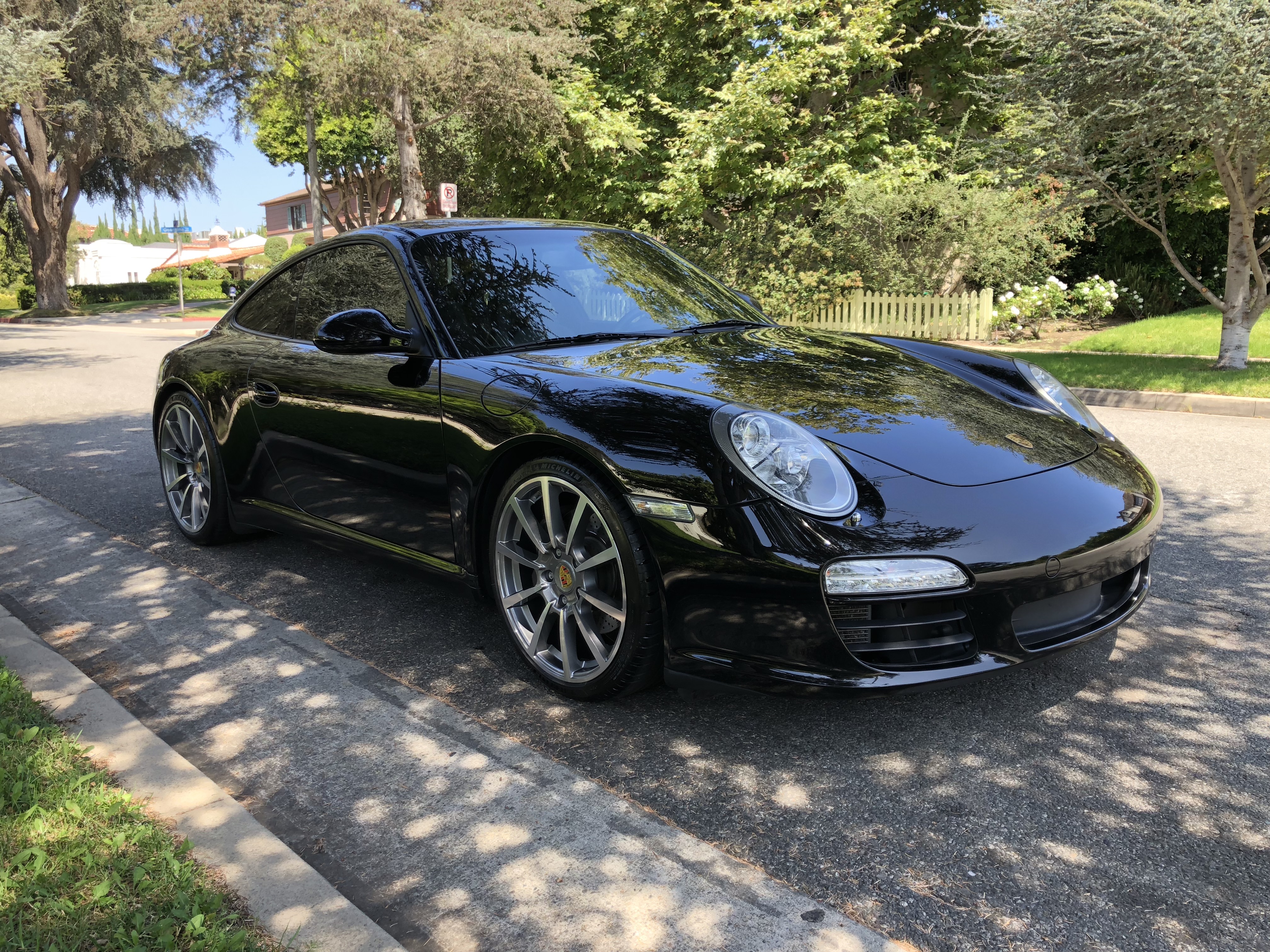
- IMS bearing failure is the critical technical risk for 997.1 Carrera/S models; prioritize cars with documented replacement.
- The 997.2 Carrera S offers the best blend of performance, modern engine, and value for most enthusiasts.
- Expect to pay $40,000-$80,000 for a good example, with GT and Turbo variants significantly higher.
- Check for bore scoring, especially on 997.1 3.8L engines, using a boroscope if possible.
- Inspect convertible tops and Targa roof mechanisms thoroughly for proper operation and leaks.
- Verify service records for consistent oil changes and major maintenance, especially for PDK fluid.
- Look for consistent panel gaps and paintwork to rule out accident damage.
Porsche 911 997 Buying Guide: Everything You Need to Know Before You Buy
The 997 occupies a particular place in the 911 story. It arrived in 2004 as a deliberate course correction — a return to the oval headlights and more traditional 911 proportions that the 996 had abandoned — and it succeeded in winning back the enthusiasts who had been alienated by its predecessor. It was better-looking, better-finished, and better-received than the 996, and it went on to become one of the most celebrated 911 generations.
It is also a car with its own specific failure modes, a generation split that matters enormously when buying, and a price structure that rewards the buyer who understands the differences between variants. This guide covers everything you need to know.
Model History and Context
The 997 was introduced at the Frankfurt Motor Show in 2003 and went on sale in 2004 as a 2005 model year car. Porsche described it as a new model rather than a facelift of the 996, and while it shared the same basic architecture and wheelbase, the styling, interior, and chassis were substantially revised. The most visible change was the return to round headlights — a direct response to the criticism that had followed the 996's "fried egg" units — along with a wider rear body (88 mm broader than the 996) and a more upright windscreen.
The generation divides into two distinct phases that are not merely cosmetic revisions but represent meaningfully different cars:
997.1 (2004–2008) — The first phase used an evolution of the M96 engine from the 996, designated M97, in naturally aspirated Carrera form. The Turbo and GT variants continued to use the Mezger engine. The 997.1 retained the 5-speed Tiptronic S automatic as its only automatic option.
997.2 (2009–2012) — The second phase was a more substantial update. New engines with direct fuel injection (DFI) were introduced across the Carrera range, producing more power with better fuel economy. The 5-speed Tiptronic was replaced by Porsche's new PDK dual-clutch transmission, which transformed the car's performance and usability. The 997.2 also introduced electric power steering on Carrera models — a change that drew criticism from some purists but improved efficiency.
The 997 was succeeded by the 991 in 2012, which introduced a longer wheelbase and a more significant departure from the classic 911 formula.
Engine Variants and Specifications
997.1 Generation (2004–2008)
The naturally aspirated 997.1 Carrera models used the M97 engine, an evolution of the 996's M96. The 3.6-litre unit in the standard Carrera produced 325 PS (321 hp); the 3.8-litre unit in the Carrera S produced 355 PS (350 hp). Both are naturally aspirated flat-sixes with VarioCam Plus variable valve timing and lift on the intake side.
The Turbo used the Mezger engine in 3.6-litre twin-turbocharged form with Variable Turbine Geometry (VTG) turbochargers — a technology previously seen only in diesel engines — producing 480 PS with an overboost function that temporarily raised torque to 680 Nm. The GT3 and GT2 also used Mezger-derived engines.
997.2 Generation (2009–2012)
The 997.2 introduced direct fuel injection (DFI) to the Carrera range, a significant engineering change that increased power, reduced fuel consumption, and improved emissions. The 3.6-litre Carrera engine now produced 345 PS; the 3.8-litre Carrera S produced 385 PS. The GTS, introduced in 2011, used a 408 PS version of the 3.8-litre engine with wider bodywork and sport-focused equipment.
The 997.2 Turbo retained the Mezger engine but with DFI added, producing 500 PS in standard form and 530 PS in Turbo S specification.
| Variant | Generation | Engine | Displacement | Power | Torque |
|---|---|---|---|---|---|
| Carrera | 997.1 | M97 | 3.6L | 325 PS / 321 hp | 370 Nm |
| Carrera S | 997.1 | M97 | 3.8L | 355 PS / 350 hp | 400 Nm |
| GT3 | 997.1 | Mezger | 3.6L | 415 PS / 409 hp | 405 Nm |
| Turbo | 997.1 | Mezger | 3.6L TT | 480 PS / 473 hp | 620 Nm |
| GT2 | 997.1 | Mezger | 3.6L TT | 530 PS / 523 hp | 680 Nm |
| Carrera | 997.2 | MA1 DFI | 3.6L | 345 PS / 340 hp | 390 Nm |
| Carrera S | 997.2 | MA1 DFI | 3.8L | 385 PS / 380 hp | 420 Nm |
| GTS | 997.2 | MA1 DFI | 3.8L | 408 PS / 402 hp | 440 Nm |
| Turbo | 997.2 | Mezger DFI | 3.8L TT | 500 PS / 493 hp | 650 Nm |
| Turbo S | 997.2 | Mezger DFI | 3.8L TT | 530 PS / 523 hp | 700 Nm |
| GT3 RS 4.0 | 997.2 | Mezger | 4.0L | 500 PS / 493 hp | 460 Nm |
| GT2 RS | 997.2 | Mezger DFI | 3.8L TT | 620 PS / 612 hp | 700 Nm |
Transmission Options
The 997.1 offered a 6-speed manual gearbox and a 5-speed Tiptronic S automatic. The 997.2 replaced the Tiptronic with the 7-speed PDK dual-clutch transmission, which is genuinely excellent — faster than the manual in outright acceleration and well-suited to both spirited driving and daily use. The manual remains the preferred choice for driving purists; the PDK is the better choice for those who want maximum performance or use the car as a daily driver.
Model Variants
Carrera — The base rear-wheel-drive coupé. Available in 997.1 (3.6L, 325 PS) and 997.2 (3.6L DFI, 345 PS) forms. The entry point to 997 ownership.
Carrera S — Adds the 3.8-litre engine, larger brakes, and PASM (Porsche Active Suspension Management) as standard. The S is the sweet spot of the naturally aspirated range for most buyers, offering meaningfully more performance and better-equipped suspension without the complexity of all-wheel drive.
Carrera 4 / Carrera 4S — All-wheel-drive versions of the Carrera and Carrera S respectively. The 4S uses the wider Turbo bodyshell, making it visually the most imposing naturally aspirated 997. The AWD system adds weight but provides additional security in poor conditions.
Targa 4 / Targa 4S — The glass-roof Targa body style, available only in all-wheel-drive form. Distinctive and practical, though the glass roof adds weight and the mechanism requires maintenance.
Cabriolet — Available across the Carrera and Carrera 4 lines. The hood is well-engineered and the car retains most of the coupé's structural rigidity.
GTS (997.2 only) — Introduced in 2011, the GTS is widely regarded as the best naturally aspirated 997. It combines the 3.8-litre engine tuned to 408 PS with the wider Turbo bodyshell, sport exhaust, sport seats, and a range of performance-focused equipment as standard. Available in rear-wheel drive and all-wheel drive. Values have held exceptionally well.
Turbo / Turbo S — The 997.1 Turbo with its Mezger engine and VTG turbochargers was a landmark car — 480 PS, all-wheel drive, and 0–100 km/h in 3.9 seconds. The 997.2 Turbo added DFI and the PDK option, raising power to 500 PS. The Turbo S (997.2) produced 530 PS and came with PDCC (Porsche Dynamic Chassis Control), PCCB ceramic brakes, and Sport Chrono as standard. Both generations are highly desirable.
GT3 / GT3 RS — Track-focused, naturally aspirated, rear-wheel drive. The 997.1 GT3 produced 415 PS; the 997.2 GT3 produced 435 PS. The GT3 RS variants add wider bodywork and further weight reduction. The 997.2 GT3 RS 4.0, with its 500 PS 4.0-litre Mezger engine, is one of the most celebrated 911s ever built and commands prices to match.
GT2 / GT2 RS — The most extreme 997. The 997.1 GT2 produced 530 PS; the 997.2 GT2 RS produced 620 PS, making it the most powerful 911 of its era. Both are rear-wheel drive only and represent the ultimate expression of the 997 generation.
Sport Classic (997.2) — Limited to 250 units, the Sport Classic featured a ducktail spoiler, double-bubble roof, and Porsche's first manual transmission in a 911 Turbo-engined car since the 930. Highly collectible.
Known Mechanical Issues
The 997's failure modes divide clearly between the 997.1 and 997.2 generations, and between the M97 naturally aspirated engine and the Mezger units used in Turbo and GT variants.
IMS Bearing (997.1 M97 Engine)
The M97 engine in the 997.1 carries the same intermediate shaft bearing concern as the 996's M96. However, the situation is more nuanced than with the 996. Early 997.1 cars (2005 model year, built before approximately February 2005) used a small single-row IMS bearing with a meaningful failure risk. From approximately February 2005 onwards, Porsche fitted a larger single-row bearing that is substantially more robust and has a very low failure rate.
The practical implication: 2005 model year 997.1 cars built before the bearing change are the highest-risk group. Cars from 2006 onwards have the larger bearing and are considered low risk, though LN Engineering's IMS Solution retrofit remains available for those who want additional peace of mind. A diagnostic scan and oil filter inspection for metallic debris remain important checks on any 997.1.
Bore Scoring (997.1 and 997.2)
Bore scoring affects the 997 as it does the 996, but with a different pattern. On the 997.1, the 3.8-litre Carrera S engine is more susceptible than the 3.6-litre Carrera unit, though neither is immune. The 997.2's DFI engines can also exhibit bore scoring, though the prevalence appears lower than on the 997.1 3.8-litre.
Contributing factors are the same as with the 996: cold-weather short-trip driving, infrequent oil changes, and specific piston-to-cylinder tolerances. A borescope inspection is essential for any 997.1 Carrera S and advisable for all naturally aspirated 997s. Look particularly for sooty exhaust tips on one side of the car, which is a classic indicator of bore scoring in progress.
Rear Main Seal (RMS) Leak
The RMS leak is a common finding on 997.1 models, as it was on the 996. The seal sits between the engine and transmission; replacement requires engine removal and is typically combined with a clutch service. Budget approximately $900–$1,600 for the combined job at an independent specialist.
Coolant Pipe Failure (Mezger Engine — Turbo, GT2, GT3)
The Mezger-engined Turbo, GT2, and GT3 variants share the coolant pipe issue described in the 996 guide. The coolant pipe fittings are bonded with adhesive rather than mechanically fastened; adhesive failure causes sudden catastrophic coolant loss and engine overheating. This is a well-known issue with a well-understood fix: the fittings should be pinned or welded to prevent detachment.
Confirm this work has been done on any Mezger-engined 997. If it has not, factor the cost (approximately $500–$1,000) into your offer and have it done immediately after purchase. This is non-negotiable.
High-Pressure Fuel Pump Failure (997.2 DFI Engine)
The direct injection engines in the 997.2 use a high-pressure fuel pump (HPFP) driven off the left camshaft. This pump is a known failure point, with symptoms including difficulty starting, rough running, and loss of power. Failure is not catastrophic in the way that bore scoring or IMS failure can be, but it is an expensive repair (approximately $1,000–$2,000 for the pump and labour) and should be checked via diagnostic scan during a PPI.
Carbon Buildup (997.2 DFI Engine)
Direct fuel injection bypasses the intake valves with fuel, meaning the cleaning effect of fuel washing over the valves is absent. Over time, carbon deposits accumulate on the intake valves and ports, reducing airflow and affecting performance. This is a maintenance item rather than a failure, but it requires a walnut blasting or chemical cleaning procedure (approximately $500–$1,000) at intervals of approximately 40,000–60,000 miles.
PDK Transmission (997.2)
The PDK is an excellent transmission, but early units can develop sensor failures and mechatronic unit issues. A full diagnostic scan is essential on any 997.2 PDK car. The PDK fluid and filter should be changed at approximately 40,000-mile intervals; many cars arrive at sale with this service overdue. Budget approximately $500–$1,000 for a PDK service at an independent specialist.
Electrical Issues
The 997 is generally reliable electrically. Known issues include alternator cable failures on early 997.1 models (causing battery drain and electrical gremlins), PCM (Porsche Communication Management) screen failures, and occasional sensor issues. A diagnostic scan will reveal any stored fault codes.
Suspension
PASM (Porsche Active Suspension Management) dampers are fitted to Carrera S and higher models and are subject to wear. Leaking or failed PASM dampers are a common finding on higher-mileage cars; replacement is expensive (approximately $2,000–$3,300 per axle). Coil spring breakage is also a known issue, particularly on cars that have been lowered or driven on poor roads. Inspect the suspension carefully and listen for any clunking or knocking over bumps.
Pre-Purchase Inspection Checklist
As with the 996, a professional PPI by an independent Porsche specialist is essential. The following checklist covers the critical areas specific to the 997.
Engine and Drivetrain
For 997.1 models, a borescope inspection of all six cylinders is mandatory — particularly on Carrera S (3.8L) models. Check for vertical scoring marks on the cylinder walls. Cut open the oil filter and inspect for metallic debris. Confirm the IMS bearing type (early 2005 cars have the smaller bearing; post-February 2005 and all 2006+ cars have the larger bearing). Check for RMS oil leaks between the engine and transmission.
For 997.2 models, the borescope inspection remains important. Additionally, check for HPFP fault codes via diagnostic scan. Inspect the intake valves for carbon buildup if the car has significant mileage without a documented walnut blasting service.
For all Mezger-engined cars (Turbo, GT2, GT3), confirm the coolant pipe fix has been performed. This is the most critical single check on these variants.
Service History
Complete, documented service history is non-negotiable. Look for annual oil changes using the correct specification oil. For 997.2 models, confirm PDK fluid changes have been performed at the appropriate intervals. For GT3 and GT2 models, look for evidence of correct break-in procedures and appropriate use.
A Porsche-specific diagnostic scan (PIWIS or equivalent) should be performed to check for fault codes and over-rev events. An over-rev history on a manual car indicates abusive driving and should be treated as a serious red flag.
Transmission
For manual cars, test all gears for smooth engagement. The shifter cables can stretch on higher-mileage cars, resulting in a vague or imprecise feel. For PDK cars, ensure smooth, rapid shifts without hesitation or clunking. For Tiptronic cars (997.1), check for smooth shifts without slipping.
Bodywork
Inspect panel gaps and paint depth for evidence of accident repair. Check the front bumper and hood for stone chip damage consistent with the claimed mileage and use. On cabriolets, operate the roof through several cycles and inspect the hood for tears or leaks.
Suspension and Brakes
On PASM-equipped cars, test both Normal and Sport modes to confirm the dampers are functioning correctly. Listen for clunking over bumps that could indicate worn bushings or broken springs. Inspect brake disc thickness and condition; on PCCB-equipped cars, inspect the ceramic rotors for chips or cracks (replacement cost is very high — budget $4,000–$8,000 per axle for PCCB rotors).
Running Costs
The 997 is more expensive to run than the 996 in some respects — particularly the 997.2 with its DFI engine and PDK transmission, which have their own specific service requirements — but it is a broadly similar ownership proposition.
Servicing
Annual oil changes are recommended regardless of mileage, using a quality fully synthetic 5W-40 or 0W-40. The DFI engines of the 997.2 are particularly sensitive to oil quality. An annual service at an independent specialist costs approximately $320–$520.
A full intermediate service (oil, filters, brake fluid) runs approximately $800–$1,300. A major service at 40,000 miles adds spark plugs and a more thorough inspection, typically $1,300–$2,400.
Common Maintenance Items
| Item | Approximate Cost |
|---|---|
| Annual oil service | $320–$520 |
| Full service (filters, brake fluid) | $800–$1,300 |
| Major service (spark plugs, full inspection) | $1,300–$2,400 |
| RMS replacement (with clutch) | $1,600–$2,600 |
| PDK service (fluid and filter) | $500–$1,000 |
| HPFP replacement (997.2) | $1,000–$2,000 |
| Carbon cleaning / walnut blast (997.2) | $500–$1,000 |
| Coolant pipe fix (Turbo/GT models) | $500–$1,000 |
| PASM damper replacement (per axle) | $2,000–$3,300 |
| Clutch replacement | $1,600–$2,600 |
| Tyre set (four) | $1,000–$1,800 |
| Brake pads and discs (front and rear) | $900–$1,800 |
Fuel Economy
Naturally aspirated Carrera models return approximately 22–27 mpg (US) in mixed driving. The Carrera S is slightly lower. The GTS, Turbo, and GT variants will be lower still under spirited use. All require premium unleaded fuel.
Which Variants to Buy and Avoid
The Best Buys
997.2 Carrera S or GTS (manual) — The 997.2 with its DFI engine and revised chassis is the most resolved naturally aspirated 997. The GTS is the pick of the range: it combines the 3.8-litre engine at 408 PS with the wider body, sport exhaust, and a comprehensive equipment list. A manual GTS is the benchmark naturally aspirated 997 for driving enthusiasts. Values have held well and will continue to do so.
997.2 Turbo or Turbo S — The 997.2 Turbo with PDK is a remarkable car — 500 PS, all-wheel drive, and the reliability of the Mezger engine with the convenience of the PDK. The Turbo S adds ceramic brakes, PDCC, and 530 PS. Both are highly desirable and represent strong value relative to their performance.
997.1 Turbo (Mezger engine) — The 997.1 Turbo with its VTG turbochargers and Mezger engine is one of the great 911s. Confirm the coolant pipe fix and you have a car with excellent long-term reliability prospects. Manual examples are particularly sought after.
997.2 GT3 / GT3 RS — For the track-focused buyer, the 997.2 GT3 and GT3 RS are exceptional. The GT3 RS 4.0 is one of the most celebrated 911s ever built. Values are high and rising.
Approach with Caution
997.1 Carrera S (3.8L, early 2005 build) — The 3.8-litre engine in early 997.1 cars is the highest-risk combination: the small IMS bearing and the greater bore scoring susceptibility of the 3.8-litre unit. A thorough PPI with borescope is essential. Cars built after February 2005 have the larger IMS bearing and are lower risk, but the bore scoring concern remains.
997.2 cars with high mileage and no PDK service — The PDK is robust but requires proper maintenance. A high-mileage 997.2 without a documented PDK fluid change is a potential liability.
Tiptronic-equipped 997.1 models — The 5-speed Tiptronic is a functional but dated transmission. Manual cars are significantly more desirable and easier to sell.
Cars with PCCB brakes in poor condition — Ceramic composite brakes are excellent when in good condition but extremely expensive to replace. Inspect them carefully; chips or cracks mean imminent replacement costs.
Unverified GT3 or GT2 cars — The high values of GT3 and GT2 models attract fraud. Verify the car's identity through the VIN, build sheet, and a specialist inspection. Ensure the car has not been used on track without appropriate maintenance.
Price Guide (2024–2025 Market)
The 997 market is strong, with the 997.2 generation commanding a meaningful premium over the 997.1 in most variants. GT and Turbo models have appreciated significantly.
| Variant | Price Range |
|---|---|
| Carrera 997.1 (manual) | $32,000–$52,000 |
| Carrera S 997.1 (manual) | $38,000–$65,000 |
| Carrera 997.2 (manual) | $52,000–$75,000 |
| Carrera S 997.2 (manual) | $58,000–$85,000 |
| GTS 997.2 (manual) | $85,000–$125,000 |
| Turbo 997.1 | $70,000–$110,000 |
| Turbo 997.2 | $90,000–$130,000 |
| Turbo S 997.2 | $115,000–$180,000 |
| GT3 997.1 | $100,000–$155,000 |
| GT3 997.2 | $130,000–$210,000 |
| GT3 RS 4.0 | $325,000–$520,000+ |
| GT2 RS | $260,000–$455,000+ |
The 997.2 GTS commands a significant premium over the Carrera S for good reason — it is a more complete car with higher specification and stronger residual values. The gap between 997.1 and 997.2 Carrera prices reflects the meaningfully better engine and transmission of the later cars.
Ownership Experience
The 997 is a more refined daily driver than the 996, with a better interior, improved NVH, and the option of the PDK transmission for those who want a more relaxed experience. It is also a more capable track car in GT3 and GT2 form, and a more composed grand tourer in Turbo specification.
The 997 community is active and well-resourced. Rennlist's 997 forum is the primary technical resource, with extensive threads on every known issue and its resolution. 911UK and PistonHeads provide additional community support. Finding a trusted independent Porsche specialist is as important for the 997 as it is for the 996 — main dealer servicing is not necessary and is significantly more expensive.
Parts availability is excellent. The 997 is recent enough that most components are still available from Porsche, and the aftermarket is comprehensive. The DFI engines of the 997.2 have their own specific service requirements (HPFP, carbon cleaning) that require a specialist familiar with these systems.
The 997 is a car that can be used daily without compromise. The PDK-equipped 997.2 in particular is a remarkably usable car — fast, comfortable, and practical enough for everyday use while remaining genuinely exciting when the road opens up. The manual cars require more engagement but reward it proportionally.
Verdict
The 997 is the most accessible point of entry into the modern 911 story — a car that combines the classic 911 silhouette with genuinely modern performance, reliability, and usability. The 997.2 generation is the better buy for most people: the DFI engine, PDK transmission, and revised chassis represent a meaningful step forward over the 997.1, and the bore scoring and IMS concerns are less acute.
For the buyer who wants the ultimate driving experience, the GT3 and GT2 variants are among the finest driver's cars ever built, and their values reflect this. For the buyer who wants a complete, usable sports car at a sensible price, the 997.2 Carrera S or GTS in manual form is the recommendation.
The 997.1 Turbo with its Mezger engine and VTG turbochargers is a special car — one of the great 911s — and represents strong value relative to its performance and engineering quality. Confirm the coolant pipe fix and you have a car that will reward ownership for years.
Total first-year budget recommendation:
| Variant | Purchase | First Year Running | Total |
|---|---|---|---|
| Carrera S 997.2 (manual) | $63,500–$82,500 | $4,400–$7,000 | $68,000–$89,500 |
| GTS 997.2 (manual) | $89,000–$121,000 | $5,100–$7,600 | $94,000–$128,000 |
| Turbo 997.1 | $76,000–$108,000 | $5,700–$8,900 | $82,000–$117,000 |
| Turbo 997.2 | $95,500–$127,000 | $5,700–$8,900 | $101,000–$136,000 |
The first-year running budget should include a PPI, an oil service, and a contingency for any items identified at inspection. On a well-maintained car, ongoing annual costs should be manageable within these figures.
The 997 is not a car to buy on price alone. Buy the best-documented, best-maintained example you can afford, prioritise the 997.2 generation for daily use, and do not skip the pre-purchase inspection. Done properly, 997 ownership is one of the great automotive experiences available at its price point.
Plus de Guides d'Achat
Recherches approfondies sur les voitures qui comptent
mars 2026
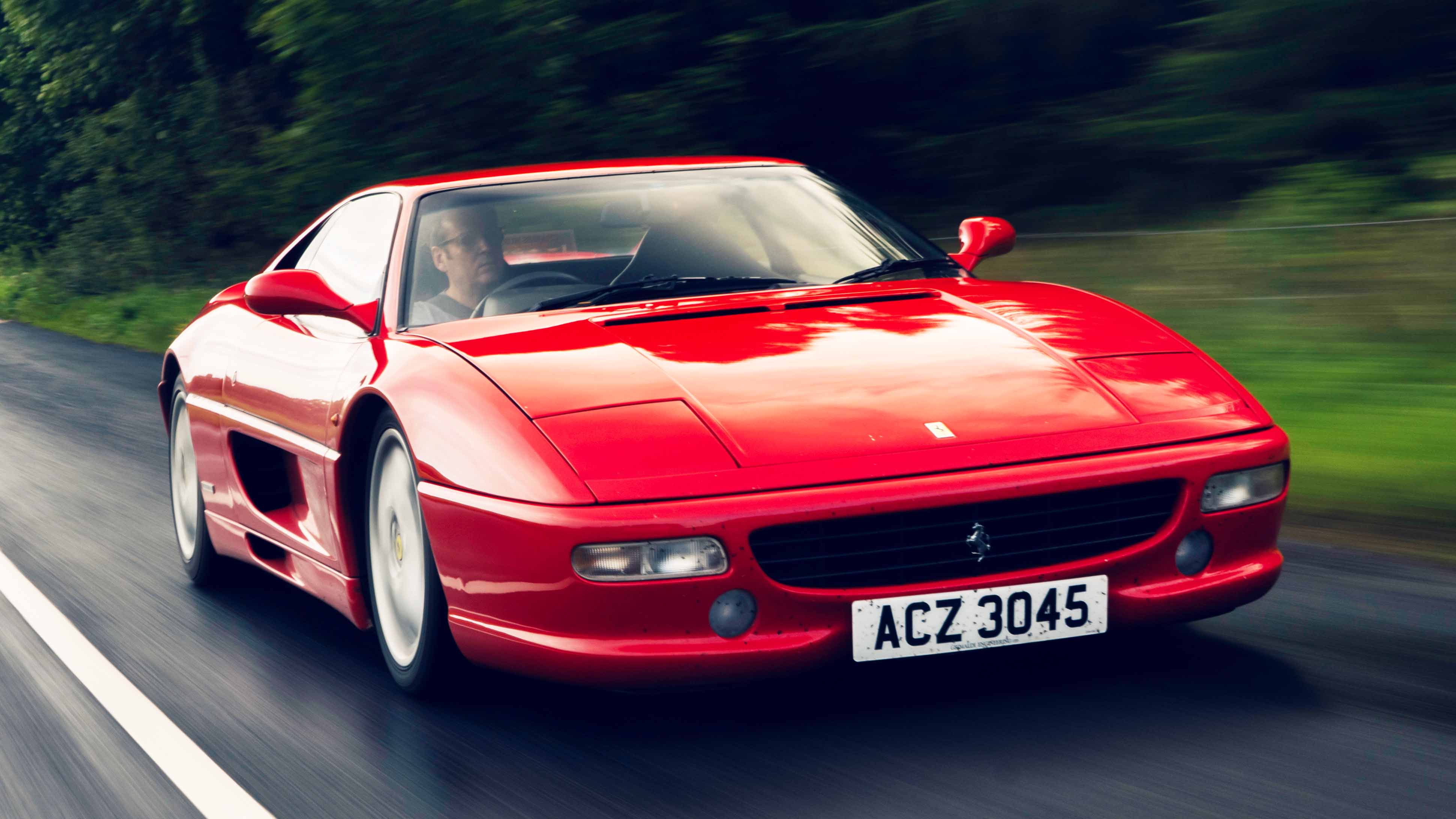
Guide d'achat - Ferrari F355, la dernière Ferrari pure
La F355 est la dernière Ferrari pure — un chef-d'œuvre V8 de 375 ch à 8 250 tr/min qui a défini la supercar à moteur central. Voici tout ce que vous devez savoir avant d'en acquérir une.
mars 2026
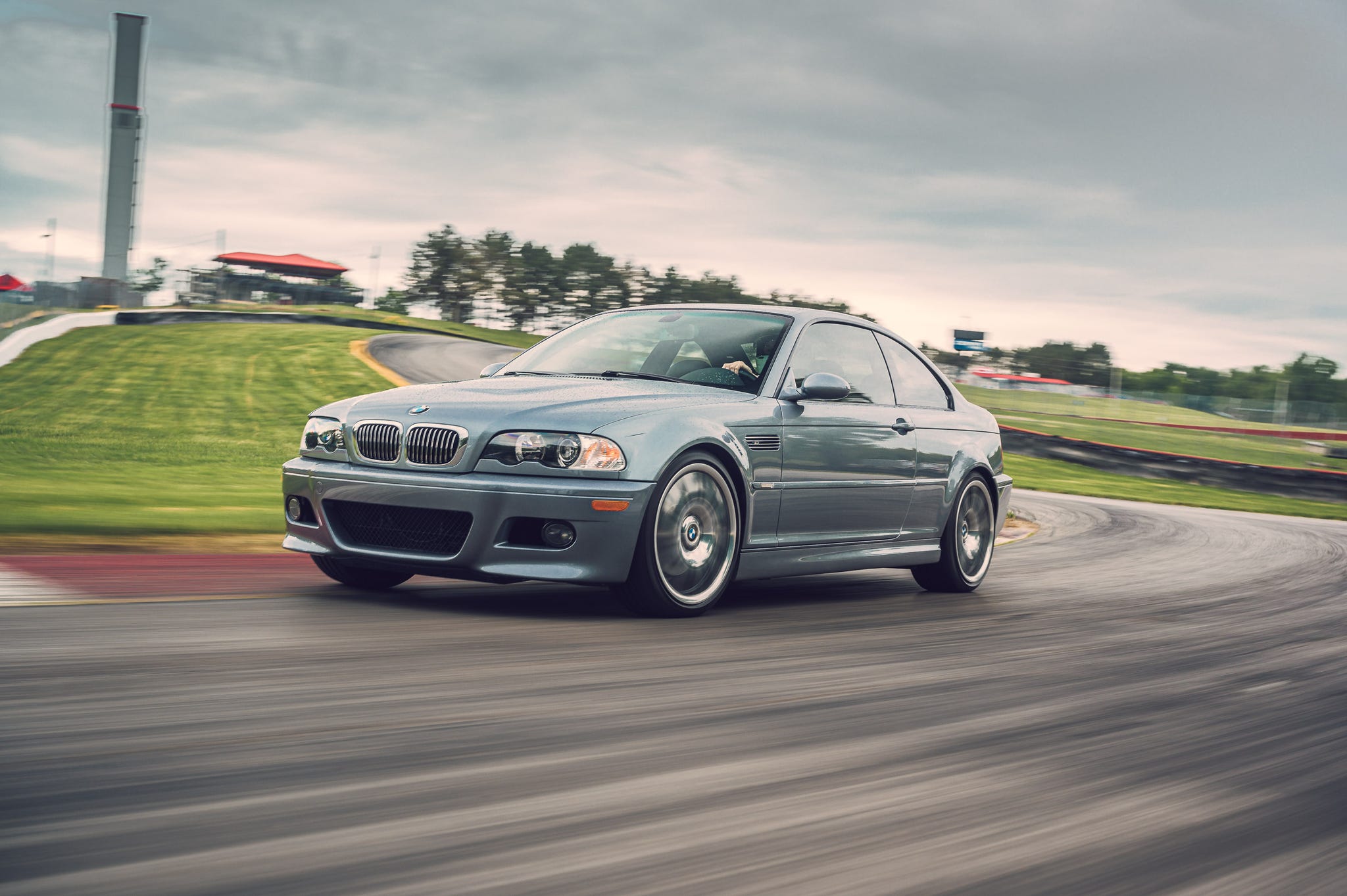
Guide d'Achat - BMW M3 E46, Tout ce que Vous Devez Savoir Avant d'Acheter
La E46 M3 est la dernière M3 véritablement analogique — moteur S54 à haut régime, boîte de vitesses manuelle précise et un châssis réglé pour les sensations. Voici tout ce que vous devez savoir pour en acheter une en toute connaissance de cause : fissures du sous-châssis, coussinets de bielle, VANOS, SMG vs manuelle, variantes et prix actuels du marché.
mars 2026
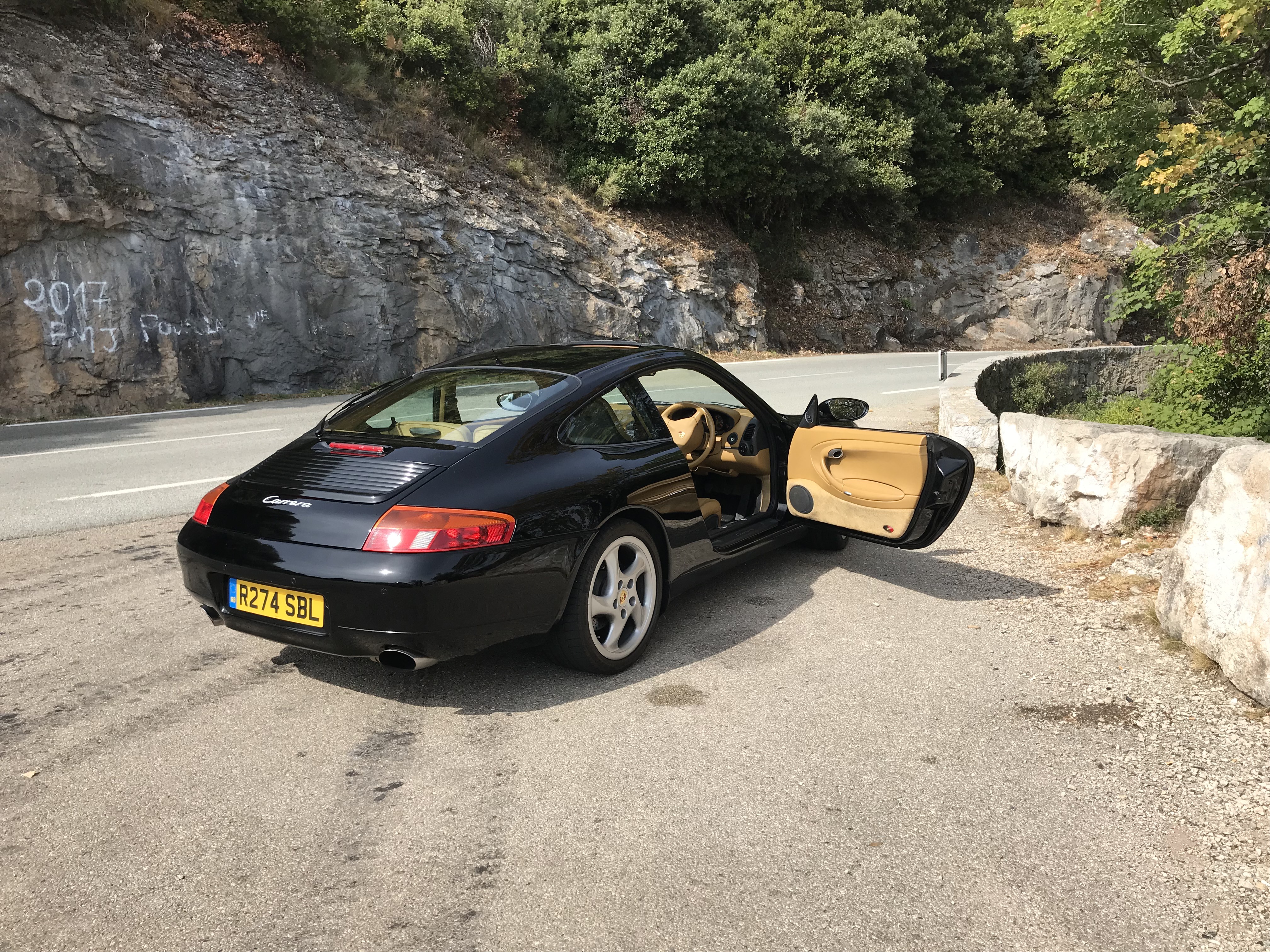
Guide d'Achat - Porsche 911 996, Tout ce que Vous Devez Savoir Avant d'Acheter
La 996 est la voiture la plus incomprise de la lignée 911. Ce guide complet couvre l'historique du modèle, les variantes de moteur, le problème du roulement IMS, le bore scoring, l'inspection avant l'achat, les coûts d'entretien, et quelles variantes acheter — et éviter.
Parcourez les routes que vous venez de lire
L'adhésion The Stable arrive bientôt — un abonnement pour chaque itinéraire sélectionné de notre bibliothèque, avec points de rallye détaillés, guides gastronomie & vins et hébergements. À partir de $6.97/mois.