
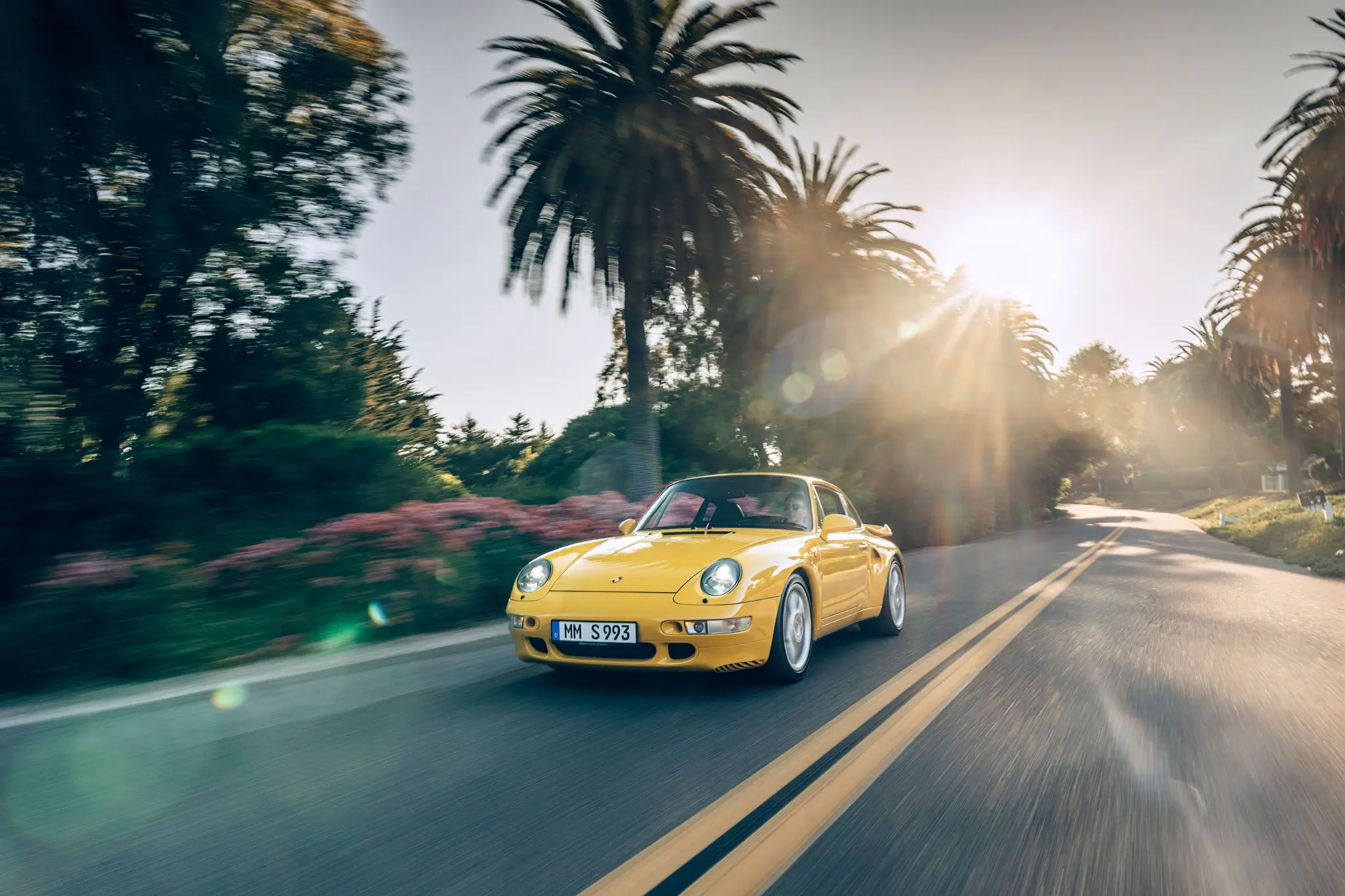
TL;DR for 993 Buyers:
- Last Air-Cooled 911: The 993 (1993-1998) is the final air-cooled 911, a highly sought-after classic and strong value retainer.
- Improved Handling: Features a new LSA multi-link rear suspension, significantly enhancing predictability and accessibility.
- Engine Robustness: The M64 flat-six is generally robust but has specific quirks.
- Oil Consumption: Normal and expected; up to 1 liter per 2,400 km is acceptable. Overfilling is detrimental.
- Critical Cooling Fan Belt: Inspect every 30,000 miles, replace every 60,000 miles or 5 years. Failure leads to catastrophic engine damage.
- No IMS Bearing Issue: Unlike 996/997, the 993's M64 engine does not have the problematic IMS bearing.
- Varioram (1996+): Adds 13 bhp and boosts mid-range torque on Carrera models; check for proper function.
Porsche 993: The Last Air-Cooled 911 — A Buyer's Guide
The Porsche 993 occupies a singular position in automotive history. Produced from 1993 to 1998, it was the last 911 to use an air-cooled engine — a lineage stretching back to 1963 — and the culmination of three decades of refinement on a single engineering theme. When Porsche switched to water cooling with the 996 in 1998, the 993 became not just a great sports car but a cultural artefact. Today, a well-chosen 993 is simultaneously one of the most rewarding cars to drive and one of the most reliable stores of value in the classic car market.
This guide covers everything a prospective buyer needs to know: the engineering story, every variant, the known issues, what to look for at inspection, and what to expect to pay in 2025.
A Brief History
The 993 replaced the 964 in 1993 and represented the most comprehensive redesign the 911 had received since the original. While the iconic roofline was retained, almost every other panel was new. Lead exterior designer Tony Hatter created a more aerodynamic, muscular body with integrated bumpers, flush-mounted windows, and wider flared fenders — a design so successful that it remains the template against which every subsequent 911 is measured.
Beneath the skin, the engineering changes were equally significant. The most important was the introduction of the LSA (Lightweight-Stable-Agile) aluminium multi-link rear suspension, a complete replacement for the semi-trailing arm arrangement that had given earlier 911s their reputation for snap oversteer. The new rear axle transformed the car's handling, making it far more predictable and accessible without sacrificing the directness that defines the 911 experience.
A new six-speed manual gearbox replaced the five-speed unit, and from 1996 the naturally aspirated Carrera models received the Varioram variable-length intake system — a clever mechanism that switches between long and short intake runners at around 5,000 rpm, boosting mid-range torque and adding 13 bhp over the earlier 272 bhp engine. Total production across all variants was 68,881 units.
The Engine
The 993's M64 air-cooled flat-six is the final and finest expression of an engine architecture that Porsche had been developing since 1963. The 3.6-litre unit is fundamentally robust, but it has characteristics that every buyer must understand.
Oil consumption is normal and expected. A well-maintained 993 engine will consume up to one litre per 2,400 km (approximately one quart per 1,500 miles). Consumption significantly above this threshold — particularly more than one litre per 1,000 km — warrants investigation for worn valve guides or piston rings. Critically, air-cooled engines should never be run with the oil level at maximum; overfilling causes oil to be expelled through the breather system, which can be mistaken for excessive consumption.
The cooling fan belt is the 993's most critical maintenance item and the one most likely to catch an uninformed buyer out. Unlike a water-cooled engine, the 993 relies on a belt-driven cooling fan to circulate air across the engine. If this belt fails, the engine overheats within minutes and catastrophic damage follows. The belt should be inspected every 30,000 miles and replaced proactively every 60,000 miles or every five years, whichever comes first. Always check service records for evidence of recent replacement. A worn fan bearing — which can cause vibrations that accelerate belt wear — should also be inspected.
The IMS bearing — the notorious failure point of the 996 and 997 — does not exist in the 993. The air-cooled M64 engine uses a fundamentally different architecture (the Mezger design) that does not incorporate the intermediate shaft bearing arrangement that caused so many M96 and M97 engine failures. This is one of the 993's most significant advantages over its immediate successors.
The Varioram system (1996 and later Carrera models) is generally reliable but its vacuum connections and actuators can fail with age. During a test drive, the characteristic surge in power around 5,000 rpm should be clearly perceptible. A flat power delivery throughout the rev range on a Varioram car suggests the system is not functioning correctly.
The engine wiring harness on pre-1996 cars is susceptible to insulation degradation from heat and age, causing intermittent misfires and sensor faults. Verify that the harness has been replaced on any early car you are considering.
Secondary Air Injection (SAI) carbon buildup is a significant issue on US-market cars. Carbon deposits clog the air injection ports in the cylinder heads, triggering check engine lights and emissions failures. The repair requires engine removal and partial disassembly, making it expensive. Seek cars where this has already been addressed or factor the cost into your offer.
Variants
| Variant | Production | Engine | Key Characteristics |
|---|---|---|---|
| Carrera Coupe | ~26,000 | 3.6L, 272/285 bhp | The definitive 993; narrow body, RWD, manual or Tiptronic |
| Carrera Cabriolet | ~6,100 | 3.6L, 272/285 bhp | Fabric hood; heavier and softer than Coupe |
| Carrera Targa | ~5,800 | 3.6L, 272/285 bhp | Retractable glass roof (1996+); unique but polarising |
| Carrera 4 | ~7,600 | 3.6L, 272/285 bhp | AWD; narrow body; heavier than RWD |
| Carrera 4S | ~6,100 | 3.6L, 272/285 bhp | AWD + wide Turbo body; highly desirable combination |
| Carrera S | ~3,000 | 3.6L, 272/285 bhp | Wide Turbo body + RWD; the driver's choice |
| Turbo | ~5,978 | 3.6L twin-turbo, 408 bhp | AWD; first 911 Turbo with air-to-air intercoolers |
| Turbo S | ~345 | 3.6L twin-turbo, 424/450 bhp | Larger K24 turbos; the ultimate road-going 993 |
| GT2 | ~57 road cars | 3.6L twin-turbo, 430–450 bhp | RWD Turbo; homologation special; seven-figure territory |
| Carrera RS | ~1,014 | 3.8L, 300 bhp | Lightweight; Club Sport and Touring variants |
| Carrera RS Clubsport | ~227 | 3.8L, 300 bhp | Full roll cage; track-focused; blue-chip collector car |
| Carrera RSR | ~15 | 3.8L race-prepared | Pure racing car; not road legal |
Carrera Coupe (Manual) remains the most accessible and most common entry point into 993 ownership. The 1996–1998 Varioram cars are more desirable than the earlier 272 bhp cars, offering better mid-range response and slightly higher power. The six-speed manual is the transmission of choice; Tiptronic cars trade at a meaningful discount and are harder to sell.
Carrera S and Carrera 4S are the most sought-after naturally aspirated variants. The wide Turbo body — with its dramatically flared rear arches — combined with the naturally aspirated engine creates a car that looks purposeful without the complexity of forced induction. The Carrera S (RWD wide body) is particularly prized by driving purists. Both variants command a significant premium over the standard Carrera and values continue to rise.
The Turbo was a landmark car when launched in 1995 — the first 911 Turbo with all-wheel drive and the first with air-to-air intercoolers. The 408 bhp twin-turbo 3.6-litre engine delivers performance that remains genuinely rapid by modern standards. The optional X50 power kit (available from the factory) raised output to 430 bhp and is a significant value-add. Turbo values are strong and rising, particularly for X50 cars and those with low mileage.
The Turbo S is in a different league entirely. Just 345 were built, with European cars producing 450 PS and US cars 424 bhp. A 4,200-mile 1997 Turbo S sold at auction in 2024 for $950,000. This is a serious collector's car.
The GT2 is the rarest and most extreme road-going 993. Built for GT racing homologation, it uses the Turbo engine in rear-wheel-drive configuration with no rear seats and a stripped interior. Only 57 road cars were built. Values are firmly in seven-figure territory.
The Carrera RS is the naturally aspirated equivalent of the GT2 in desirability terms. The 3.8-litre M64/21 engine produces 300 bhp, the body is lightened, and the suspension is race-derived. A low-mileage RS Clubsport sold at auction in the UK in 2024 for $579,000. These are blue-chip collector cars that have appreciated dramatically.
Known Issues
Cooling Fan Belt
As described above, this is the single most important maintenance item on the 993. A broken fan belt means a destroyed engine within minutes. Always verify recent replacement and inspect the belt and fan bearing during any PPI.
Oil Leaks
Oil leaks from aging gaskets and seals are common on any 993 of this age. The most frequent sources are the cam cover gaskets, timing chain cover seals, oil return tubes, and the rear main seal. Minor seepage is acceptable and expected; significant leaks warrant negotiation or immediate repair. A leaking rear main seal on a manual car can contaminate the clutch, turning a relatively straightforward gasket job into a much more expensive repair.
Engine Wiring Harness (Pre-1996)
The original wiring harness on early 993s degrades with heat and age, causing intermittent electrical faults. Replacement with an updated harness is a known and documented fix; verify it has been done on any pre-1996 car.
SAI Carbon Buildup (US Market)
Secondary Air Injection carbon buildup in the cylinder heads is a significant and expensive issue on US-specification cars. The repair requires engine removal. Factor this into any purchase of a US-market car where the work has not been documented.
Distributor Belt
The 993 uses a dual-distributor ignition system with an internal drive belt. Belt failure causes misfires and potential engine damage. A vent kit modification prolongs belt life; confirm recent service or a distributor rebuild.
G50 Gearbox
The six-speed G50 manual gearbox is generally robust and long-lived. Worn synchromesh (most commonly on second and third gear) is the most frequent issue, manifesting as difficulty engaging gears when cold. Gearbox whine or vibration at specific road speeds warrants investigation. Gearbox oil should be changed every 30,000 miles.
Tiptronic Transmission
The Tiptronic automatic can develop internal seal failures affecting the clutch packs, most commonly the second-gear clutch pack. Symptoms include harsh or delayed shifts and a Tiptronic warning light. A full transmission service and fluid change is essential on any Tiptronic car without recent documented maintenance.
Suspension Wear
The sophisticated multi-link rear suspension introduced more wear points than the earlier semi-trailing arm arrangement. Control arm bushings, ball joints, and rear suspension links all wear with age and mileage. A refreshed suspension significantly improves the driving experience and is a reasonable expectation on any high-mileage car.
Body and Rust
The 993 has a galvanised steel body and significant rust is rare — but not impossible. Inspect the windscreen and rear window frames (rust here indicates poor sealing and water ingress), the front luggage compartment (particularly around the battery tray and seams), lower sill areas, and suspension mounting points. Chassis legs painted body colour (they left the factory with a white base coat) are a reliable indicator of accident repair.
Pre-Purchase Inspection Checklist
A professional pre-purchase inspection by a recognised 993 specialist is non-negotiable. The following checklist covers the key areas to verify:
Engine and Mechanicals
- Cooling fan belt condition and replacement history (date and mileage)
- Fan bearing condition — listen for vibration or roughness
- Oil level and condition; check for signs of excessive consumption
- Evidence of oil leaks (cam covers, timing chain covers, rear main seal, oil cooler)
- Engine wiring harness — confirm updated harness on pre-1996 cars
- Varioram operation on 1996+ cars — confirm power surge at ~5,000 rpm
- SAI system on US-market cars — confirm carbon buildup has been addressed
- Distributor belt service history
- Compression test and/or leak-down test
- Oil analysis for wear metals
Transmission
- Manual: smooth engagement through all gears, no synchro issues, no gearbox whine
- Tiptronic: smooth shifts in all modes, no warning lights, recent fluid change
Suspension and Steering
- Multi-link rear suspension — check bushings, ball joints, and links
- Steering rack — check for leaks from seals
- Shock absorbers — check for leaks and proper damping
- Brake discs and pads — check for corrosion on inner faces
Body and Interior
- Paint meter readings across all panels — identify resprayed areas
- Windscreen and rear window frames for rust
- Front luggage compartment seams and battery tray
- Chassis leg colour (should be white base coat, not body colour)
- All electrical functions: windows, central locking, sunroof, electric spoiler
- HVAC system — check blower, air distribution, and A/C function
- Instrument cluster for any warning lights or gauge anomalies
Documentation
- Complete service history with specialist stamps and invoices
- Matching engine and gearbox numbers (verify against option sticker)
- VIN consistency across all locations (front trunk stamp, windscreen plate, title)
- Option code sticker under front trunk lid
- Original toolkit, manuals, and spare keys
Red Flags — Walk Away
- No cooling fan belt replacement history
- Significant oil leaks without explanation
- Blue smoke on cold start (valve guide wear)
- Engine knocking or rattling
- Chassis legs painted body colour without documented repair history
- Inconsistent VINs or missing option sticker
- No service history for more than three years
Running Costs
| Item | Interval | Approximate Cost (UK) |
|---|---|---|
| Engine oil change | 10,000 miles / annually | $250–$450 |
| Spark plugs | 15,000 miles | $200–$300 |
| Minor service | Annually | $500–$650 |
| Major service | Every 2–3 years | $1,100–$1,800 |
| Cooling fan belt | 60,000 miles / 5 years | $500–$900 |
| Brake fluid | 20,000 miles | $200–$250 |
| Clutch replacement | 60,000–100,000 miles | $1,900–$3,200 |
| Suspension refresh | As required | $1,900–$3,800 |
| Tyres (wide body) | As required | $300–$500 per corner |
Annual running costs for a well-maintained Carrera in regular use typically fall between $3,800 and $7,600. Budget significantly more in the first year of ownership if the car has not had recent preventative maintenance — a cooling fan belt, suspension refresh, and full service on a neglected car can easily reach $6,400–$10,000.
Independent Porsche specialists typically charge 20–30% less than main dealers and, for a car of this age, are generally the better choice. Many are ex-Porsche technicians with specific 993 expertise that main dealers cannot match.
Price Guide (2025)
| Variant | Project / High Mileage | Good Driver | Excellent / Low Mileage | Concours |
|---|---|---|---|---|
| Carrera Coupe (Tiptronic) | $44,500–$57,000 | $63,500–$82,500 | $89,000–$114,000 | $114,000+ |
| Carrera Coupe (Manual) | $57,000–$76,000 | $82,500–$114,000 | $114,000–$165,000 | $165,000+ |
| Carrera Cabriolet | $38,000–$57,000 | $63,500–$89,000 | $95,500–$127,000 | $127,000+ |
| Carrera Targa | $44,500–$63,500 | $70,000–$95,500 | $102,000–$140,000 | $140,000+ |
| Carrera 4 | $51,000–$70,000 | $76,000–$102,000 | $108,000–$146,000 | $146,000+ |
| Carrera S | $82,500–$108,000 | $114,000–$165,000 | $178,000–$254,000 | $254,000+ |
| Carrera 4S | $89,000–$114,000 | $121,000–$178,000 | $191,000–$267,000 | $267,000+ |
| Turbo | $114,000–$152,000 | $165,000–$229,000 | $241,000–$356,000 | $356,000+ |
| Turbo S | $254,000–$356,000 | $381,000–$508,000 | $508,000–$635,000 | $635,000+ |
| Carrera RS | $191,000–$254,000 | $279,000–$381,000 | $406,000–$572,000 | $572,000+ |
| GT2 | POA — seven figures |
Market direction: The 993 market has moderated from the explosive appreciation of 2020–2022 but remains fundamentally strong. Standard Carrera values are broadly stable. Wide-body naturally aspirated variants (S, 4S) continue to rise. Turbo and Turbo S values are strong and rising. RS and GT2 values are at record levels and show no sign of reversing. Tiptronic cars remain the most accessible entry point and represent reasonable value for buyers who prioritise the air-cooled experience over driving engagement.
The Verdict
The 993 is the right answer to a very specific question: what is the best car to own that will reward you every time you drive it, appreciate in value, and never become obsolete? The answer is the last air-cooled 911, and the answer has not changed in twenty years.
For most buyers, the sweet spot is a 1996–1998 Carrera Coupe with the Varioram engine, six-speed manual, and a comprehensive service history. Budget $102,000–$140,000 for a genuinely good example. Spend the extra money on condition rather than specification — a well-maintained standard Carrera will give you more pleasure and fewer problems than a neglected Carrera S.
If budget allows, the Carrera S is the definitive 993. The wide body transforms the car's visual presence and the rear-wheel-drive, naturally aspirated combination is the purest expression of what the 993 is. Expect to pay $165,000–$229,000 for a good example, and considerably more for the best.
Whatever variant you choose, commission a professional pre-purchase inspection from a recognised 993 specialist. The cooling fan belt history alone can be the difference between a sound investment and an expensive lesson. The 993 is not a car to buy on impulse — but bought carefully, it is one of the most rewarding cars in existence.
Plus de Guides d'Achat
Recherches approfondies sur les voitures qui comptent
mars 2026
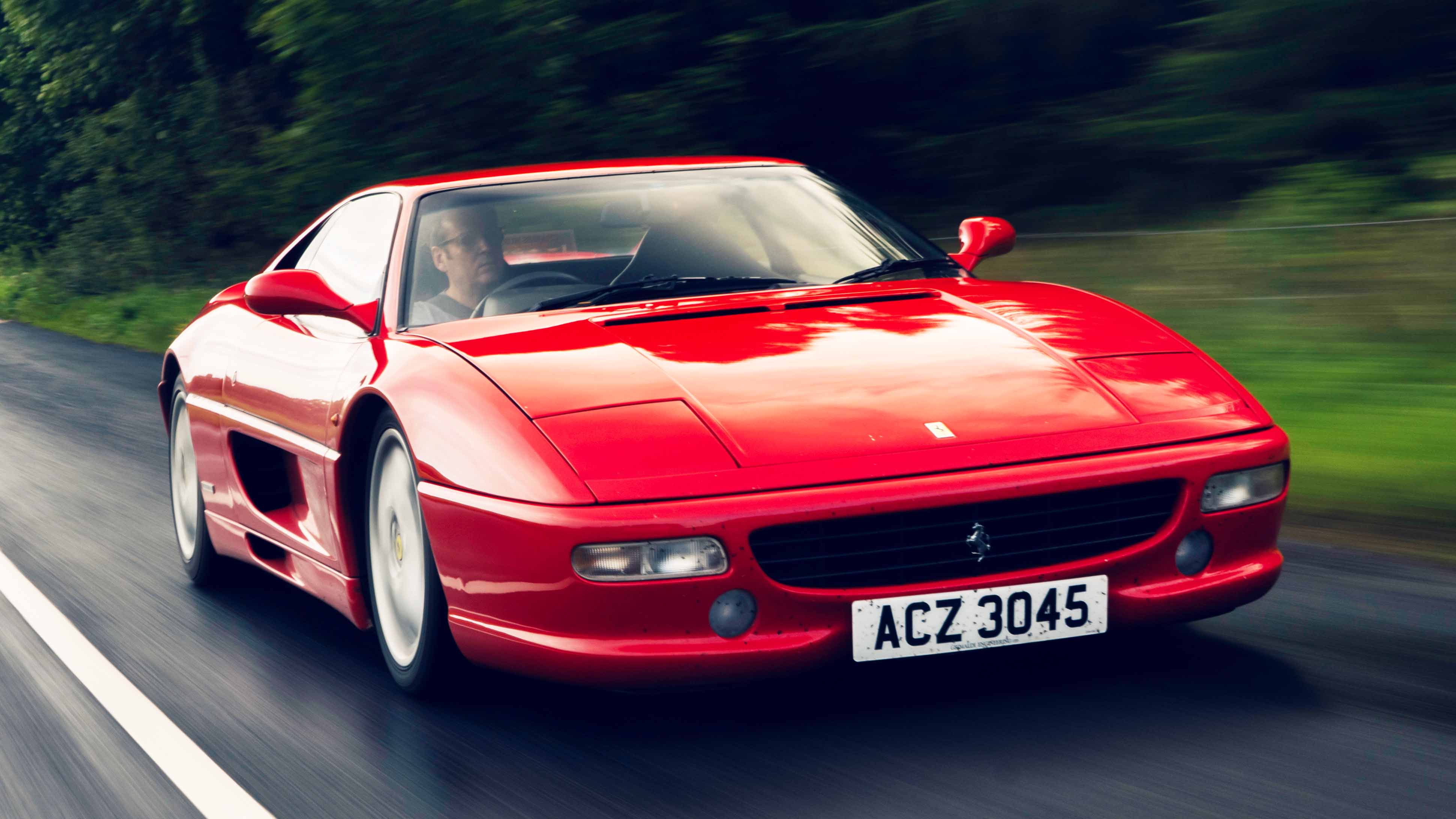
Guide d'achat - Ferrari F355, la dernière Ferrari pure
La F355 est la dernière Ferrari pure — un chef-d'œuvre V8 de 375 ch à 8 250 tr/min qui a défini la supercar à moteur central. Voici tout ce que vous devez savoir avant d'en acquérir une.
mars 2026
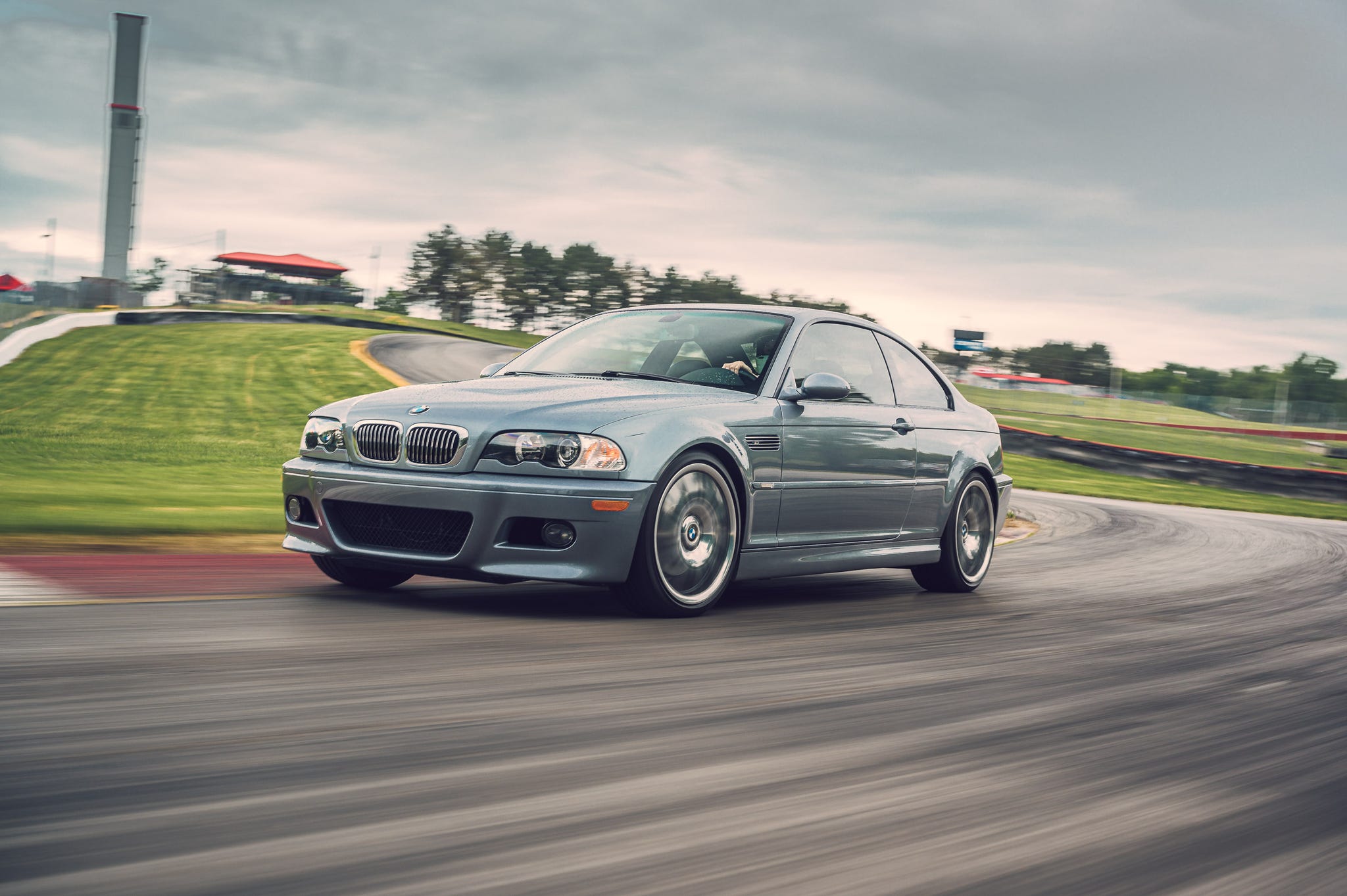
Guide d'Achat - BMW M3 E46, Tout ce que Vous Devez Savoir Avant d'Acheter
La E46 M3 est la dernière M3 véritablement analogique — moteur S54 à haut régime, boîte de vitesses manuelle précise et un châssis réglé pour les sensations. Voici tout ce que vous devez savoir pour en acheter une en toute connaissance de cause : fissures du sous-châssis, coussinets de bielle, VANOS, SMG vs manuelle, variantes et prix actuels du marché.
mars 2026
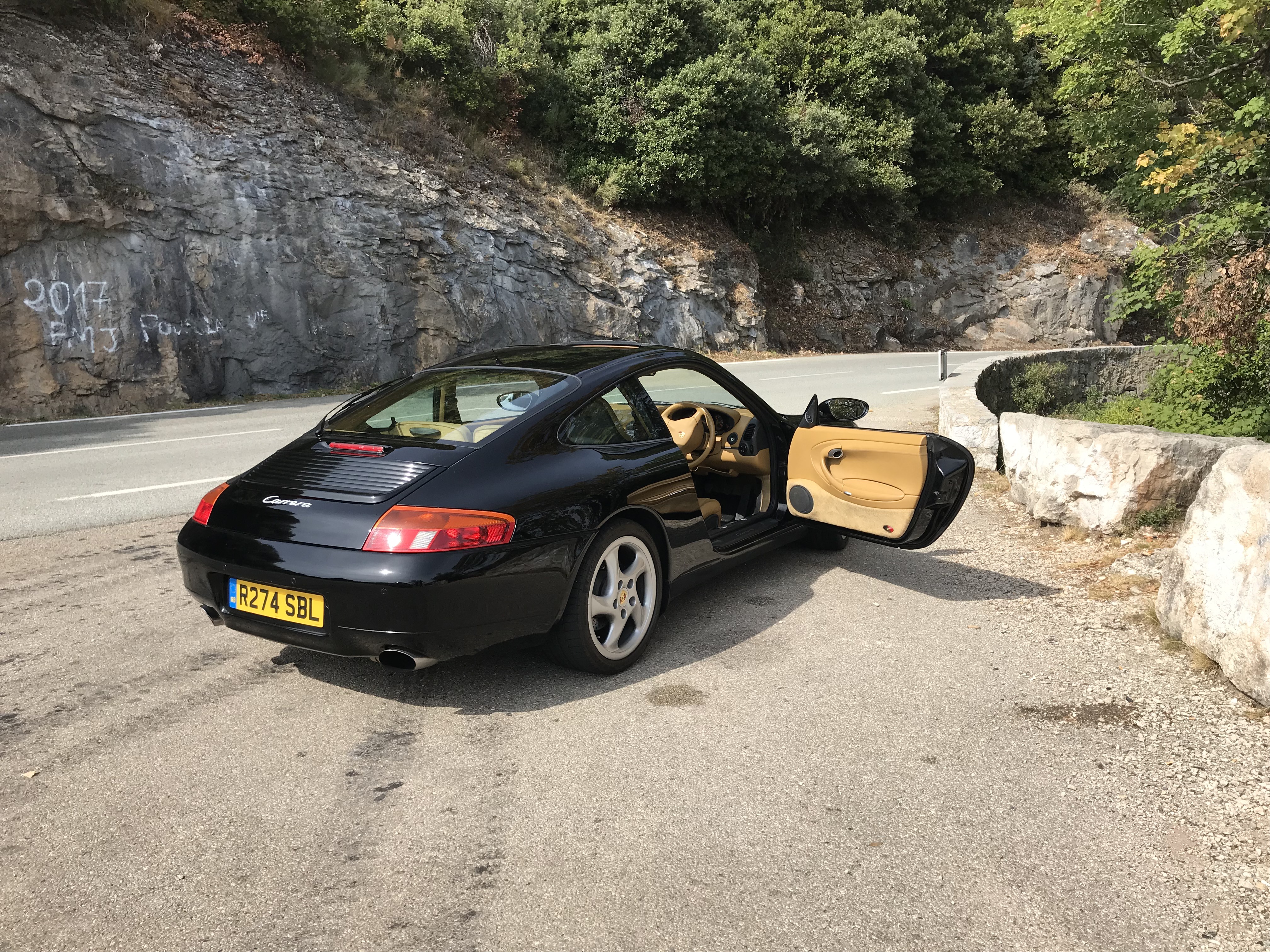
Guide d'Achat - Porsche 911 996, Tout ce que Vous Devez Savoir Avant d'Acheter
La 996 est la voiture la plus incomprise de la lignée 911. Ce guide complet couvre l'historique du modèle, les variantes de moteur, le problème du roulement IMS, le bore scoring, l'inspection avant l'achat, les coûts d'entretien, et quelles variantes acheter — et éviter.
Parcourez les routes que vous venez de lire
L'adhésion The Stable arrive bientôt — un abonnement pour chaque itinéraire sélectionné de notre bibliothèque, avec points de rallye détaillés, guides gastronomie & vins et hébergements. À partir de $6.97/mois.