
Porsche 911 964 Buying Guide: The Bridge Between Eras
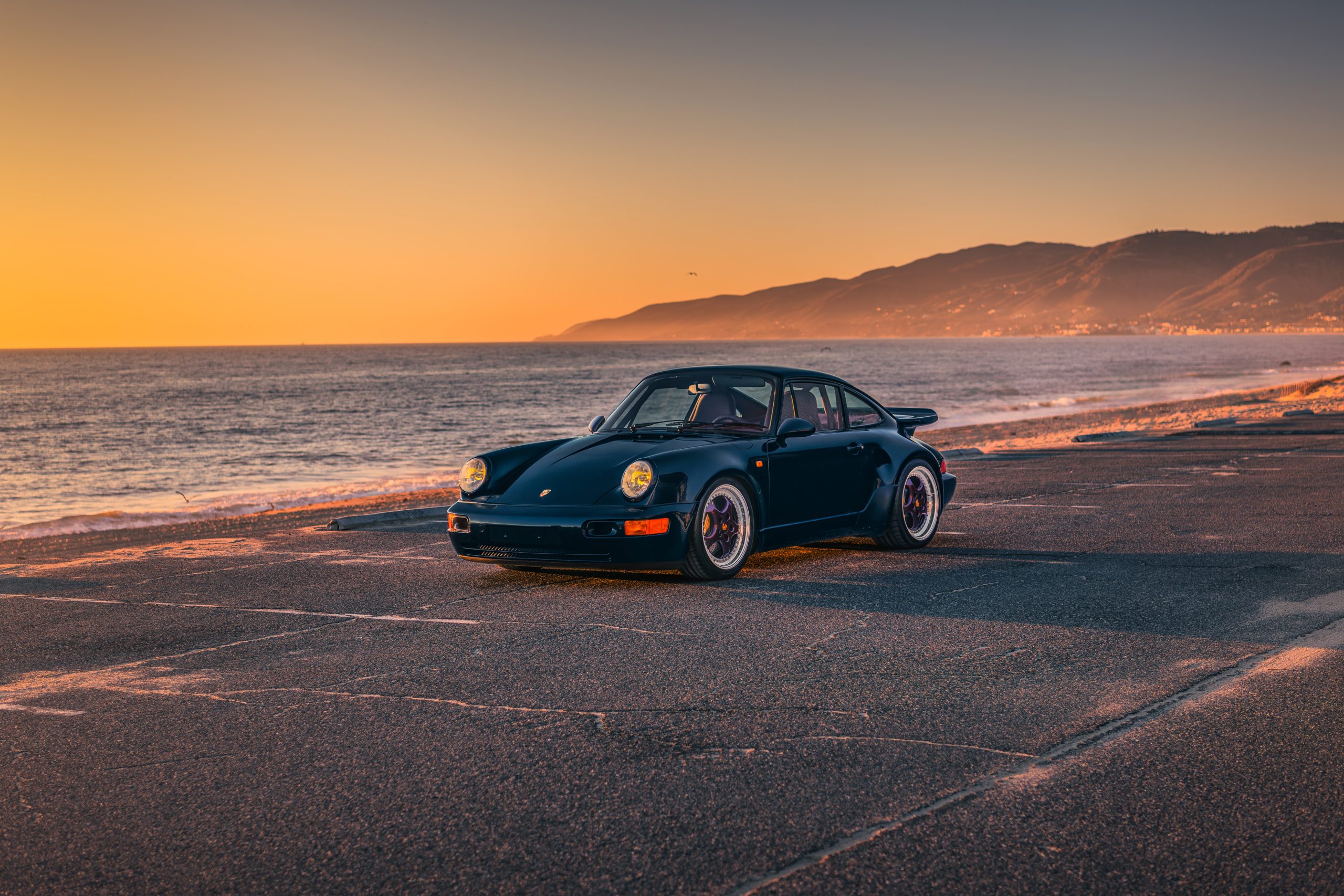
The Porsche 964 occupies a singular position in the 911 lineage. Produced between 1989 and 1994, it arrived as the most comprehensively re-engineered 911 in the model's history - approximately 85 per cent new compared to its predecessor, the 3.2 Carrera - while retaining the silhouette, the air-cooled flat-six, and the essential character that had defined the 911 since 1963. It introduced coil spring suspension, ABS, power steering, Tiptronic, and all-wheel drive to the 911 for the first time. It was, in short, the car that made the 911 liveable for the modern era without sacrificing the analogue soul that enthusiasts demanded.
Today, the 964 is firmly established as a collector's car. Values have risen sharply since 2018 and, while the post-COVID spike of 2022 has moderated for common variants, rare examples - the Turbo 3.6, the Carrera RS, the Speedster - continue to appreciate. For buyers approaching the market in 2025 and 2026, understanding the variant hierarchy, the mechanical realities of a 30-year-old air-cooled car, and the inspection priorities is essential to making a sound purchase.
History and Significance
The 964 was designed by Benjamin Dimson and entered production in 1989, with the all-wheel-drive Carrera 4 leading the launch before the rear-wheel-drive Carrera 2 followed in 1990. The new coil spring and MacPherson strut front suspension - replacing the traditional torsion bars - transformed the 911's ride quality and handling precision. The rear retained semi-trailing arms, but the overall chassis was a significant step forward.
The M64 engine, a 3.6-litre air/oil-cooled flat-six with twin-spark ignition and Bosch Motronic fuel injection, produced 250 PS in standard form - a meaningful increase over the 3.2 Carrera's 231 PS. The electric rear spoiler, which deployed automatically above 80 km/h, became one of the 964's most recognisable features. The interior was updated with dual airbags for North American models from 1990, an improved climate control system, and revised instrumentation.
Total production reached 63,762 units across all variants, making the 964 a relatively low-volume car by modern standards. The Carrera 2 Coupe was the best-seller at 18,219 units, while the Turbo 3.6 was produced in just 1,436 examples and the Speedster in 936.
The M64 Engine: What You Need to Know
The M64 is the heart of every naturally aspirated 964 and the source of most of its ownership challenges. It is a robust, characterful engine when properly maintained, but it has specific failure modes that every buyer must understand.
Oil leaks are the defining characteristic of 964 ownership. The saying "if a 964 isn't leaking oil, it's out of oil" is an exaggeration, but not by much. The most common leak points are the cam cover gaskets (valve covers), the chain housing gaskets, the rear main seal, and the oil return tubes. Pre-1991 cars have an additional vulnerability: the original engine design lacked a conventional cylinder head gasket, relying instead on a metal-to-metal seal between the cylinder and head. This design was prone to oil seepage, and Porsche introduced a revised cylinder base sealing arrangement in 1991. Buyers of early cars should verify whether this has been addressed.
Oil consumption of up to 1.5 litres per 1,000 km is within Porsche's stated tolerance. In practice, a healthy engine typically consumes around 1 litre per 2,000–2,800 miles. Higher consumption suggests worn piston rings or valve guides.
The cooling fan belt is the most safety-critical maintenance item on the M64. A snapped belt causes the engine to overheat within minutes, with catastrophic results. The original fan belt sensor is also known to fail, removing the warning before disaster strikes. The belt should be inspected at every service and replaced on a strict mileage or time interval regardless of apparent condition. Some owners fit an aftermarket serpentine belt conversion for improved reliability.
The dual-mass flywheel (DMF) fitted to 1989–1991 cars was a Freudenberg unit notorious for failure. Symptoms include heavy vibration at idle and clutch chatter. From 1992, Porsche switched to a LUK unit for the Carrera 2 and addressed the Carrera 4's DMF separately. Most early cars will have had the flywheel replaced by now, but buyers should verify this in the service history.
The engine wiring harness degrades with heat over time. Brittle, cracked insulation leads to misfires, stalling, and intermittent electrical faults. A harness replacement is expensive but often necessary on high-mileage or poorly-stored cars.
Cold-start chain rattle - a brief rattling from the timing chain tensioners on a cold start - is a normal characteristic of the M64. It should clear within a few seconds as oil pressure builds. Prolonged or loud rattle indicates worn tensioners and requires investigation.
Variants: The Complete Hierarchy
| Variant | Production | Engine | Power | Key Characteristics |
|---|---|---|---|---|
| Carrera 2 Coupe (Manual) | 18,219 | M64/01 3.6L | 250 PS | Best-seller; purist's choice |
| Carrera 2 Cabriolet | 11,013 | M64/01 3.6L | 250 PS | Check roof mechanism and hood condition |
| Carrera 2 Targa | 3,534 | M64/01 3.6L | 250 PS | Removable roof panel; check seals |
| Carrera 4 Coupe | 13,353 | M64/01 3.6L | 250 PS | AWD; heavier; check driveshaft joints |
| Carrera RS (Standard) | 1,916 | M64/03 3.6L | 260 PS | Lightweight; LSD; most desirable NA |
| Carrera RS Touring (M002) | 76 | M64/03 3.6L | 260 PS | RS with creature comforts; only 11 RHD |
| Carrera RS N/GT (M003) | 290 | M64/03 3.6L | 260 PS | Near-race specification; all LHD |
| Carrera RS America | 701 | M64/01 3.6L | 247 hp | US-market lightweight; no LSD |
| Speedster | 936 | M64/01 3.6L | 250 PS | Raked windscreen; check hood and seals |
| Turbo 3.3 | 3,660 | M30/69 3.3L | 320 bhp | Classic turbo lag; 930-derived engine |
| Turbo 3.6 | 1,436 | M64/50 3.6L | 360 PS | Rarer; more refined; higher values |
| Turbo S (Leichtbau) | 86 | M64/50 3.6L | 381 PS | Extreme rarity; seven-figure values |
Carrera 2 - The Purist's Entry Point
The Carrera 2 manual coupe is the most accessible and arguably the most rewarding entry into 964 ownership. Rear-wheel drive, a five-speed G50 manual gearbox, and 250 PS from the 3.6-litre M64 combine to produce a car that rewards skilled drivers without the weight penalty of the Carrera 4. The Tiptronic-equipped Carrera 2 commands a significant discount - approximately 30–40 per cent - and is best avoided unless budget is the primary constraint.
Carrera 4 - All-Weather Capability
The Carrera 4 was the first 911 to offer all-wheel drive, using a viscous coupling centre differential to distribute torque between axles. It is heavier than the Carrera 2 and the AWD system adds complexity, but it provides meaningful traction advantages in wet conditions. The G64 gearbox fitted to the C4 is generally robust, though synchromesh wear - particularly between first and second gear - is a known issue on high-mileage or hard-driven cars. The brake servo pump on C4 models is a known failure point; a hard pedal and reduced braking assistance indicate a failing unit.
Carrera RS - The Pinnacle of Naturally Aspirated 964
The Carrera RS is the most desirable naturally aspirated 964 by a considerable margin. The M64/03 engine produces 260 PS, channelled through a G50/10 gearbox with closer ratios and a twin-plate clutch, to a limited-slip differential. Weight was reduced by 100 kg compared to the standard Carrera 2 through an aluminium front lid, thinner glass, manual mirrors, and the deletion of sound insulation, rear seats, power windows, central locking, and airbags. The chassis was seam-welded, suspension mounts reinforced, and ride height lowered by 50 mm at the front and 40 mm at the rear.
The RS was offered in three specifications: the standard lightweight car (1,916 units), the Touring (M002, 76 units, 11 RHD) which reinstated most comfort equipment, and the N/GT Competition (M003, 290 units, all LHD) which was essentially a race car with a roll cage, harnesses, and a stripped interior. Values reflect this hierarchy: the N/GT averages $363,000, the standard RS $263,000, and the Touring $235,000 at current market rates.
Carrera RS America - The US-Market Lightweight
The RS America was developed specifically for the North American market as a more affordable performance variant. It used the standard M64/01 engine (247 hp rather than the RS's 260 PS), lacked the RS's limited-slip differential, and was heavier than the European RS. However, it deleted the rear seats, sound insulation, and air conditioning, and fitted the RS's front spoiler and rear wing. Production was 701 units. Values sit at approximately 70 per cent of the European RS.
Speedster - The Open-Air Icon
The 964 Speedster (936 units) features a dramatically raked windscreen, a humped tonneau cover, and a simplified folding soft top. It is one of the most visually distinctive 964 variants and commands a premium over the standard Cabriolet. The roof mechanism and hood condition are critical inspection points; replacements are expensive and specialist work.
Turbo 3.3 - The Classic Widowmaker
The 964 Turbo 3.3 (1991–1992, 3,660 units) uses the M30/69 engine, a development of the 930 Turbo's 3.3-litre unit producing 320 bhp. It retains the classic characteristics of the 930 era: pronounced turbo lag, a sudden power surge on boost, and rear-wheel drive with no electronic aids. It is the more characterful of the two Turbo variants and the more accessible in price terms, averaging $221,000 at current market rates.
Turbo 3.6 - The Refined Rarity
The 964 Turbo 3.6 (1993–1994, 1,436 units) uses the M64 engine base with a KKK K27 turbocharger, producing 360 PS. It is more refined than the 3.3, with reduced turbo lag and improved drivability, and its rarity drives significantly higher values - averaging $426,000, with low-mileage examples reaching $500,000–$900,000 in recent auction results.
Turbo S (Leichtbau) - The Unicorn
Just 86 Turbo S Leichtbau were produced, featuring a 381 PS version of the 3.6-litre turbocharged engine, a stripped lightweight interior, and carbon fibre body components. Values average over $1,000,000 and exceptional examples have exceeded $2,000,000 at auction. This is a specialist collector's car requiring specialist advice before purchase.
Known Issues and What to Inspect
Oil Leaks (Critical)
As described above, oil leaks are endemic to the M64. A car with no oil leaks is either very recently rebuilt or very recently cleaned. The key distinction is between manageable seepage - which is normal and inexpensive to monitor - and active leaks from the rear main seal or chain housing, which require significant labour to address. Always inspect the underside of the engine, the bellhousing area, and the area around the dry-sump oil tank and its connecting pipes.
Dual-Mass Flywheel (1989–1991 Cars)
Check the service history for evidence of DMF replacement. If the car has its original Freudenberg unit and no replacement is documented, budget for this work immediately.
Brake Servo (Carrera 4)
The hydraulic brake booster pump on C4 models is a known failure point. Test the brakes thoroughly; a hard pedal or reduced assistance indicates a failing unit. Replacement pumps can be difficult to source.
Rust and Corrosion
The 964 body is fully galvanised, but corrosion can still occur where the protective coating has been compromised. Inspect the following areas carefully: windscreen and rear window surrounds, sill panels (lift the plastic covers), front and rear wings where they meet the bumpers, bumper mounting brackets, engine tinware, and rear light enclosures. Rust repairs on a 964 are expensive; significant corrosion is a walk-away scenario.
Electrical System
The DME (Digital Motor Electronics) relay is a frequent failure point, causing the engine to cut out or fail to start. Carry a spare. The ignition switch, ground connections, and engine wiring harness are other common sources of electrical gremlins. A car with unexplained intermittent faults requires a thorough electrical diagnosis before purchase.
Tiptronic Transmission
The four-speed Tiptronic can develop slipping, clunky shifts, or complete loss of drive. A fluid and filter change resolves minor issues; more significant problems require a full rebuild. Avoid Tiptronic cars unless the transmission has been recently serviced and tested thoroughly.
G64 Gearbox Synchromesh (Carrera 4)
The C4's G64 gearbox is generally robust but can develop synchromesh wear, particularly between first and second gear. Grinding or notchy changes indicate worn synchros; a rebuild is the only solution.
Air Conditioning
The A/C system is now over 30 years old. Refrigerant leaks and failed HVAC servo motors are common. Budget for a full A/C service and potential component replacement.
Pre-Purchase Inspection Checklist
Documentation
- Full service history with specialist stamps and invoices
- Evidence of DMF replacement (pre-1992 cars)
- Evidence of fan belt replacement history
- Confirmation of cylinder base sealing work (pre-1991 cars)
- MOT/inspection history with no advisory patterns suggesting deferred maintenance
Engine and Drivetrain
- Cold start: listen for chain rattle (brief is normal; prolonged is not)
- Idle quality: smooth, no misfires, no smoke
- Oil leaks: inspect underside, bellhousing, dry-sump tank pipes
- Oil consumption: ask for evidence of top-up frequency
- Fan belt condition: inspect visually; check replacement date
- Engine wiring harness: look for cracked or brittle insulation
- Clutch engagement: smooth, no judder or chatter (DMF indicator)
- Gearbox: all ratios engage cleanly, no grinding
Chassis and Brakes
- Brake pedal feel: firm and progressive (C4: check servo pump)
- ABS function: warning light extinguishes at start
- Suspension: no clonks over bumps, no pull under braking
- Front suspension bushes: check for perishing and play
Bodywork
- Panel gaps: consistent throughout
- Paint: check for colour variation, overspray, signs of respray
- Rust: windscreen surround, sills, wings, bumper brackets
- Accident damage: use magnet on steel panels to detect filler
Interior and Electrical
- All warning lights extinguish correctly
- DME relay: confirm spare is present or recently replaced
- A/C: cold air from all vents
- Electric windows, mirrors, central locking (where fitted)
- Roof mechanism (Cabriolet/Speedster): smooth operation, no leaks
Running Costs
| Item | Frequency | Estimated Cost |
|---|---|---|
| Annual service (oil, filters, inspection) | Annual | $1,000–$1,900 |
| Cooling fan belt replacement | Every 30,000 miles / 3 years | $500–$1,000 |
| Brake fluid flush | Every 2 years | $200–$400 |
| Tyres (set of four) | As required | $1,000–$1,900 |
| DMF replacement (if required) | Once | $1,900–$3,800 |
| Engine wiring harness | Once (if required) | $2,500–$5,100 |
| Oil leak repair (minor) | As required | $650–$2,500 |
| Top-end engine rebuild | As required | $12,500–$25,500 |
| Annual budget (well-sorted car) | Annual | $2,500–$5,100 |
2025 Market Price Guide
| Variant | Entry-Level | Mid-Range | Exceptional |
|---|---|---|---|
| Carrera 2 Coupe (Manual) | $70,000 | $102,000–$127,000 | $165,000+ |
| Carrera 2 Cabriolet | $44,500 | $63,500–$82,500 | $108,000+ |
| Carrera 2 Targa | $57,000 | $82,500–$102,000 | $127,000+ |
| Carrera 4 Coupe | $63,500 | $89,000–$114,000 | $140,000+ |
| Carrera RS (Standard) | $229,000 | $279,000–$356,000 | $445,000+ |
| Carrera RS Touring | $203,000 | $254,000–$318,000 | $381,000+ |
| Carrera RS N/GT | $318,000 | $406,000–$508,000 | $635,000+ |
| RS America | $152,000 | $191,000–$229,000 | $279,000+ |
| Speedster | $152,000 | $203,000–$254,000 | $330,000+ |
| Turbo 3.3 | $152,000 | $203,000–$254,000 | $318,000+ |
| Turbo 3.6 | $356,000 | $483,000–$635,000 | $889,000+ |
| Turbo S Leichtbau | $889,000 | $1,143,000–$1,524,000 | $2,540,000+ |
Prices are approximate UK market values for right-hand-drive examples. Left-hand-drive cars typically command a 10–20 per cent discount in the UK market. US dollar values are broadly equivalent at current exchange rates.
The Verdict
The 964 is the most technically significant air-cooled 911 and, for many enthusiasts, the most rewarding to own. It offers the analogue driving experience of the classic 911 with the comfort and safety of modern suspension, ABS, and power steering. It is not a low-maintenance car - the M64's oil leaks, the fan belt's criticality, and the electrical system's age all demand attentive ownership - but a well-sorted example, maintained by a specialist, is a deeply satisfying machine.
Best buy: The Carrera 2 manual coupe represents the best combination of driving purity, relative accessibility, and long-term value retention. Buy the most complete, best-documented example you can afford; the cost of rectifying a neglected car will quickly exceed the premium paid for a well-maintained one.
Best value: The Carrera 4 coupe offers all-wheel drive, strong values, and a slightly lower entry price than the Carrera 2 coupe. The AWD system adds complexity but provides meaningful real-world capability.
Avoid: Tiptronic-equipped cars unless the transmission has been recently rebuilt and the price reflects the significant discount the market applies. Cabriolets with unknown roof histories.
Aspire to: The Carrera RS in any specification. It is the definitive air-cooled 964 experience and, despite its values, represents a sound long-term investment given its rarity, homologation history, and the enduring demand from the most serious Porsche collectors.