Turn a Big Sur visit into a planned drive
For a slower coastal trip, explore The Big Sur Classic Drive Pack. Its public preview explains the route, suggested trip length, included resources and purchase options. Check the current Caltrans Highway 1 report before booking overnight stops, then check again before departure.
Choosing between a short Bay Area escape and a longer coastal journey? Compare California Drive Packs by location, duration and experience.
Road Trip West Coast California: Ultimate Pacific Coast Highway Itinerary
There's something about the Pacific Coast Highway that gets under your skin. Maybe it's the way the road hugs cliffs that drop a thousand feet into churning surf, or how San Francisco's fog gives way to Santa Barbara sunshine over the course of a few hundred miles. A west coast road trip down California's Highway 1 is one of those drives that actually lives up to the hype - dramatic, varied, and endlessly photogenic.
Northern California stands out for its cooler climate, towering redwood forests, and breathtaking coastal views, offering unique landscapes and natural beauty that set it apart from the rest of the state and make this road trip especially memorable. If you're dreaming of exploring the northern forests, our NorCal Redwoods & Lost Coast Drive Pack covers that wild stretch in detail.
This guide covers everything you need to plan a 7–14 day California road trip from San Francisco to San Diego, threading through Big Sur's wild coastline, Santa Barbara's palm-lined streets, Malibu's celebrity coves, and San Diego's laid-back beach neighborhoods. Whether you're chasing sunsets at McWay Falls or counting sea lions at La Jolla Cove, this coast road trip itinerary will help you slow down and soak it all in.
Quick Overview: How to Use This West Coast California Road Trip Guide
This article focuses on the classic 400–500 mile coastal stretch from San Francisco to San Diego, the heart of any Pacific Coast Highway road trip. The route passes through some of California's most iconic landscapes: the redwood-shaded curves of Big Sur, the American Riviera charm of Santa Barbara, the surf breaks of Malibu, and the family-friendly beaches of San Diego.
While the core itinerary stays coastal, we'll also point out optional inland detours to Paso Robles wine country, Joshua Tree National Park, and Yosemite for those with extra time. The recommended direction is north-to-south, putting the driver's side toward the Pacific Ocean for superior views and easier access to pullouts, though the itinerary works in reverse if you're starting from Southern California.
Quick Snapshot:
- Suggested trip length: 7 days (highlights), 10 days (relaxed pace), 14+ days (with inland parks and wine country)
- Best season: Late September through October - warm days, fewer crowds, minimal fog
- Total driving distance: Approximately 650 miles from San Francisco to San Diego
- Driving style: Expect 100–150 miles per day maximum to allow for viewpoints, short hikes, and beach time
- Key stops (north to south): San Francisco, Half Moon Bay, Santa Cruz, Monterey, Carmel, Big Sur, San Simeon, Morro Bay, San Luis Obispo, Santa Barbara, Ventura, Malibu, Los Angeles, Laguna Beach, San Diego
This guide is written for travelers who love slow travel, scenic viewpoints, and balancing city exploration with natural beauty. Each section below breaks down specific stops with sample time allocations, so you can pick your own pace through this absolutely stunning stretch of the west coast.
Planning Your West Coast California Road Trip
Before you hit the road, a few key decisions will shape your entire trip. The most fundamental: which direction to drive, how many days to allocate, and whether you want to stick purely to the California coast or venture inland to places like Yosemite or the desert parks.
The full Pacific Coast Highway runs roughly 656 miles from Leggett in Mendocino County to Dana Point in Orange County. This guide focuses on the most popular stretch - San Francisco to San Diego - which covers about 650 miles and forms the backbone of classic coast highway road trip itineraries. If you have extra time, you can extend north to Mendocino's Victorian villages and Glass Beach, or south past San Diego toward the Mexican border.
Route Overview:
- Full PCH: Leggett to Dana Point (656 miles)
- Core route covered here: San Francisco to San Diego (~650 miles)
- Optional northern extension: Point Reyes, Bodega Bay, Mendocino
- Optional southern extension: San Diego to Tijuana border
Car Rental Considerations:
- Pick up at San Francisco International Airport (SFO) or Oakland (OAK) if heading south - and if you have time before departing, our [Bay Area Skyline Drive Pack](/drives/bay-area-skyline) is a perfect warm-up drive through the hills above the city
- Pick up at San Diego International Airport (SAN) if reversing the route
- One-way drop fees between SF and SD typically run $200–500 depending on provider
- Compare rates through aggregator sites; Enterprise and Hertz often have competitive options
- Consider picking up the car only when leaving the city - parking in SF costs $50/day or more
Ideal Trip Lengths:
- 7 days: Hit the highlights - SF (2 nights), Monterey/Big Sur (2 nights), Santa Barbara (1 night), LA area (1 night), San Diego (1 night)
- 10 days: Add extra time in Big Sur or Carmel, plus one night in Paso Robles wine country
- 14+ days: Include Yosemite pre-trip, Joshua Tree post-trip, and longer stays in favorite towns
Direction Recommendations:
- North-to-south (SF to SD): Recommended for most travelers - driver's side faces the ocean, pullouts are on the right, and you save the dramatic Big Sur coastline for early in the trip
- South-to-north (SD to SF): Saves wilder northern coast for the finale, useful if starting in San Diego, but ocean is on passenger side and prevailing winds can be bumpier
Critical Tech Tip: Download offline maps via Google Maps or Maps.me before entering Big Sur. Cell service drops to 20–30% coverage along the 60-mile stretch between Carmel and San Simeon. Gas stations are also sparse here - fill up in Monterey or Carmel before heading into the cliffs.
Best Time to Drive the West Coast of California
Weather and fog patterns along the California coast can make or break your views of iconic spots like Bixby Creek Bridge and McWay Falls. Timing your trip correctly means the difference between crystal-clear coastal panoramas and staring into a gray wall of marine layer.
Late September through October consistently emerges as the sweet spot for a PCH road trip. Summer crowds dissipate by 30–50% from July–August peaks, skies clear, and temperatures settle into ideal ranges: 68–75°F in San Francisco, 70–78°F in Big Sur, and 75–82°F in San Diego. Precipitation stays under one inch monthly throughout this window.
Seasonal Breakdown:
- Late September–October (Best): Warm, dry days with fewer tourists. Southern California beaches reach peak warmth. Fog diminishes significantly along the central coast.
- June–August (Summer): Fog banks north of Big Sur can obscure landmarks up to 60% of daylight hours. "June Gloom" brings persistent morning marine layer to Santa Monica, Laguna Beach, and San Diego (50% overcast mornings in June).
- April–early June (Spring): Wildflowers bloom, waterfalls run strong after winter rains. Some lingering fog, but generally pleasant. Good balance of daylight and lower prices.
- November–March (Fall/Winter): Dramatic 20–30 foot waves at spots like Ragged Point. Spectacular storm-watching. However, Highway 1 closures from landslides become a real risk - over 20 miles of intermittent closures have occurred since 2020 due to erosion.
Key Considerations:
- Book accommodations early for late September–October weekends
- Check Caltrans QuickMap for road closures before departure, especially in winter
- Avoid June for Big Sur photography if clear skies matter to you
What to Pack for a West Coast California Road Trip
The California coast spans microclimates that can shift dramatically within hours. San Francisco evenings average 55°F with 20–30 mph winds, while San Diego afternoons sit comfortably at 70°F. Packing for versatility rather than bulk will serve you well across hotel switches from north to south.
For open-top driving days along the coast, a quality pair of polarized sunglasses is essential - we've tested and reviewed the three driving sunglasses we actually wear on exactly these kinds of roads.
Clothing Essentials:
- Layering pieces: merino base layers, packable down jacket, fleece or lightweight sweater
- Waterproof shell (Gore-Tex or similar) for 10–20% drizzle risk in fall
- Beachwear for Santa Barbara, Malibu, Laguna Beach, and San Diego
- Comfortable walking shoes for city exploration and light hiking trails
- One nicer outfit for dinners in Carmel or Santa Barbara
Sun Protection:
- High-SPF reef-safe sunscreen (California bans oxybenzone - look for brands like California Baby)
- Polarized sunglasses reducing 99% glare for spotting seals and sea otters
- Wide-brim hat for beach days and exposed viewpoints
- Rash guard for surfing or kayaking at Santa Cruz, Morro Bay, or La Jolla
Tech and Navigation:
- Smartphone with offline maps downloaded for Big Sur stretch
- Portable power bank (20,000mAh recommended)
- Multi-port car charger
- RAM mount or phone holder for navigation
- Dedicated camera for capturing the Big Sur coastline and Point Reyes landscapes
Packing Strategy:
- Soft-sided duffel bags under 40L per person facilitate frequent hotel switches
- Avoid large suitcases - you'll appreciate flexibility when parking at viewpoints
- Small cooler for picnic supplies near Bixby Bridge and Ragged Point
West Coast California Road Trip Itinerary (7–14 Days)
This is the core planning section for your road trip itinerary. Below, we'll lay out flexible frameworks for 7-day and 10–14 day trips, with realistic driving times between major stops.
7-Day Sample Plan:
- Day 1–2: San Francisco - explore the city, pick up rental car on day 2
- Day 3: Santa Cruz and Monterey/Carmel - overnight Carmel area
- Day 4: Big Sur and San Simeon - overnight San Simeon or Cambria
- Day 5: Santa Barbara - overnight Santa Barbara
- Day 6: Los Angeles / Santa Monica - overnight LA area
- Day 7: Laguna Beach and San Diego - overnight San Diego, drop car
10–14 Day Sample Plan:
- Days 1–2: San Francisco
- Day 3: Santa Cruz to Carmel - overnight Carmel
- Days 4–5: Big Sur exploration - overnight Big Sur or Carmel
- Day 6: San Simeon and Hearst Castle - overnight Cambria
- Day 7: Paso Robles wine country - overnight Paso Robles
- Day 8: San Luis Obispo to Santa Barbara - overnight Santa Barbara
- Day 9: Santa Barbara and Ventura - optional Channel Islands day trip
- Days 10–11: Malibu, Topanga Canyon, Los Angeles
- Day 12: Laguna Beach and Newport Beach
- Days 13–14: San Diego and La Jolla
Pacing Philosophy:
- Combine shorter coastal hops with half-days of activities rather than packing days with pure driving
- Allow extra buffer in Big Sur - curves, viewpoints, and photo stops add up quickly
- Check Caltrans and state park websites before departure for closures, especially around Big Sur
- Highway 1 closures like the 2024–2026 detours near Paul's Slide may require rerouting via Highway 101, adding 1–2 hours
Starting Point: San Francisco and the Northern Coast
San Francisco earns its reputation as the classic launching point for a west coast California road trip. The city's 43 hills, iconic Golden Gate Bridge, and easy access via SFO and Oakland airports make it ideal for easing into California before the road opens up.
Must-See San Francisco Experiences (1–3 Days):
- Walk or bike across the Golden Gate Bridge (1.7 miles, 746-foot towers)
- Visit Alcatraz Island - book 4–6 weeks ahead via Alcatraz City Cruises ($45/adult)
- Explore Fisherman's Wharf and watch the sea lions at Pier 39 (up to 1,300 seasonally)
- Ride the Powell-Hyde cable car up 600-foot gradients
- Wander neighborhoods: the Mission for murals, North Beach for Italian cafés, Castro for history
Scenic Viewpoints:
- Twin Peaks: 925-foot elevation with 360° city skyline panoramas, best at sunset
- Lands End Lookout: 3-mile coastal trail past Sutro Baths ruins with bridge views
- Baker Beach or Crissy Field: Bridge-and-beach photos with the Marin Headlands backdrop
- The Painted Ladies at Alamo Square for that classic Victorian row house shot
Optional Nearby Day Trips:
- Muir Woods National Monument: Coastal redwoods just north of the bridge
- Sausalito: Waterfront cafés and houseboats across the bay
- Point Reyes National Seashore (70,000 acres): Tomales Bay oysters, Earthquake Trail marking the 1906 fault
- On your way south from San Francisco to Santa Cruz, consider stopping at Half Moon Bay - a scenic coastal town known for its beautiful beaches and relaxed atmosphere
Travelers with extra time can extend north to Mendocino's Glass Beach and Bodega Bay before heading south. Our NorCal Redwoods & Lost Coast Drive Pack covers this northern stretch in detail for those who want to make the most of it.
Central Coast Highlights: Santa Cruz, Monterey, Carmel & Big Sur
The stretch from Santa Cruz through Monterey, Carmel, and Big Sur forms the dramatic heart of most west coast California road trips. This is where surf culture meets marine biology, and where Highway 1 threads along cliffs that have inspired photographers for generations.
This section of the Pacific Coast Highway delivers constant variety: the vintage boardwalk vibes of Santa Cruz, the world-class aquarium in Monterey, the storybook charm of Carmel-by-the-Sea, and the raw natural beauty of Big Sur's thousand-foot cliffs plunging into the Pacific Ocean. For drivers who want a fully planned, curated experience of this stretch, our Big Sur Classic Drive Pack covers the definitive version of this drive with every stop, timing note, and overnight recommendation mapped out.
Santa Cruz
Santa Cruz sits about 75 miles south of San Francisco, roughly 1.5 hours with a scenic stop or two, making it an ideal first coastal destination after leaving the city. This laid-back surf town has maintained its character since Duke Kahanamoku's 1907 visit helped establish California surf culture.
Santa Cruz Beach Boardwalk:
- Classic seaside amusement park operating since 1907
- Giant Dipper: 1924 wooden roller coaster reaching 75 feet at 45 mph
- Arcade games, funnel cake, and oceanfront carnival vibes that feel genuinely nostalgic
Surf Culture and Beaches:
- Cowell Beach: Gentle waves averaging 2–4 feet, ideal for beginners
- Steamer Lane: Advanced breaks with spectator-friendly cliffs above
- West Cliff Drive: Scenic coastal path past the surf statue and Surfing Museum in Mark Abbott Lighthouse
Nearby Detours:
- Capitola Village: Colorful beachfront houses, boutiques, and cafés, perfect for lunch
- Roaring Camp Railroads: 1880s steam train chugging 3 miles through 2,000-year-old redwoods
- Henry Cowell Redwoods State Park: Quick taste of forest before returning to coast
Monterey & Carmel-by-the-Sea
Monterey and Carmel sit on a peninsula that combines marine history, world-class wildlife viewing, and one of California's most charming villages. Plan for 1–2 nights to do it justice.
Monterey Highlights:
- Cannery Row: Former sardine-processing district, Steinbeck's 1945 novel setting, now hosting 100+ shops and restaurants
- Old Fisherman's Wharf: Clam chowder stands, whale-watching departures, and barking sea lions
- Monterey Bay Aquarium: Opened 1984, houses 550 species including 200+ jellyfish across 1.2 million gallons - budget half a day ($60/adult)
17-Mile Drive:
- Private scenic loop ($11.25/vehicle) connecting Pacific Grove to Pebble Beach and Carmel
- Coastal golf course views, cypress groves, and the famous Lone Cypress planted 1889
- Drive it in late afternoon for softer light and fewer crowds
Carmel-by-the-Sea:
- White-sand Carmel Beach
- Cottages without street addresses - a quirk since the 1920s artist colony days
- Art galleries, wine tasting rooms, and candlelit restaurants make it ideal for an overnight stay
Big Sur
Big Sur is the dramatic crescendo of any PCH road trip - roughly 70 miles of wild coastline where the Santa Lucia Mountains plunge directly into the Pacific. This is the stretch that appears on postcards and Instagram feeds, and it deserves a full day of your attention. We've documented every key stop, pullout, and overnight option in our Big Sur Classic Drive Pack, which is the most thorough guide we've produced for any single stretch of road.
Iconic Stops (North to South from Carmel):
- Point Lobos State Natural Reserve: Short hikes, sea otter and harbor seal spotting - often called "the crown jewel of the state park system"
- Garrapata State Park: Pullouts with coastal views and short trails
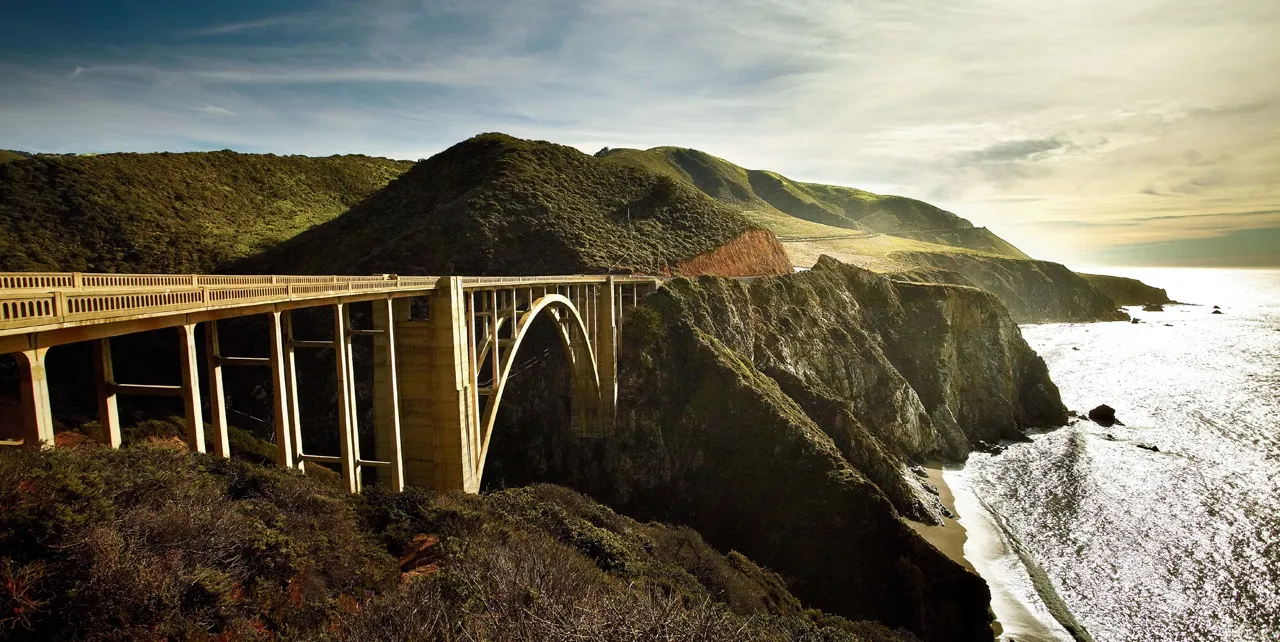
- Bixby Creek Bridge: The 1932 arch spans 260 feet - Castle Rock Viewpoint and Hurricane Point Vista Point offer the best photo angles
- Point Sur Lighthouse: 1889 lighthouse on volcanic rock at 270-foot elevation, $5 pre-booked walking tours available
- Nepenthe: 1949 restaurant perched 800 feet above the ocean, famous Ambrosia burger ($22), spectacular sunset spot
Julia Pfeiffer Burns State Park:
- Contains one of California's most photographed scenes - McWay Falls, an 80-foot waterfall tumbling directly onto a sheltered cove beach
- Access via the short Waterfall Overlook Trail - note that periodic closures for repairs may require roadside viewing
Pfeiffer Beach:
- Famous for purple-tinged sand from manganese garnet and a dramatic sea arch
- Access via narrow Sycamore Canyon Road - arrive early or late to find parking, RVs not advised
Current Conditions Warning: Highway 1 periodically closes due to landslides. Recent events near Paul's Slide and Regent's Slide have caused closures extending into 2026. The Caltrans QuickMap app provides real-time updates. If closures affect your dates, detour via Highway 101 between Carmel and San Simeon - add 1–2 hours.
Driving Advice:
- Fill your tank in Monterey or Carmel before entering Big Sur - gas is $5.50/gallon vs. $6.50+ along the cliffs
- Expect 4–6 hours driving time for the 90 miles to San Simeon - curves, pullouts, and viewpoints add up
- Use turnouts to let faster traffic pass
- Avoid driving Big Sur at night - no streetlights, sharp turns, and potential fog
San Simeon, Paso Robles & the Classic Central Coast Towns
South of Big Sur, the landscape softens into rolling ranchlands, historic estates, and relaxed beach communities. This stretch offers a welcome change of pace after Big Sur's intensity - a chance to explore Hearst Castle, watch elephant seals, and sample central coast wine country.
San Simeon & Hearst Castle
Hearst Castle rises on a hilltop overlooking the Pacific, visible from Highway 1 as you approach San Simeon. Built by newspaper magnate William Randolph Hearst between 1919 and 1947, the 165-room estate now operates as a California state park and remains one of the coast's most distinctive attractions.
Visiting Hearst Castle:
- Access via shuttle bus from the Hearst Castle Visitor Center - 3 miles uphill, shuttles every 45 minutes
- Tours like Grand Rooms Tour or Evening Tour require advance reservation via reservehearstcastle.com, $30–40
- Highlights include the Neptune Pool, indoor Roman Pool, ornate guest houses, and terraces with Pacific views
- Budget half a day for the full experience
Piedras Blancas Elephant Seal Rookery:
- Free viewing area a few miles north of Hearst Castle
- Northern elephant seals haul out on the beach year-round, with peak viewing December through April when up to 20,000 seals gather
- Males can reach 16 feet and 4,000 pounds - the viewing platforms put you just yards from these massive creatures
Cambria, Morro Bay, Pismo Beach & San Luis Obispo
This cluster of central coast towns offers distinct personalities - from pine-shaded artists' enclaves to harbor towns and college-city energy.
Cambria: Quieter charming little town just south of San Simeon. Moonstone Beach Boardwalk for sunset strolls along the bluff. Cozy inns, art galleries, and restaurants make it an ideal overnight base.
Morro Bay: Classic harbor town dominated by Morro Rock, a 576-foot volcanic plug that's been a protected bird sanctuary since 1968. Waterfront is prime territory for spotting sea lions and sea otters, and enjoying fresh seafood.
Pismo Beach: Known for its long sandy beaches and the 1,200-acre Oceano Dunes - one of the few California beaches where off-highway vehicles are permitted ($5/day). Pier offers sunset viewpoints.
San Luis Obispo: SLO brings college-town energy via Cal Poly, with a walkable downtown, historic mission, and quirky attractions like Bubblegum Alley (2,000+ wads of gum accumulated since the 1950s). Madonna Inn offers 110 uniquely themed rooms.
Paso Robles & Central Coast Wine Country
Paso Robles sits inland along US-101 and Highway 46, about 30–40 minutes from the coast. For wine lovers, it's worth the detour. Over 200 wineries focus primarily on Rhône varietals like Syrah, and the downtown square hosts 20+ tasting rooms within walking distance. Wine enthusiasts planning to spend more time in California wine country should also consider our Napa & Sonoma Grand Tour Drive Pack, which covers the northern wine regions in depth.
Santa Barbara & Ventura: The American Riviera and Channel Islands Gateway
South of Pismo Beach, the scenery takes on a Mediterranean quality. Palm trees line the waterfront, white stucco buildings wear red-tiled roofs, and Santa Barbara fully earns its American Riviera nickname. We've written a dedicated guide to the city that covers the best neighborhoods, restaurants, and day trips in detail.
Santa Barbara
Santa Barbara's downtown is walkable, centered on State Street with a 3-mile stretch of boutiques, cafés, and galleries framed by Spanish Colonial Revival architecture, rebuilt after the 1925 earthquake. This is a town made for slowing down.
Downtown and the Funk Zone:
- State Street: Main commercial corridor with shops, restaurants, and theaters
- Funk Zone: Creative district near the waterfront with 50+ murals, wine-tasting rooms, craft breweries, and casual eateries
- Urban Wine Trail: 20+ tasting rooms within walking distance
Historic Sites:
- Old Mission Santa Barbara: Rose garden, Moorish fountain, hilltop views
- Santa Barbara County Courthouse: Spanish-Moorish architecture with clock tower access for panoramic city and coastline vistas
Beaches:
- East Beach: Volleyball courts, bike paths, wide sand
- Leadbetter Beach: More sheltered, good for picnics
- Butterfly Beach (Montecito): Sunset walks with mountain-and-ocean backdrops
Wine Country Access: Santa Ynez Valley and Los Olivos sit about 30–45 minutes inland, with 120+ wineries - Pinot Noirs dominate. A half-day or full-day excursion works well from a Santa Barbara base.
Ventura & Channel Islands National Park
Ventura sits about 30–40 minutes south of Santa Barbara - a smaller, more low-key coastal town with a historic pier, solid surf breaks, and walkable downtown. Its main claim to fame is serving as the gateway to Channel Islands National Park. Day trips to Anacapa and Santa Cruz Islands run $60–100 roundtrip via Island Packers from Ventura Harbor Village. If you have a spare half-day, the hills just inland are home to our Central Coast Crossing Drive Pack - a winding canyon drive through one of California's most beautiful hidden valleys.
Malibu, Topanga Canyon & Los Angeles / Santa Monica
This is where your road trip enters its urban phase. Highway 1 leads past Malibu's celebrity beaches into greater Los Angeles, offering both coastal scenery and the chance to experience one of America's most sprawling cities. Drivers who want to explore the canyon roads and coastal routes around LA in a more focused, curated way should look at our LA Canyons & Coast Drive Pack, which covers the best driving roads from the San Gabriels down to the Pacific.
Malibu
Malibu stretches 27 miles along PCH, mixing state beaches, hidden coves, and hillside homes that have housed Hollywood royalty for decades.
Beaches and Viewpoints:
- Zuma Beach: Wide, sandy shoreline popular with families and surfers - 3-mile strand
- El Matador State Beach: Photogenic sea stacks and caves accessed via 164 steep stairs - arrive early for parking
- Point Dume: Bluff-top views, frequent dolphin sightings, whale migration viewing December–April
Attractions:
- Malibu Pier: Classic stop for coffee or brunch with surf scene views
- Getty Villa: Free entry, $20 parking, 64-acre museum with ancient Greek and Roman art in Pompeii-replica architecture - reserve online
Topanga Canyon
Topanga Canyon offers a winding route through the Santa Monica Mountains, providing a contrasting bohemian, woodsy vibe after Malibu's sleek beachfront. This 11,000-acre urban wildland is the largest in LA. Hiking, organic groceries, and eclectic vintage shops make it an ideal lunch or coffee stop on the way inland from PCH.
Los Angeles, Santa Monica & Venice
Santa Monica serves as LA's classic beachfront city, centered around the famous Santa Monica Pier with its Ferris wheel and amusement park. Group sights by neighborhood - one day Santa Monica/Venice, one for Hollywood/Griffith, one for Downtown - and avoid rush hours (7–10am, 3–7pm) when traffic adds 50% to drive times.
Orange County Beaches to San Diego: Laguna, La Jolla & Beyond
The final stretch from Los Angeles to San Diego passes through some of Southern California's most beloved beach towns. This is where the coastal route delivers consistent sunshine, cove beaches, and a slower pace as you approach your final destination.
Laguna Beach & Orange County Coast
Laguna Beach sits along Highway 1 with steep hills dropping to protected coves. This artsy seaside town has a strong local art scene supported by galleries and summer festivals like the Pageant of the Masters (1935, living tableaux) and Sawdust Art Festival.
Laguna Beach Beaches:
- Main Beach: Easy access, people-watching, volleyball
- Treasure Island and Thousand Steps: More dramatic scenery with tide pools
- Heisler Park: Bluff-top walking path with lawns, sculpture, and cove access
Other Orange County Stops:
- Newport Beach: Harbor cruises, Balboa Island fun zone atmosphere, pier fishing
- Huntington Beach: Surf City USA, 1,850-foot pier, long surf-friendly sands
- San Clemente: Quieter pier, coastal rail-side trail, laid-back vibe
San Diego & La Jolla
San Diego delivers a laid-back final stop with pleasant climate year-round and distinct neighborhoods spanning coast and city. After days on the road, San Diego's relaxed energy feels like a reward. For those who want to explore the inland canyons and mountain roads east of the city, our San Diego Highlands Drive Pack covers the dramatic transition from sea level to the mountains in a single day's drive.
Balboa Park:
- Over 1,200 acres hosting 17 museums, lush gardens, and the world-famous San Diego Zoo (100 acres, 3,500 animals representing 650 species)
- Spanish Revival architecture from the 1915 expo creates a distinctive atmosphere
- Budget at least half a day - more if visiting the zoo
La Jolla:
- La Jolla Cove: Protected cove with resident sea lions, 100+ year-round
- Sea cave kayak and snorkel tours, $100/2hr
- Scripps Pier and Torrey Pines State Natural Reserve nearby
Additional Beach Areas:
- Pacific Beach and Mission Beach: Boardwalk biking, casual bars, classic California scene
- Ocean Beach: Bohemian vibe, long pier for sunset viewing
- Coronado Island: Wide beach fronting the historic Hotel del Coronado, 1888
Optional Inland Detours: National Parks and Desert Escapes
While this article focuses on the coastal west coast of California, many travelers combine Highway 1 with inland highlights when time permits. Yosemite sits about 3.5–4.5 hours from San Francisco, making it best added before starting the coastal drive or as a separate loop. Joshua Tree delivers high-desert landscapes famous for namesake trees, massive granite boulders, and some of the darkest skies in Southern California - best visited late fall through early spring due to extreme summer heat.
Practical Tips: Driving, Safety & Budgeting on the California West Coast
A west coast California road trip is straightforward, but advance planning for driving conditions, safety, and costs makes the difference between a smooth journey and unnecessary stress.
Driving Tips:
- California uses right-hand traffic - speed limits vary, 55 mph on curvy Big Sur sections, 65+ on Highway 101
- Use turnouts every 1–2 miles in Big Sur to let faster traffic pass
- Expect sharp curves throughout the coastal route - this isn't freeway driving
- Avoid driving Big Sur at night - no streetlights, fog risk, and cliffs with no guardrails
Budget Ranges (7 days, couple):
- Car rental: $400–600
- Gas: $150–200 (coastal premium)
- Lodging: $150–250/night average
- Food: $80–150/day
- Activities/Parks: $100–200 total
- Total: $1,500–3,000
Safety Notes:
- Stay within marked paths near cliffs - rock can crumble unexpectedly, stay 6 feet back
- Watch for wildlife on rural stretches, especially deer at dusk
- Don't leave valuables visible in your car at viewpoints - theft happens
- Be prepared for 10% fog-related slowdowns, particularly morning hours
Reservations to Make Early:
- Summer and holiday lodging in Big Sur, Santa Barbara, Laguna Beach, San Diego
- Hearst Castle tours
- Channel Islands ferry seats
- Alcatraz Island tickets - 4–6 weeks ahead
- Yosemite lodging and entrance reservations in peak season
Extending Your West Coast Road Trip Beyond California
Many travelers expand a west coast California road trip into a broader Pacific Coast journey. Northbound extensions include Redwood National Park, the Oregon Coast with Cannon Beach and Haystack Rock, Olympic National Park, and Seattle as an urban endpoint for a full west coast adventure. The Pacific Northwest adds 500+ miles but delivers landscapes distinct from California - expect rain, emerald forests, and fewer crowds.
Whether you stick to the 650-mile San Francisco to San Diego route or expand into a three-week west coast odyssey, the California coast delivers the kind of driving experience that stays with you. Every curve reveals something new - a hidden cove, a pod of dolphins, a clifftop restaurant with views that make you pause mid-bite.
The road is waiting. Download those offline maps, check Caltrans for closures, and give yourself permission to travel at your own pace. This stretch of the west coast rewards those who take their time. And when you're ready to go beyond the guide and experience these roads in a fully planned, curated format, explore our California Drive Packs - each one built from years of driving these exact roads.
Conclusion and Final Tips
A California coast road trip is more than just a drive - it's an invitation to experience some of the most stunning natural beauty and vibrant culture the West Coast has to offer. From the iconic Golden Gate Bridge in San Francisco to the famous Santa Monica Pier and the sun-drenched beaches of Southern California, every stop along the way offers its own unique charm and adventure.
To make your journey as smooth and memorable as possible, plan ahead: book accommodations and must-do activities early, always check road conditions and weather forecasts before setting out, and consider investing in a California State Parks pass to unlock access to a variety of scenic parks and hidden gems along your route.
Above all, give yourself the gift of time. The California coast is best enjoyed at a relaxed pace, with plenty of stops to soak in the views, sample local flavors, and discover the quirky, creative spirit that defines this region. So pack your bags, hit the road, and let the California coast surprise and inspire you at every turn.
Looking for a fully curated version of this drive? Our Big Sur Classic Drive Pack and LA Canyons & Coast Drive Pack are the most detailed guides we've produced for the California coast - every stop, every overnight, every road note, planned down to the last turn.