

Road trip itineraries are the difference between a forgettable drive and a journey worth telling. The Stable designs long-distance routes around the roads themselves — curating the best driving roads, overnight stops, and experiences so every mile has a reason.
Road Trip Itineraries: How The Stable Designs Long Drives You’ll Actually Love.
There’s a difference between driving somewhere and driving. The first is logistics. The second is the reason you own the car you own. This guide exists for the second kind of driver—the one who cares about the camber of a corner, the rhythm of a mountain pass, and the feeling of arriving at a design-led inn with a story to tell about the road that got you there.
Road trip itineraries are the difference between a forgettable drive and a journey worth telling. The Stable designs long-distance routes around the roads themselves — curating the best driving roads, overnight stops, and experiences so every mile has a reason. Whether you're crossing the USA, chasing the Pacific Coast, or threading through mountain passes, a great itinerary turns a trip into a story.
At The Stable, we build road trip itineraries for people who understand that how you get there matters as much as where you end up. What follows are concrete, ready-to-adapt frameworks for the drives we love most: cross country routes that span the continent, East Coast loops dense with coastal curves and historic towns, national park itineraries designed around the roads rather than just the trailheads, and Gulf Coast ribbons where seafood and sunsets set the pace.
Key Takeaways.
This guide delivers specific, multi-day road trip itineraries across the U.S.—cross country routes (Northern, Central, Southern), East Coast loops, national park circuits, and Gulf Coast runs—each curated for drivers who care about the road itself, not just the destination.
Every itinerary prioritizes driver-focused roads: sweeping mountain passes, coastal curves, and scenic byways over monotonous interstates, paired with design-led stays, strong food and wine, and realistic pacing that caps driving at 4–6 hours daily.
Sample routes include real distances (most cross country trips span 2,700–3,200 miles), optimal seasons (late spring and early fall for northern routes; winter through early spring for the South), and highlight stops with suggested multi-night anchors.
The Stable provides digital Route Packs with GPX navigation, dining recommendations, car-forward hotel picks, and printable PDF roadbooks—plus fully bespoke planning for those building a bucket list journey from scratch.
The FAQ section addresses common questions on timing, pacing, EV adaptation, and choosing between a long cross country road trip and shorter regional escapes.
What Makes a Great Road Trip Itinerary?.
A great road trip itinerary isn’t a list of cities connected by the fastest highway. It’s a sequence of roads chosen for how they feel—the way a well-cambered curve rewards smooth inputs, the way a ridgeline vista opens up after a series of switchbacks, the way arriving somewhere after a memorable drive changes the character of the stay.
For The Stable’s audience, the definition of “great” comes down to five elements:
Driver-focused roads that engage rather than exhaust
Interesting overnights in places where your car is part of the experience rather than an afterthought
Strong food and wine that reward the effort of getting there
Realistic pacing that leaves room for spontaneity
Routing that treats National Scenic Byways and backroads as the primary path rather than a detour—an ethos we outline in more detail in our story of The Stable and its driving-first philosophy
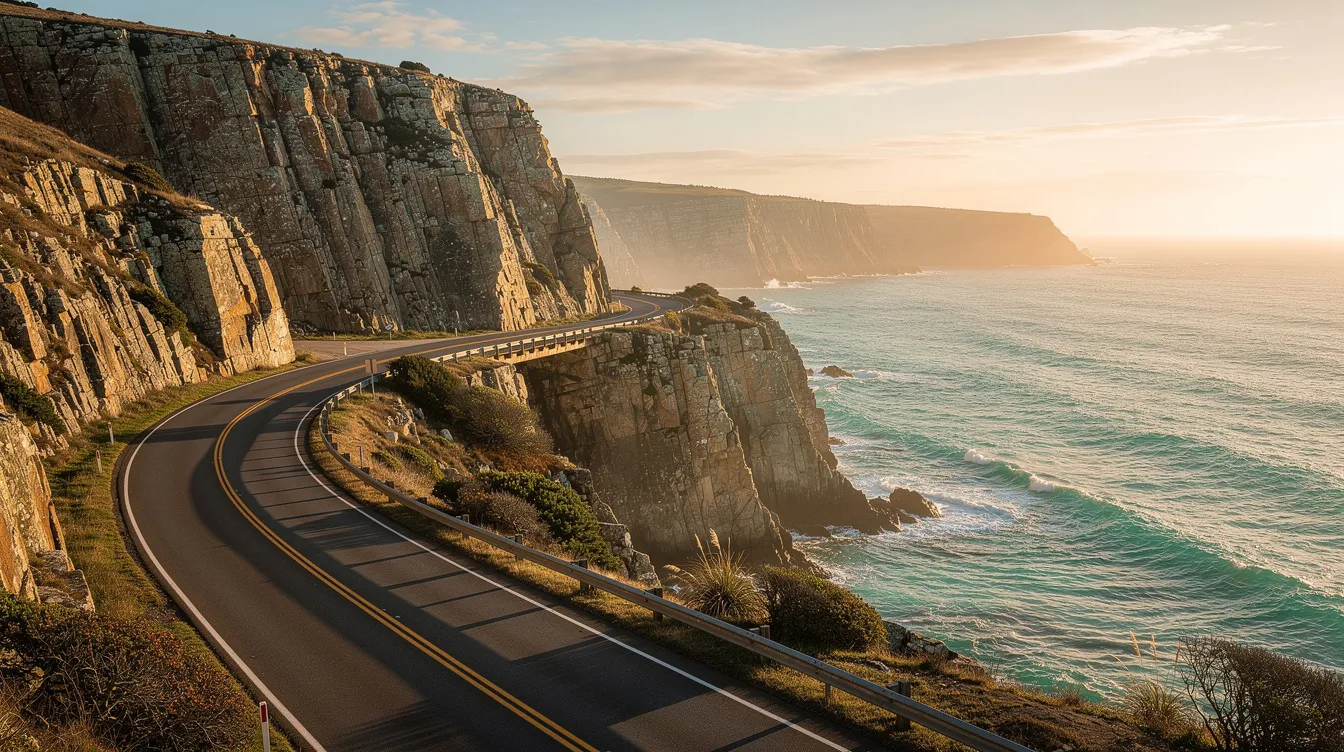
Traveling on scenic byways rather than interstates can enhance views and provide opportunities to explore historic markers and local cafes—this is fundamental to how we think about route design. The Pacific Coast Highway is often regarded as one of the most scenic drives in the United States, offering breathtaking views of the coastline, cliffs, and ocean, and it exemplifies what we look for in every route we build.
How a Route Pack from The Stable is built:
Route curation: Every road is hand-selected for surface quality, sightlines, and rhythm—not just scenery. We note camber, elevation changes, and traffic patterns.
Rally Point navigation: Discrete waypoints that highlight apexes on curves, vista pullouts, and moments worth pausing for.
Dining recommendations: From Michelin-recognized restaurants to roadside spots that locals swear by.
Car-forward accommodation suggestions: Boutique hotels and inns with secure parking, covered spaces, or EV charging—places where your car is welcome.
Printable PDF roadbook: A tangible reference for the journey, designed to work offline.
Custom build options: Bespoke planning for cross country trips or special occasions, tailored to your car, your calendar, and your priorities.
The difference between a generic route and an enthusiast itinerary:
Consider the drive from San Francisco toward Salt Lake City. A generic route sends you straight across I-80—2,900 miles of interstate monotony at 70-80 mph averages. An enthusiast itinerary diverts you off I-80 to carve around Lake Tahoe’s shoreline, adding perhaps 50 miles but delivering 200+ miles of shoreline curves on NV-28 and CA-89. The destination is the same. The drive is not.
Seasonality as a core design principle:
Late spring and early fall runs through the Northern states avoid both winter closures and summer crowds.
Shoulder-season visits to crowded parks (think Zion or Yosemite) mean 20-30% less traffic.
Southern and Gulf Coast routes excel in late winter through early spring, dodging peak summer humidity and hurricane risk.
When planning a road trip, consider the time of year; late spring and mid-fall are often the best times to travel due to milder weather and fewer crowds. Every itinerary in this guide reflects that principle.
How to Choose the Right Road Trip Itinerary for You.
Choosing the right itinerary comes down to four variables:
How much time you have
What region calls to you
What car you’re driving
What kind of days you enjoy
Some drivers want long hauls with minimal stops; others prefer slow, scenic loops with two-night anchors. Neither is wrong—but the itinerary should match the intention.
Trip length framework:
Day trip (100-200 miles): Ideal for testing a new car or exploring backroads close to home. Think Utah’s Alpine Loop Scenic Byway (42 miles of aspen-lined switchbacks) or a morning run through California canyons.
Long weekend (2-3 nights, 400-600 miles total): Perfect for regional escapes. Boston to Portland, Maine via US-1 with lobster shack detours. San Francisco to Lake Tahoe with a twilight circuit of the shoreline.
7-10 day regional loop (1,200-2,000 miles at 150-250 miles/day): The sweet spot for leisurely touring. The Grand Circle in the Southwest hitting five parks. A New England coast-and-mountains circuit.
2-3 week cross country road trip (2,700-3,200 miles at 200-350 miles/day): The full commitment. Plan for 20-30% detour flexibility and at least three multi-night anchor stops.
Trip “flavors” to consider:
National park-heavy itineraries: Focused on scenic park roads and dark-sky overnights. Require advance reservations and often high-clearance considerations.
Coastal food and wine routes: Grand tourers with good range thrive here. Think the Pacific Coast Highway or the Gulf Coast ribbon.
Heritage and culture routes: Civil rights trails, music cities, architectural pilgrimages. Slower pace, more urban stops.
Pure driving-road pilgrimages: Colorado’s Million Dollar Highway, the Beartooth, Appalachian switchbacks. The road is the destination.
Starting point considerations:
Using your home base (New York, Boston, LA, San Francisco) as a starting point simplifies logistics and lets you break in the trip gradually.
Fly-in, drive-out itineraries work well for bucket list roads far from home—rent at Seattle for a Pacific Northwest parks loop or pick up a car in Las Vegas for the Southwest Grand Circle.
The Stable can tailor Route Packs for either approach, with GPX files compatible with Garmin or Apple CarPlay.
Visual discovery tools like Pinterest and Instagram can assist in finding picturesque and hidden spots not covered in standard travel guides—use them for inspiration, then let The Stable handle the routing.
One piece of advice for first-timers: Pick one core “spine”—East Coast, Gulf Coast, Northern Route—and resist the temptation to stack detours. Multi-detour trips increase planning complexity significantly and often lead to rushed driving. Build depth, not breadth.
Classic Cross Country Road Trip Itineraries (North, Central, South).
The Great American Road Trip can be planned using three main routes: northern, central, and southern, each offering unique landscapes and experiences across the U.S. A cross-country road trip typically spans from 2,000 to 3,000 miles, depending on the chosen route, and can take anywhere from several days to a few weeks to complete.
Each of these spines suits different cars, different seasons, and different driving styles. The Northern Route rewards cooler temperatures and Great Lakes shorelines—ideal for late spring or early fall. The Central Route crosses the Sierra Nevada and the heartland, working well for GT cars and performance EVs with robust charging networks. The Southern Route is the sunshine-and-seafood option, best from late winter through early spring to dodge both heat and hurricanes.
What follows are high-level frameworks with 5-7 day segments rather than minute-by-minute schedules. The goal is to show where to linger versus where to make miles—and to demonstrate that driving cross country can be an experience rather than an endurance test.
Northern Cross Country Route: Pacific Northwest to New York via the Great Lakes.
This is a cross country road trip for drivers who love cooler air, towering peaks, and Great Lakes shorelines. The route takes you through some of the most dramatic mountain passes in the Lower 48, across the vast quiet of North Dakota, and along the storied lakeside roads of Minnesota and Wisconsin before delivering you to the Hudson Valley and New York City.
Traveling in the northern states is recommended in late spring or early fall to enjoy outdoor activities without extreme temperatures. Late May through mid-June catches the post-snowmelt opening of high passes; September through early October offers brilliant foliage and thinner crowds.
10-14 day framework:
Days 1-2: Seattle to Whitefish, Montana (approximately 500 miles). Cross Washington’s Cascades and the Idaho panhandle. Overnight in Spokane or continue to the Flathead Valley. Whitefish serves as your anchor for Glacier National Park.
Days 3-4: Glacier National Park. If Going-to-the-Sun Road is open (typically mid-June through mid-October), this 50-mile route with 11% grades is non-negotiable. Wildlife on dawn and dusk drives. Two nights in a lakeside lodge booked well in advance—occupancy spikes to 70% during peak weekends.
Days 5-6: Whitefish to Duluth, Minnesota (approximately 800 miles over two days). Cross the North Dakota badlands—austere, beautiful, and surprisingly engaging. Theodore Roosevelt National Park makes a worthy midday stop.
Day 7: Duluth. A Great Lakes anchor with craft breweries, lakeside drives, and shipping-channel views. Rest day.
Days 8-9: Duluth to Door County or Michigan’s Upper Peninsula (200-400 miles). Cherry orchards, lighthouse loops, and some of the best lakeside roads in the Midwest.
Days 10-12: Great Lakes to New York City via Lake Erie and the Hudson Valley (500-600 miles over 2-3 days). Skim the southern shore of Lake Erie, cut through Pennsylvania’s wine country, and arrive via the scenic Hudson Valley on I-87 rather than dropping into the city from the Thruway.
Highlight segments:
Going-to-the-Sun Road in Glacier: 50 miles of carved-from-cliff engineering, best at sunrise or golden hour
The drive through Montana’s Flathead Valley with the Rockies as a backdrop
Door County’s quiet peninsula roads for a slower rhythm before the final push
Planning cues:
Book lakeside inns in Glacier and the Great Lakes region 4-6 months ahead for late spring weekends
Check NPS for seasonal opening dates on mountain passes
Watch for wildlife at dawn and dusk—elk, bear, and deer are common
Central Cross Country Route: San Francisco to Virginia Beach via Lake Tahoe and the Heartland.
This is the “classic Americana” cross country trip—a 12-16 day journey that prioritizes scenic mountain and plains driving over desert heat. It’s well-suited to GT cars and performance EVs, with robust DC fast-charging clusters through Utah and Colorado (Electrify America’s network covers most of the corridor, with 20-minute charges available every 150 miles).
Day-by-day arc:
Days 1-2: San Francisco to Lake Tahoe (approximately 200 miles via CA-89). Cross the Sierra Nevada and arrive at the lake for a two-night stay. The late spring evening run on NV-28 or CA-89—tracing the shoreline at twilight—is one of the finest 72-mile loops in the country. Emerald Bay deserves a stop.
Days 3-4: Lake Tahoe to Moab, Utah (approximately 500 miles over two days). Cross Nevada on US-50 (“The Loneliest Road in America”) and descend into Utah’s canyon country. Overnight near Arches or Canyonlands National Park.
Day 5: Moab. Arches’ 34-mile scenic drive through sandstone windows. An optional second night if you want to catch sunrise at Mesa Arch.
Days 6-7: Moab to Kansas City (approximately 900 miles over two days). Cross the Colorado Rockies and the Great Plains. This is the repositioning stretch—less scenic, more about making miles. Long stretches of open road, but the Rockies deliver one last mountain flourish.
Day 8: Kansas City. BBQ pilgrimage—burnt ends, ribs, and architectural detours. Arthur Bryant’s or Q39 for the purists. One night.
Day 9: Kansas City to St. Louis (250 miles). The Gateway Arch, good food, and an easy drive.
Days 10-11: St. Louis to Kentucky bourbon country (approximately 300 miles). Detour through Louisville and the Bourbon Trail if time allows. Alternatively, push toward the Blue Ridge.
Days 12-14: Blue Ridge Parkway and Skyline Drive to Virginia Beach (approximately 400 miles over 2-3 days). This is the payoff stretch—105 miles of Skyline Drive at a 35 mph limit, sweeping ridgeline vistas, and a final run to the Atlantic coast.
Anchor stops:
Two nights at Lake Tahoe for shoreline runs and alpine lakes
One night near Arches or Canyonlands for desert stargazing
One night in Kansas City or St. Louis for BBQ and architecture
Two nights along the Blue Ridge for decompression before the coast
Car-specific considerations:
Performance brake checks before Tahoe and Blue Ridge mountain days
Plan DC fast-charging clusters in Utah and Colorado for EVs (250-mile legs match Mach-E range)
Watch for summer thunderstorms across the Midwest—afternoon cells can be intense
Southern Cross Country Route: San Diego to Charleston via the Gulf Coast.
The “sunshine and seafood” cross country trip—San Diego to Charleston or Wilmington via the Gulf Coast—is best from late winter through early spring (February through April) to avoid peak summer humidity and hurricane season. The southern route for a cross-country road trip is best taken during the summer months for a leisurely experience along the coast, though we’d qualify that advice: June is manageable, but July and August bring 95°F averages and 80% humidity that will test both driver and car.
10-14 day route:
Days 1-2: San Diego to Tucson (approximately 400 miles). Stop at Saguaro National Park for an afternoon drive through the iconic cactus forests.
Days 3-4: Tucson to West Texas (approximately 500 miles). Marfa for a night—minimalist galleries, the Marfa lights, and some of the quietest roads in the country. Optional Big Bend detour adds a day but delivers world-class isolation.
Days 5-6: West Texas to San Antonio and Austin (approximately 400 miles). Hill Country backroads, breakfast tacos, and live music. One night each.
Day 7: Austin to Houston (160 miles). Easy repositioning day. Houston’s food scene rewards an extended dinner.
Days 8-9: Houston to New Orleans via the Gulf Coast corridor (approximately 350 miles over two days). Lafayette for Cajun country, then New Orleans for a two-night anchor. The French Quarter, beignets, and jazz—but also some of the best restaurants on any American road trip.
Days 10-11: New Orleans to the Florida Panhandle (approximately 300 miles). Mississippi Gulf Coast towns like Bay St. Louis and Ocean Springs for quiet beach time. Pensacola or the 30A corridor (Seaside, Rosemary Beach) for a two-night stay.
Days 12-14: Florida Panhandle to Charleston (approximately 500 miles over 2-3 days). Cross into Georgia, then up the Atlantic side—Savannah warrants an overnight, and Charleston is the reward.
Gulf Coast experiences:
Late-afternoon coastal drives between Pass Christian and Ocean Springs
Seafood dinners in Mobile or Apalachicola
Sunrise runs along quiet barrier island roads
Summer caveats:
Hurricane season runs June through November—NOAA data shows 85% of storm risk falls in this window
Intense heat demands earlier driving windows (depart by 7 AM, arrive by 1 PM)
More frequent rest days and hydration stops if attempting July-August
Signature East Coast Road Trip Itineraries.
The East Coast works remarkably well for curated drives because so much character is packed into relatively short distances. Within 1,000 miles of New York City lie 15 national parks and scenic byways—dense with coastal curves, historic cities, mountain roads, and charming towns that don’t require crossing the Great Plains to reach.
This section focuses on Atlantic-side trips rather than full cross country routes: a Northern New England loop, a Southern East Coast coastal run, and a mid-Atlantic culture-and-curves itinerary. Each can be driven as a standalone adventure or combined into longer journeys, much like the weekend and multi-day curated driving experiences in The Stable’s Drives collection. Many readers will be based in New York, Boston, Washington DC, or Miami—each sub-itinerary references concrete start points and driving times from these hubs.
Northern East Coast Loop: Boston to Coastal Maine and Back.
A 5-7 day late spring or early fall loop starting and ending in Boston, designed for coastal scenery, lighthouses, and seafood with 150-200 mile driving days. The Atlantic coast here delivers some of the most atmospheric driving on the eastern seaboard—dawn light on rocky shores, hidden gems tucked into fishing villages, and roads that wind through pine forests to sudden ocean views.
Route spine:
Boston → Portsmouth, NH → Portland, ME → Camden/Rockland, ME → Acadia National Park area → inland return via the White Mountains to Boston
Driving moments:
Dawn or dusk run along Maine’s US-1 past 60+ lighthouses
A half-day loop through Acadia’s Park Loop Road (27 miles, climbing to Cadillac Mountain’s 1,200-ft summit)
The Kancamagus Highway (34 miles of NH peaks)—if you’re here in early fall, the foliage draws a million visitors annually, so time it midweek
Stay structure:
Two nights in Portland (lobster, craft beer, walkable waterfront)
Two nights in Camden or Rockland (harbor towns, good restaurants, secure parking)
One night in the White Mountains (inn like the Omni Mount Washington)
The Stable can recommend design-led inns and car-friendly boutique hotels with secure parking and EV charging along this route. For those chasing pristine lakes and alpine lakes, the return through the White Mountains adds interior variety to balance the coastal miles.
Southern East Coast Run: Washington, DC to Florida’s Atlantic Beaches.
A 7-9 day early summer or late September itinerary from Washington, DC to somewhere between St. Augustine and Miami, prioritizing coastal atmosphere and historic districts over high-mileage interstate slogs. This route is among the most iconic destinations on the eastern seaboard—Outer Banks lighthouses, Charleston’s live oaks, Savannah’s squares.
Progression:
DC → Richmond → Outer Banks, NC → Charleston, SC → Savannah, GA → Amelia Island and/or St. Augustine, FL → optional extension to Miami
Standout driving stretches:
The bridges and ferries of North Carolina’s Outer Banks (52-mile Hatteras stretch with wildlife stops)
Live-oak-lined lanes approaching Charleston and Savannah on US-17 (100 miles of lowcountry scenery)
Early-morning coastal runs in northern Florida—quiet, warm, uncrowded
Smart pacing for heat and beach time:
Two nights minimum in both Charleston and Savannah—rushing these cities defeats the purpose
Shorter one-night hops on either side (Richmond, Outer Banks stopover, Amelia Island)
Midday breaks for pool time, galleries, or long lunches
Seasonal considerations:
Hurricane season runs June through November—NOAA data shows 85% risk in this window
Holiday traffic (Memorial Day, July 4th) can clog the Outer Banks
The Stable’s bespoke planning can adjust inland vs coastal nights depending on forecasts
Mid-Atlantic Culture & Curves: New York to the Blue Ridge and Back.
A 4-6 day “long weekend plus” loop from New York City through Pennsylvania Dutch country and the Blue Ridge, aimed at drivers who want mountain switchbacks within a half-day of Manhattan. This is the itinerary for when you have just a couple of days but need real roads.
Loop outline:
NYC → Bucks County or Lancaster, PA → Shenandoah National Park / Skyline Drive, VA → Blue Ridge Parkway segment, VA/NC → return via Charlottesville and Washington, DC or directly up I-81 with curated backroad detours
Specific roads:
Skyline Drive for sweeping ridgeline vistas (105 miles at 35 mph limit—embrace the pace)
Selected sections of the Blue Ridge Parkway
Quieter Pennsylvania farm roads (Route 340) for relaxed cruising
Stay suggestions:
One night in Pennsylvania Dutch country for a slower start
1-2 nights in a vineyard-adjacent inn in Virginia
One night in a design-led hotel in DC or Philadelphia on the return leg
This itinerary works well in shoulder months—late April through May, late September through October—when foliage is dramatic but crowds are lighter than peak fall weekends.
National Park Road Trip Itineraries for Drivers.
National park trips can be exhausting if they’re planned purely around checklists—hiking boot miles, visitor center stamps, and sunrise alarms. At The Stable, we approach them as driving experiences: curated scenic roads with well-timed overnights that happen to pass through some of the most stunning scenery on the planet.
This section focuses on three U.S. regions where a national park-focused long road trip works beautifully: the Grand Circle in the Southwest, the Sierra–Yosemite–Lake Tahoe triangle, and a Pacific Northwest parks arc. All itineraries assume you have your own car—classic, modern sports, or performance EV—and The Stable’s Route Packs factor in charging, fuel, and service gaps near remote parks, building on the broader curated driving routes and car culture guides we publish year-round.
Planning reminders:
Book key park lodges and entry reservations 4-6 months ahead—Yosemite alone sees 330,000 summer slot reservations, with 80% booked by March
The America the Beautiful Pass provides cost savings on entrance fees to federal recreation sites in the United States—it pays for itself after three or four park entries
Validating the opening hours and reservation requirements is crucial for popular rural attractions—many scenic roads have seasonal closures or timed entry
Southwest Grand Circle: Desert Canyons and Stargazing.
A 7-10 day loop from Las Vegas, ideal from March through May or September through early November, combining some of the most iconic destinations in the Western United States with cinematic desert drives. The Grand Canyon in Arizona is one of the most iconic destinations in the Western United States and is considered a natural wonder of the world—and it’s just one stop on this circuit.
Example loop:
Las Vegas → Zion National Park, UT → Bryce Canyon → Capitol Reef → Moab (Arches and Canyonlands National Parks) → Monument Valley → Page (Lake Powell, Mono Lake region in spirit) → Grand Canyon (North or South Rim) → return to Las Vegas via Hoover Dam or Historic Route 66
Sedona, Arizona is known for its stunning red rock formations and is often described as a magical place, making it a popular stop on road trips in the region—it can be added as a detour on the return leg toward Phoenix or directly to Las Vegas.
Key driving experiences:
Zion’s Mt. Carmel Highway (12 miles of tunnels and curves through dramatic canyons)
UT-12 from Bryce to Capitol Reef (100 miles of hoodoos and sweeping canyon views—one of the finest roads in America)
The approach into Moab for Arches’ 34-mile scenic drive
Sunrise or sunset rim drives in Grand Canyon National Park (Desert View Drive, 25 miles)
Stargazing:
Capitol Reef offers 99% star visibility (NPS Bortle Scale 2)—dark-sky sites like this are increasingly rare
Plan at least one “dark sky” stay near Capitol Reef or Canyonlands
Clear desert nights are a highlight for car enthusiasts and photographers alike—schedule a moonless night if possible
Heat and car care:
Desert temps hit 110°F in summer—carry extra water, check cooling systems before departure
Time mid-day drives carefully; morning departures mean arriving before peak heat
Brake checks before mountain and canyon descents
It’s advised to schedule only one major attraction per day during a road trip to leave room for spontaneity—this applies doubly in park-heavy itineraries where you’ll want time to explore without rushing.
Sierra Nevada & Yosemite to Lake Tahoe Triangle.
A 5-8 day California itinerary in late spring through early autumn, focused on mountain passes, high-alpine lakes, and iconic granite landscapes. Yosemite National Park in California is renowned for its breathtaking landscapes, including waterfalls, granite cliffs, and diverse flora and fauna, making it a must-visit for road trippers—but the roads in and around it are equally spectacular.
Route outline:
San Francisco or Bay Area → Yosemite National Park (via CA-120 or CA-140) → Tioga Pass crossing (if open) → Mammoth Lakes or June Lake loop → Lake Tahoe (south or north shore) → return via Napa/Sonoma or direct to the coast
Specific drives:
Tioga Pass Road for sweeping high-elevation views (64 miles, 9,945 ft summit—opens late May typically)
June Lake Loop for a quieter alpine circuit
Daytime and twilight circuits around Lake Tahoe’s shoreline—Emerald Bay and Sand Harbor are non-negotiable pauses
Half Dome dominates Yosemite’s skyline, but the driving roads through Tuolumne Meadows and over Tioga Pass deliver scenery that rewards the car enthusiast as much as the hiker.
Recommended stays:
Two nights minimum in Yosemite area (Valley or Wawona)—80% of lodging is booked 5 months ahead, so plan accordingly
Two nights at Lake Tahoe for shoreline runs and alpine decompression
Optional night in wine country (Napa or Sonoma) on the return for a softer landing
Seasonal constraints:
Snow closings on Tioga Pass typically last until late May or early June
Crowded summer weekends around lake resorts—midweek visits are significantly quieter
The Stable times weekday passes and sunrise/sunset drives to avoid heavy traffic where possible
Pacific Northwest Parks & Coast: From Rainforest to Peaks.
A 7-10 day loop from Seattle, best from June to September, that threads together Olympic National Park, Mount Rainier, and the Columbia River Gorge with a run down the Washington/Oregon Coast. This is the Pacific Northwest at its finest—rainforest, peaks, and dramatic coastline.
Route:
Seattle → Olympic Peninsula (Hoh Rainforest and coastal beaches) → ferry and coastal route to Astoria and Cannon Beach → Portland → Columbia River Gorge (including Multnomah Falls) → Mount Rainier National Park → back to Seattle on scenic byways
Key driving sections:
US-101 along the Pacific coast—long stretches of shoreline curves and sea stacks
The viewpoints around the Columbia River Gorge (I-84, Multnomah’s 30-mile views)
The mountain approach roads into Mount Rainier for sweeping vistas and well-surfaced curves (Wonderland Highway, 93 miles)
Ferries add 20% time but deliver 90% more scenery—they’re part of the experience, not a delay. The Icefields Parkway in Canada, linking Banff and Jasper national parks, is considered one of the world’s most scenic highways, showcasing stunning views of the Canadian Rockies—and while it’s north of the border, PNW enthusiasts often extend trips into British Columbia.
Stay recommendations:
Two nights on the Oregon Coast (Cannon Beach or Manzanita)
Two nights in Portland for food, coffee, and city energy
One night near Mount Rainier before the return to Seattle
The Stable’s planning can fold in car-forward inns with covered parking in typically damp PNW weather and suggest drying/cleaning routines for cars used in coastal rain, anticipating the kind of curated stays collection for drivers we’re building toward.
Gulf Coast and Southern Seaboard Itineraries.
The draw of the Gulf Coast and Southern Atlantic shores is unmistakable: seafood, live music, warm water, and long, low-stress coastal drives that suit grand tourers perfectly. These are the routes where good food and slow sunsets set the pace rather than mileage targets.
These itineraries can stand alone as 5-9 day breaks or be stitched into a coast-to-coast journey. They’re best tackled outside peak hurricane season when possible—The Stable’s custom planning can build in inland “weather escape” nights if forecasts shift.
The Gulf Coast Ribbon: Houston to the Florida Panhandle.
A 6-8 day, 800-1,000 mile coast-hugging itinerary from Houston to the Florida Panhandle, optimized for seafood, small beach towns, and sunset drives. This is the antidote to the aggressive cross country push—a route where the point is to slow down.
Progression:
Houston → Beaumont and Lake Charles → Lafayette (Cajun country) → New Orleans → Mississippi Gulf Coast (Bay St. Louis, Gulfport, or Ocean Springs) → Mobile, AL → Pensacola or 30A/Seaside (FL Panhandle)
Driving sequences:
Morning runs along US-90 with Gulf views
Bridge crossings between bayou and barrier islands
Quieter county roads behind the main highway for more engaging driving—save room for exploration off the main route
The New Orleans stop is essential. Two nights minimum for beignets at Café Du Monde, dinner at a white-tablecloth Creole institution, and a late-night walk through the French Quarter. Good food here is not optional—it’s the point.
Stay structure:
Two nights in New Orleans
Two nights on a quieter beach stretch (e.g., between Pensacola and Panama City on 30A)
Single nights in Lafayette and Mobile for regional flavor
Seasonal strategy:
Shoulder-season visits (March-April, October-November) balance warm weather with manageable humidity
Book waterfront, secure-parking stays early for weekends—Gulf Coast overnights fill fast in spring
Southern Culture Run: Nashville to Charleston via Atlanta and Savannah.
A 7-9 day inland-to-coast itinerary that can link up with Gulf Coast or East Coast routes, mixing music cities, civil rights history, and coastal charm. This is the “Southern culture deep dive”—for drivers who want unforgettable experiences beyond just the roads.
Route:
Nashville → Chattanooga → Atlanta → Macon or Montgomery (optional civil rights detour) → Savannah → Charleston, with backroad variants where feasible
Highlight drives:
The river gorge approaches around Chattanooga (Lookout Mountain)
Scenic byways into the Lowcountry near Savannah
Live-oak corridors on coastal islands outside Charleston
The entire state of Georgia offers surprising driving variety—from Appalachian foothills in the north to Spanish-moss-draped lowcountry in the south.
Recommended stays:
Two nights in Nashville or Atlanta for city immersion (honky-tonks, food halls, architecture)
2-3 nights split between Savannah and Charleston to absorb the slower coastal cadence
Talking to locals can yield recommendations for activities and attractions that might not be available online—especially true in the South, where barbecue spots and juke joints often operate on local knowledge alone.
Planning and Pacing a Long Road Trip (Without Burning Out).
Long road trips and cross country drives are exhilarating—but they can also be exhausting without deliberate pacing. AAA data indicates that trips exceeding 500 miles per day lead to a 30% higher incidence of driver error and burnout. The solution isn’t to drive less; it’s to drive smarter.
Realistic Daily Mileage.
150-250 miles for scenic touring: This is the sweet spot for engagement. Time for stops, photography, and enjoying the car.
300-400 miles for repositioning days: When the road between highlights is less scenic, you can push a bit—but treat these as transit, not experience.
Maximum 6 driving hours for enjoyment: When planning a cross-country road trip, it’s recommended to limit actual driving time to 6 hours a day to allow for exploration and avoid burnout.
Structuring a 10-21 Day Itinerary.
Alternate “drive days” (where the road is the focus) with “deep-dive days” (where you explore a destination on foot)
Reserve at least one 2-3 night stop every 4-5 days to reset
Plan easier days after demanding mountain drives or long repositioning stretches
Time-of-Day Strategy.
Sunrise and late-afternoon drives deliver the best light and cooler temperatures
Mid-day is for sit-down lunches, galleries, or pool time—not white-knuckle highway miles
Adding a 15% time buffer to your daily travel schedule is recommended to accommodate potential delays
What The Stable builds into Route Packs:
Embedded break points, coffee stops, and “stretch roads” so drivers don’t have to calculate everything themselves
Suggestions for morning vs afternoon driving based on sun angle and traffic patterns
Offline maps for areas with poor data connectivity—it’s important to download offline maps before embarking on a road trip, as many areas may have no cell service, which can lead to losing route plans
How The Stable Builds and Delivers Road Trip Itineraries.
The Stable exists at the intersection of classic and sports cars, great roads, and the kind of travel where how you get there matters as much as where you end up. We’re a digital luxury road trip planner for people who bring their own car—classic, sports, GT, or performance EV. Our product is the route and the planning, not the vehicle.
Two core offerings:
Curated Route Packs: Ready-to-drive itineraries for popular regions—California canyons, New England coast, national park loops, Lake Tahoe circuits. Each pack is road-tested and refined based on real-world feedback.
Bespoke Road Trip Planning: Fully custom itineraries for cross country journeys, special-occasion drives, or themed adventures. We build around your car, your calendar, and your preferences.
What a Route Pack includes:
GPX/Rally Point navigation compatible with Garmin, Apple CarPlay, and most modern infotainment systems
Day-by-day route breakdowns with distances, drive times, and highlight stops
Dining and tasting-room recommendations—from Michelin-recognized restaurants to roadside institutions
Car-friendly boutique hotel suggestions with secure parking and EV charging
Printable PDF roadbook for offline reference
How bespoke cross country trips work:
Consultation about your car, available time, and preferred regions (East Coast, Gulf Coast, mountain passes, etc.)
Custom itinerary with protected roads, seasonal timing, and logistics handled
Adjustments based on your feedback before you depart
Ongoing refinement as we incorporate real-world updates from drivers who’ve run the route
The Stable road tests and refines routes where possible. We continuously update recommendations based on seasonal changes, road conditions, and feedback from the community, then share deeper stories and guides from those drives in The Stable Journal’s driving experiences and car culture features. The Pacific Coast Highway, also known as California State Route 1, is often regarded as the ultimate California road trip, offering stunning coastal views and access to beautiful beaches—and it’s one of dozens of roads we’ve driven, documented, and built into our Route Packs.
For those inspired by world-class drives, The Great Ocean Road in Australia is famous for its dramatic coastal scenery, including the Twelve Apostles rock formations, and is considered one of the world’s most scenic coastal drives—proof that the principles of great road trip itineraries are universal.
Road Trip Itineraries FAQ.
How far in advance should I plan a long road trip or cross country itinerary?.
For complex cross country road trips with national parks or peak-season coastal towns, planning 4-6 months ahead is ideal to secure car-forward stays and key park reservations. National parks like Yosemite see 80% of summer slots booked by March—waiting until June means limited options.
Simpler regional itineraries—a 4-day East Coast loop or a late spring Lake Tahoe weekend—can often be planned 4-8 weeks ahead, especially outside major holidays.
The Stable can help compress the planning timeline by providing pre-curated Route Packs and suggesting flexible alternatives if preferred hotels or park entries are booked.
How many days do I really need for a cross country road trip?.
A bare-bones, mostly-interstate crossing can be done in 5-7 days—but that’s logistics, not a trip. An enjoyable, scenic cross country road trip typically takes 12-21 days depending on route and stops.
Aim for 200-350 miles per day with regular 2-night stops if you want time to enjoy national parks, cities, and coastal detours. The best times to take a cross-country road trip are late spring and mid-fall, as these seasons generally offer mild weather and fewer crowds.
First-timers: start with a 7-10 day regional itinerary before committing to a full 3,000-mile cross country journey. Build confidence with the pacing, then go big.
What’s the best time of year for a long road trip in the US?.
Late spring (April-June) and early fall (September-October) are generally ideal: milder temperatures, fewer crowds, and better driving conditions for both northern and central routes.
High summer can be excellent for mountain and Great Lakes itineraries but brings heavy traffic in national parks and intense heat along the Gulf Coast and deserts. South Dakota and other northern states are particularly pleasant in early June or September.
Winter works as a niche option for Southern and Gulf Coast routes if you avoid storm systems and check road conditions regularly. New Mexico and Arizona deliver stunning scenery without summer heat from November through March.
How do I adapt these itineraries if I’m driving an EV?.
Choose routes with robust DC fast-charging networks (West Coast, much of the East Coast, and many interstates) or allow extra time in more remote states.
The Tesla Supercharger network covers 95% of major corridors, and Electrify America clusters make I-70 and I-80 practical for most performance EVs.
Keep daily distances shorter in charging-sparse zones (parts of Montana, New Mexico, and West Texas) and always plan your next charger before leaving a stop.
The Stable can layer charger locations and EV-friendly accommodations into bespoke itineraries and adapt recommended legs to your vehicle’s real-world range.
Can The Stable customise a road trip itinerary around a specific event or theme?.
Absolutely. Itineraries can be built around events (Monterey Car Week, a national park eclipse, a destination wedding) or themes (wine country exploration, motorsport history, East Coast lighthouses, hot springs circuit, stargazing spots).
The process typically starts with your dates, starting city, and must-hit locations—then The Stable designs the driving routes, overnights, and suggested stops around that spine.
Think about your road trip bucket list roads and scenes—Gulf Coast sunsets, Lake Tahoe passes, Appalachian switchbacks, outdoor activities like rock climbing or white water rafting nearby—and use these as anchors for a custom build. The journey should reflect what you love, not just that itinerary template you found online.
What about routes outside the continental US?.
While this guide focuses on U.S. road trip itineraries, The Stable’s principles apply wherever great roads exist. The Icefields Parkway in Canada, which connects Jasper and Banff National Parks, is renowned for its stunning mountain scenery, glaciers, and wildlife, making it a must-drive for nature lovers—and it’s a natural extension for drivers finishing a Pacific Northwest loop.
We’re always expanding our route library. If you’re dreaming of a drive that starts in Seattle and ends in Jasper, or a Wild West loop through Montana and Wyoming into Alberta, reach out—bespoke planning knows no borders, and it draws on the hard-earned experience from the cars we’ve owned, driven, and documented in The Stable’s Garage.
What should I pack for a long road trip in a sports car?.
Sports cars and GTs have limited cargo space, which forces smart packing decisions. Essentials:
Offline maps downloaded before departure
A quality tire pressure gauge
Basic tools
A compact cooler for snacks and water on remote stretches
A few of the curated driving and travel essentials we’ve road-tested in our gear guides
For overnight trips, pack soft-sided bags that conform to trunk shapes. Leave room for souvenirs and purchases along the way—save room for the unexpected find at that roadside antique shop in Oregon Trail country.
The Stable’s gear reviews on our Journal cover road-tested essentials for drivers who refuse to compromise on what they bring, all rooted in the husband-and-wife-led Stable ethos of drives, stays, gear, and storytelling.
Every road trip itinerary is a framework—what makes it yours is the car you bring and the curves you choose to chase. Whether you’re planning a cross country journey from San Francisco to Virginia Beach, a weekend loop through New England’s coast, or a top destinations circuit through the Southwest’s national parks, the principles remain the same: prioritize the road, pace yourself for enjoyment, and let the journey unfold.
- Best First Aid Kits for Road Trips — safety essentials for any long drive.
- Best Travel Bags for Road Trips — duffels and weekenders that fit any boot.
- Best Dashcams for Road Trips — capture every mile in stunning detail.
- Best Travel Pillows for Road Trips — stay comfortable on long hauls.
The best drives aren’t about covering ground. They’re about covering the right ground, in the right car, at the right pace.
Explore The Stable’s Route Packs for ready-to-drive itineraries, or request a bespoke planning consultation to build your own cross country trip from scratch. The roads are waiting. Bring the car you love.
_Articles Connexes
Best Road Trip Places in USA for Driving Enthusiasts.
The United States offers a range of road trip experiences that simply don’t exist anywhere else on earth. From the dramatic Pacific Coast Highway to the alpine passes of Colorado, here are the 8 best road trip destinations for driving enthusiasts.

Best Road Trip Planning Tools and Services for Driving Enthusiasts
Not all planning tools serve the same purpose. For driving enthusiasts, the evaluation criteria extend well beyond basic functionality. Here's our curated guide to the best road trip planning tools available.

Travel Road Planner: Craft Your Perfect Driving Adventure
A travel road planner transforms long drives into curated adventures. This guide covers apps, custom services, and offline tools to help you plan the perfect driving adventure.
Parcourez les routes que vous venez de lire
L'adhésion The Stable arrive bientôt — un abonnement pour chaque itinéraire sélectionné de notre bibliothèque, avec points de rallye détaillés, guides gastronomie & vins et hébergements. À partir de $6.97/mois.