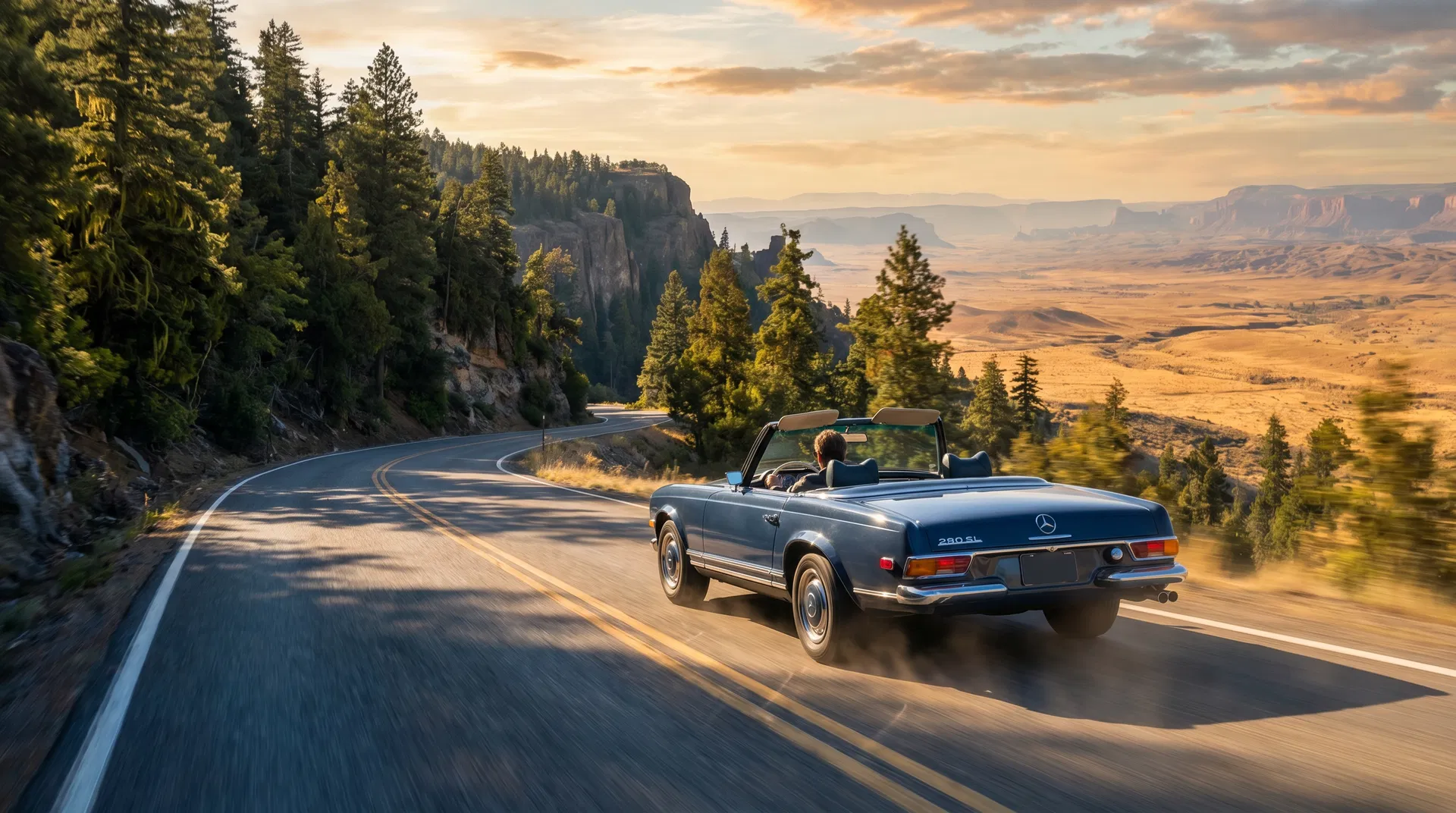

Choose a cross-country route you have time to enjoy
Start with your arrival date, then work backwards. Reserve time for overnight stops and the places you want to explore before filling the remaining days with driving. A navigation app's moving time does not include meals, fuel, charging, viewpoints or delays.
- Connecting two coasts: choose the start and finish cities first, then compare the full route in a current navigation service. Regional scenic drives are optional detours, not a continuous coast-to-coast navigation package.
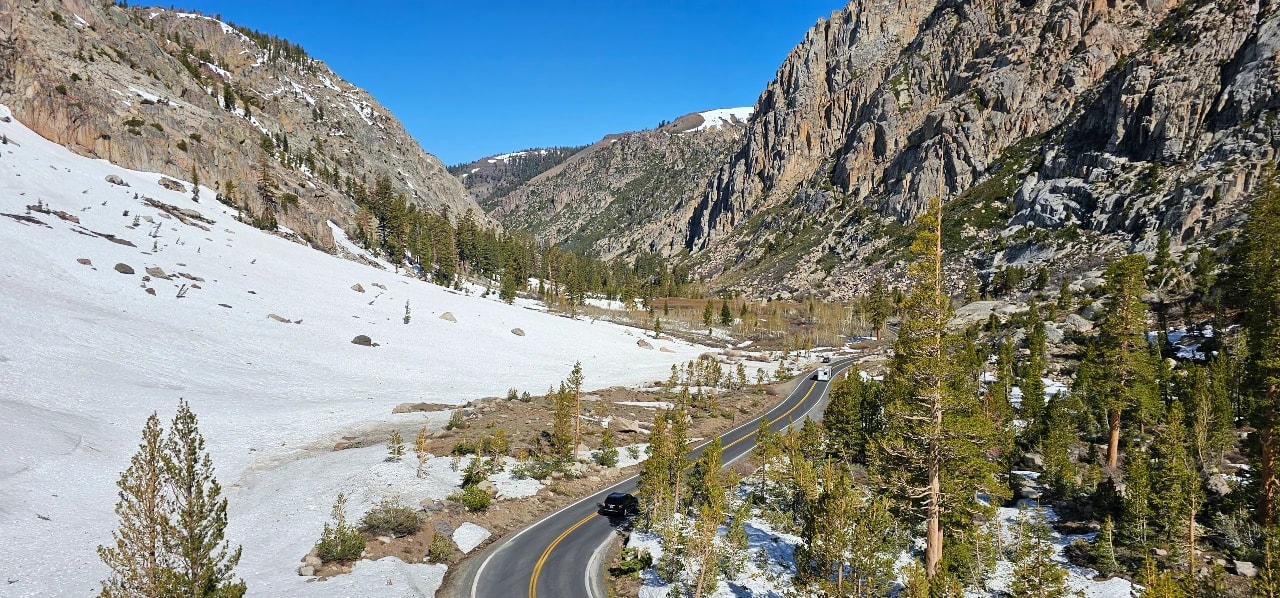
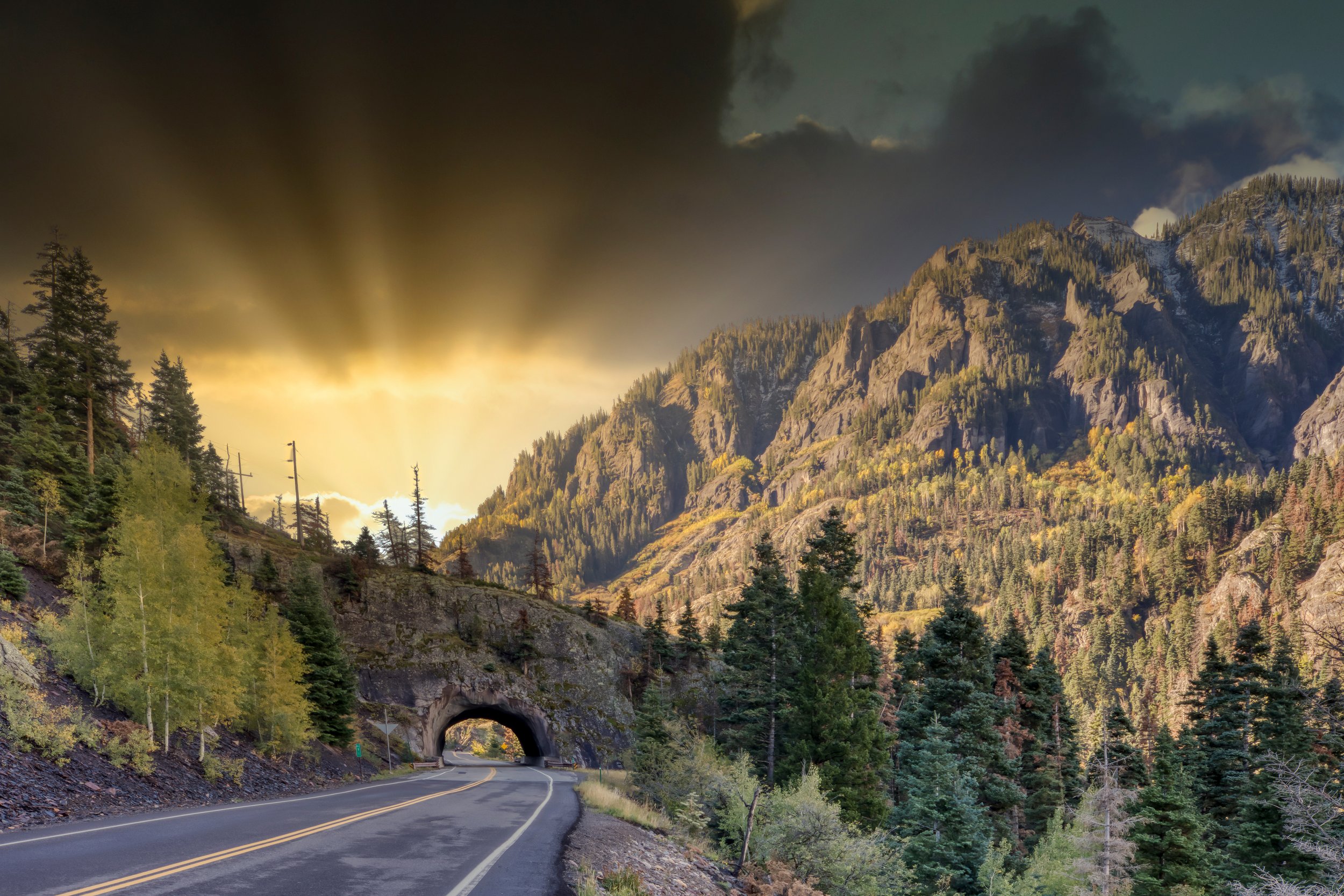
- Building around the mountains: consider the Sierra Passes Drive Pack for a California section and the Colorado High Country Drive Pack for a separate Colorado section. Check seasonal road access before linking them into a longer itinerary.
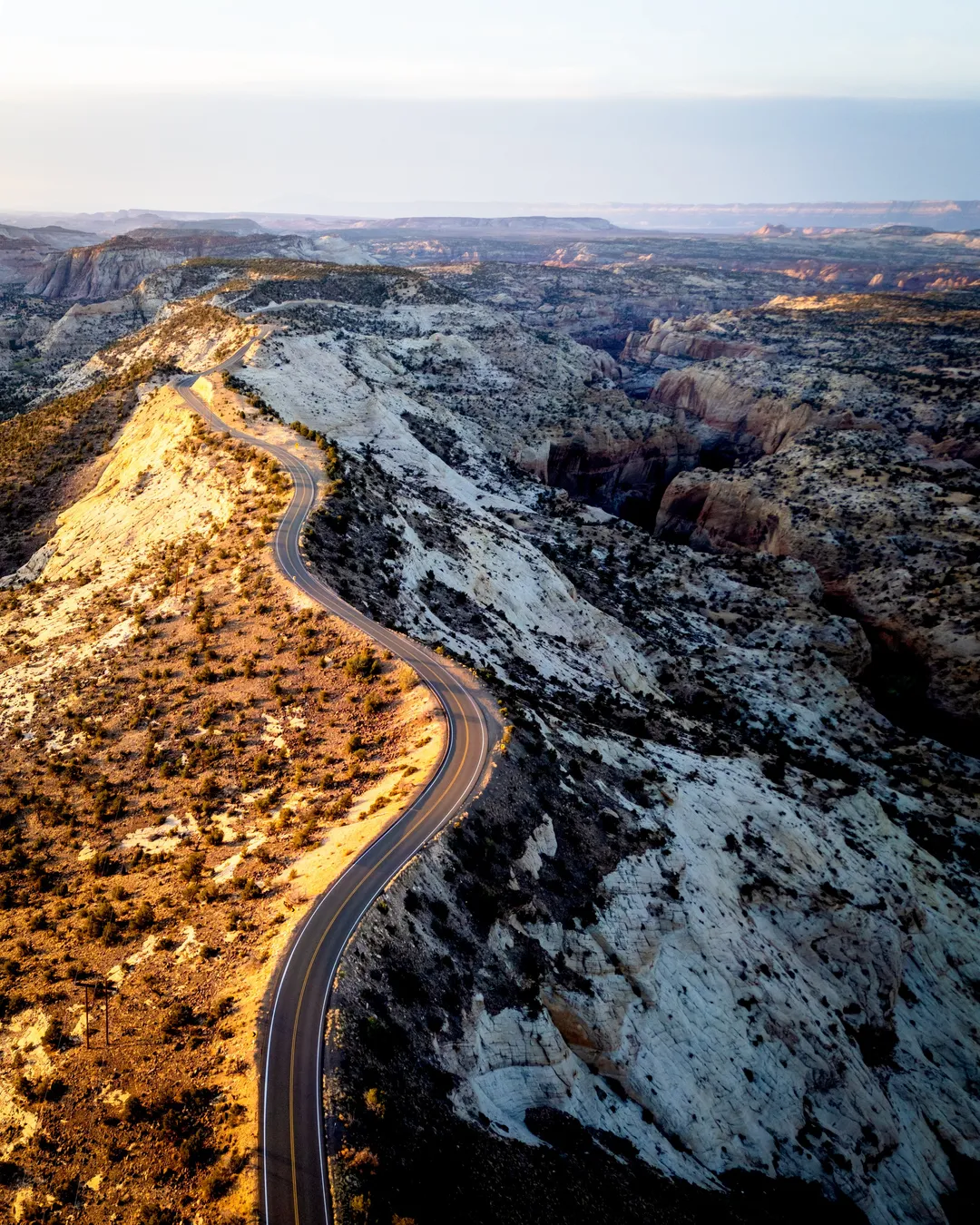
- Making Utah the focus: explore the Utah Red Rock Grand Tour as a regional trip in its own right if the cross-country schedule leaves too little time for stops.
Each public Drive Pack page shows its own route, duration and available inclusions. Compare those details with your dates before choosing membership or an individual pack. Accommodation, meals and transport are arranged separately.
Why Drive from the West Coast to the East Coast?
There’s a particular kind of satisfaction in watching the Pacific disappear in your rear-view mirror, knowing that 3,000 miles ahead the Atlantic waits. The same car that rolled out of a San Francisco garage or idled at Santa Monica Pier will arrive on the east coast with desert dust on its flanks and mountain bugs on its nose. No other journey quite matches this one.
A cross country road trip from the west coast to the east coast typically covers 3,000–3,500 miles depending on your chosen path. The raw driving time - if you somehow bypassed every meal, every viewpoint, every hotel - runs about 45 hours. But that’s not why you’re reading this. For those who care about the journey as much as the destination, the realistic timeframe is 7–14 days. Most drivers in our community find 5–7 hours of wheel time per day comfortable, leaving space for sunrise drives, proper lunches, and checking into a design-led hotel before the light fades.
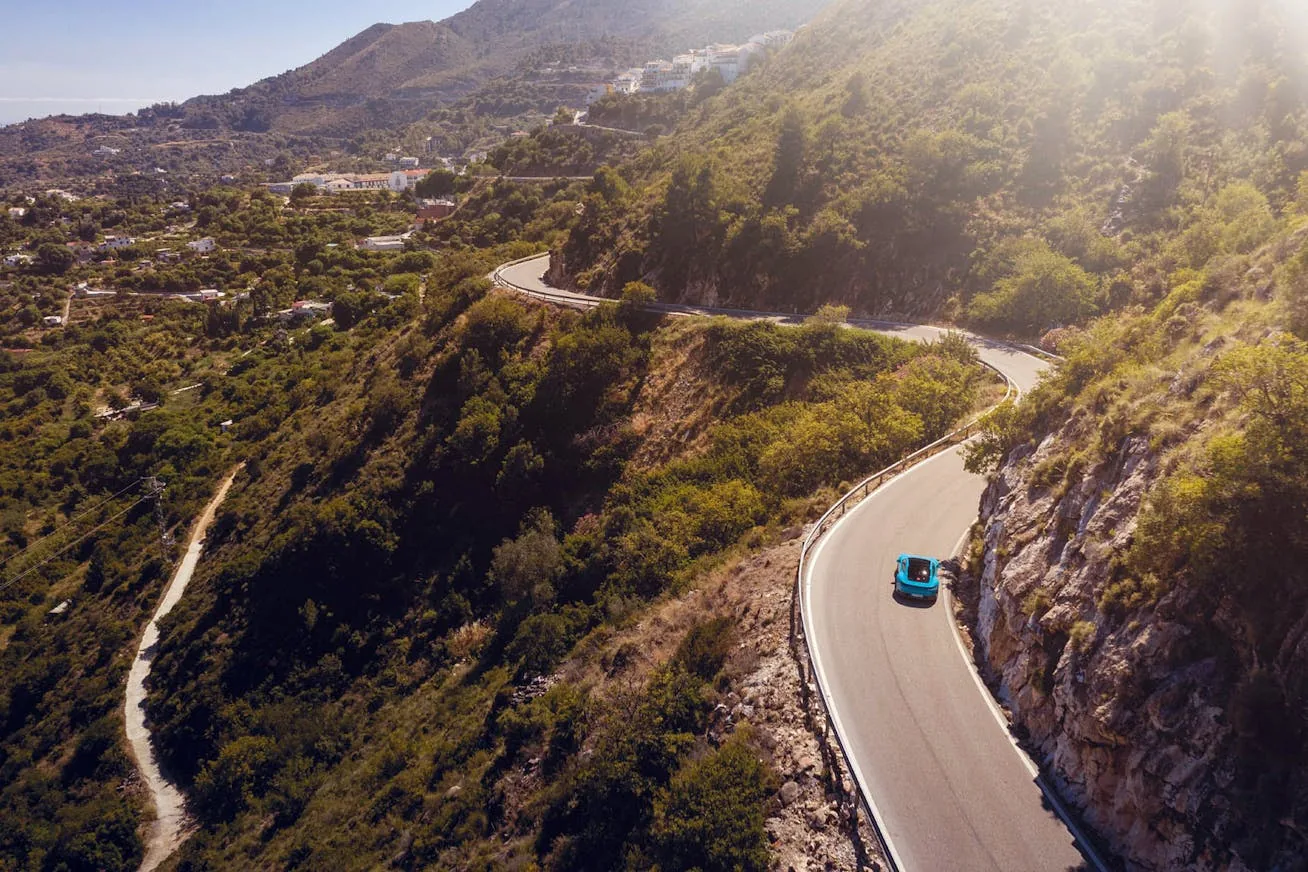
This guide isn’t for backpackers or budget RV travelers. It’s built for owners of sports cars, GTs, classic 911s, M cars, AMGs, and performance EVs who care about the texture of the tarmac as much as the view and the wine list. The kind of driver who notices surface quality on a mountain switchback and appreciates when a hotel has secure parking.
Three styles of cross-country road trip exist. The “fast and direct” approach (I-80 or I-90 straight across) gets you there in 4–5 brutal days. The “classic Americana” style mixes interstates with historic route segments like portions of Route 66. And the “enthusiast driver’s route” emphasizes mountain passes, scenic byways, and low-traffic two-lanes - this is where The Stable lives.
We use Rally Point navigation and tested GPX routes - similar to the curated driving experiences in The Stable Collection - to keep drivers off the worst truck-choked sections and onto more engaging back roads. You still make forward progress across the country, but the miles feel different.

Choosing Your Coast-to-Coast Route
There’s no single correct line from the Pacific to the Atlantic. The route you choose shapes the entire trip - desert or mountains, cities or small town stops, northern cool or southern warmth.
The best routes for a cross-country U.S. road trip typically follow four major corridors based on scenery and history. These four major corridors are: the Northern Route (Seattle to Boston), the Central Route (San Francisco to New York City), the Southern Tier Route (Los Angeles to Savannah or Miami), and the Transcontinental Interstate Route (such as I-80 or I-40 for the fastest cross-country travel). Each corridor offers a distinct blend of landscapes, attractions, and driving experiences.
Route Archetypes
Here are three archetypes you can mix and match:
Northern Route: Seattle to Boston via Idaho, Montana, possibly Yellowstone, North Dakota - with its scenic drives through places like Theodore Roosevelt National Park and the Great Plains - South Dakota’s Badlands and Black Hills, Minnesota, Wisconsin, and Michigan’s Upper Peninsula before crossing to New York and New Hampshire. This path offers cooler temperatures, big sky landscapes, and a sense of crossing the wild west frontier. Grand Teton sits within reach for those willing to angle slightly south through Wyoming. Many travelers consider northern routes for their unique blend of history and natural beauty.
Central Route: San Francisco to New York City via the Sierra Nevada, Utah’s national parks (Arches, Canyonlands), Colorado’s Rocky Mountains along I-70 and nearby byways, through Kansas City and St. Louis, then across Kentucky or West Virginia into Pennsylvania. This roughly echoes many iconic cross-country itineraries and balances dramatic scenery with solid city infrastructure.
Southern Tier Route: Los Angeles to Savannah or Miami via the Mojave Desert, northern Arizona (Flagstaff, Grand Canyon), New Mexico (Santa Fe or Albuquerque), Texas Hill Country, Louisiana (New Orleans), and the Atlantic coast of Georgia or Florida. Expect desert scenery, Southern food culture, and mild weather in the shoulder seasons.
Transcontinental Interstate Route: The fastest way to travel between U.S. coasts is via major interstates like I-80 or I-40, which prioritize efficiency over scenic drives.
The Stable typically recommends starting or finishing in major hubs with strong flight connections and car culture presence: Los Angeles, San Francisco, or Seattle in the west; New York, Boston, or Miami in the east. This makes logistics simpler if you’re shipping your car one way or arranging one way trips, and aligns with our broader focus on curated driving routes and car culture.
In the sections that follow, we’ll zoom into a concrete 10–12 day sample path from San Francisco to New York City - something tangible you can either copy or adapt to your own preferences.
Best Time of Year to Drive Coast to Coast
On a single cross-country run, you can encounter snow in the Rockies, triple-digit heat in the Nevada desert, and rain on the Atlantic coast - sometimes in the same week. Season choice matters more than you might expect.
Late April Through Early June 2026
Tioga Road opening dates vary with snow and road conditions. The National Park Service says the opening date cannot be predicted reliably, even in late spring. Check current conditions before committing to a crossing, and allow flexibility in your itinerary.
Mid-September Through Late October 2026
The other sweet spot. Desert days cool to pleasant driving temperatures. Mountain weather stabilizes. And if you angle your route through Colorado, the Appalachians, or New England, fall color provides an extraordinary visual reward. Early fall also means fewer crowds at the most popular national parks.
July–August Considerations
Maximum daylight, but maximum crowds at destinations like Yosemite, Yellowstone, and Zion. Heat becomes intense across Nevada, Utah, Kansas, and Arizona - hot asphalt affects performance tires and demands attention to brake temperatures on long descents. Not ideal for the enthusiast driver.
Winter Driving (November–March)
Expect possible closures on I-70 over the Rockies, chains required over Donner Pass, and limited seasonal operations in parks. A traveler planning a late March 2026 departure should expect unpredictable conditions that can persist well into spring.
For performance EV drivers: cold weather affects both range and DC fast-charger speed. Map your charging networks in advance if crossing remote stretches of Nevada, Utah, or West Texas. The infrastructure exists, but knowing where it sits removes range anxiety.
Sample 10–12 Day Driver-Focused Route: San Francisco to New York City
This section sketches a concrete driver’s route for 2026 that hits iconic scenery - Yosemite, Utah red rock, the Rockies - and strings together cities with strong dining and hotel options. It’s a framework, not a rigid itinerary and pairs well with our longer-form driving experiences and car culture journal pieces. Each segment can flex based on your car, your calendar, and your appetite for adventure. Some travelers may choose to start in San Diego or include Las Vegas as a major stop, given their significance as travel destinations and their proximity to key attractions and natural sites.
The high-level sequence runs:
SF to Yosemite/Mono Lake
Nevada to Utah canyon country
Rocky Mountains and Denver
Kansas City and St. Louis
Appalachians and Pennsylvania
New York City finale
The route along Interstate 80 features key stops such as Lake Tahoe, the Great Salt Lake, Arches National Park, Rocky Mountain National Park, Denver, and Washington, D.C.
The Stable can turn this skeleton into a downloadable Drive Pack complete with Rally Points, GPX files, and a printable PDF roadbook for readers who want “trip ready” instead of DIY planning.
If you plan to visit three or more national parks along the way, consider purchasing an annual U.S. Park Pass for added convenience and savings.
Days 1–2: California – From the Pacific to the Sierra Nevada
Start in San Francisco or the Bay Area with a coastal coffee stop - Half Moon Bay or Pacifica work well - before turning inland. Cross the Central Valley vineyards and orchards toward Yosemite National Park and Tioga Pass (if open) or an alternative Sierra crossing like Sonora Pass or Carson Pass. Along the way, consider stopping at notable state parks such as Henry W. Coe State Park or Calaveras Big Trees State Park, both offering exceptional natural beauty and recreational opportunities that make them worthwhile additions to your itinerary.
The transition from Highway 1 or I-280 to engaging two-lane roads in the Sierra foothills marks the real beginning of the road trip experience. Consider a late-lunch stop in a Gold Country town like Sonora or Murphys - both have walkable main streets and respectable wine lists.
Overnight near Yosemite or on the east side of the Sierra at Lee Vining or Mammoth Lakes, depending on pass conditions. Look for a boutique lodge or design-forward hotel with secure parking for valuable cars and good dining within walking distance.
Tioga Road opening dates vary with snow and road conditions. The National Park Service says the opening date cannot be predicted reliably, even in late spring. Check current conditions before committing to a crossing, and allow flexibility in your itinerary.
Key landmarks for this section: Yosemite Valley viewpoints, Mono Lake’s otherworldly tufa formations, Tioga Road’s high-elevation curves, and Highway 395 along the Eastern Sierra.
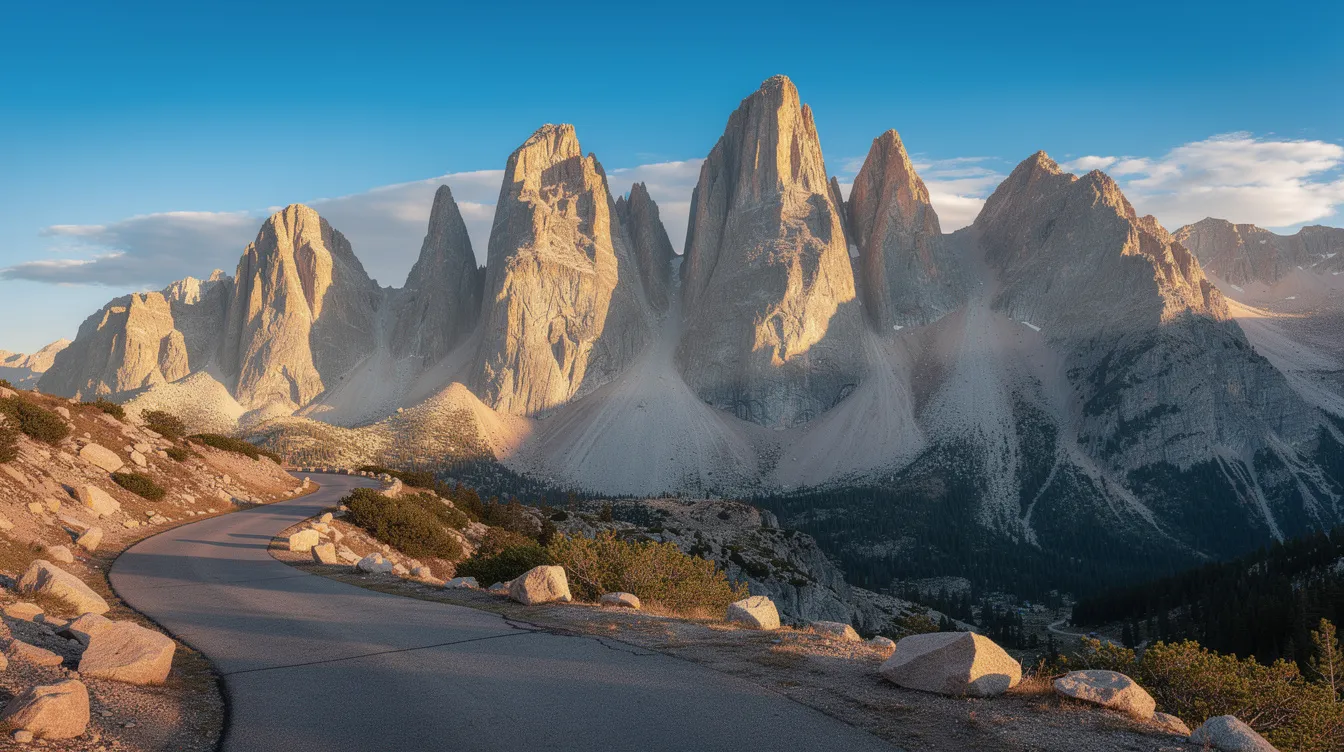
Days 3–4: Utah Canyon Country – Arches, Canyonlands, and Scenic Byways
The long but cinematic run from the Eastern Sierra across Nevada into Utah delivers one of the trip’s most dramatic visual transitions. US-50 through Nevada is branded “The Loneliest Road in America” for good reason - extended periods of minimal traffic, civilization, or services. The emptiness has its own appeal, but keep your tank full. Before leaving Nevada, consider a detour to the Hoover Dam, located about 35 miles southeast of Las Vegas - a must-see attraction known for its impressive architecture and scenic views of Lake Mead.
The red rock vistas of Utah rise almost suddenly after hours of Nevada sage. End this leg in Moab, the hub for Utah canyon country.
Dedicate a full day based out of Moab to sample Arches National Park and a portion of Canyonlands - the Island in the Sky district offers awe inspiring scenery without requiring a full day’s commitment. Zion National Park, renowned for its stunning red and white sandstone formations, is also a popular stop for road trippers seeking breathtaking landscapes. Plan early starts for sunrise drives to avoid crowds and catch the best light on the sandstone.
For pure driving pleasure, UT-128 along the Colorado River ranks among the best scenic drives in the region - sweeping curves with the river on one side and towering cliffs on the other. These scenic drives highlight the natural beauty and unique landscapes that make this part of the country so memorable. In a sports car, it’s exceptional.
Moab offers several upscale but car-friendly lodging options with secure parking and easy access to early road starts. Dining has improved significantly; expect solid Southwestern-influenced menus and decent wine selections.
Range note: Fuel and charging gaps across Utah are real. The Stable’s Rally Points help prevent range anxiety by marking reliable stops. Never roll into the desert with less than half a tank or a partly charged battery.
Days 5–6: Colorado Rockies – Mountain Passes and Denver Evenings
Cross from Moab into Colorado on I-70, but pull off the interstate onto more rewarding stretches. CO-128 near the Utah line offers engaging curves through red-rock canyons. Deeper into Colorado, CO-82 toward Aspen or Independence Pass (when open) delivers the full Rocky Mountains experience.
Independence Pass climbs above 12,000 feet with hairpins, significant gradients, and the kind of views that demand pulling over. Pay attention to brake cooling on long descents - performance cars need time to recover after extended downhill work.
Plan a Denver overnight. The LoHi, RiNo, or downtown neighborhoods offer cocktail bars, tasting menus, and design-led hotels that suit The Stable’s audience. Look for valet operations that understand low-clearance cars and high-value vehicles.
After days in sparse desert and mountain landscapes, Denver’s energy provides a welcome contrast. Consider an optional rest day here - art museums, breweries, and short out-and-back drives into the foothills on roads like CO-119 or CO-74 reward those with flexible schedules.
Late-season note: October trips can encounter early snow near Vail or through Eisenhower Tunnel on I-70. Check CDOT updates and aim for mid-day crossings when conditions are typically best.
Days 7–8: Across the Plains to the Mississippi – Kansas City and St. Louis
The psychological shift from towering mountains to wide-open plains defines this leg. Eastern Colorado and Kansas stretch flat and vast - a different kind of beauty, though admittedly less engaging behind the wheel.
Break the eastward push with a night in Kansas City, Missouri. This is not a city to pass through without stopping. The barbecue scene is legendary, live jazz continues nightly, and the city has quietly become one of America’s best food destinations. The documented drive from Denver to Kansas City covers nearly 600 miles in 8+ hours on I-70 where traffic often exceeds the 75 mph speed limit.
Even on I-70, worthwhile detours exist. Historic brick-front small town centers, regional diners, and short scenic loops off the interstate keep the drive interesting. Look for opportunities to explore things beyond the highway.
A second overnight in St. Louis makes sense - an evening at the Gateway Arch grounds, dinner in a revitalized neighborhood like The Grove or Central West End. Alternatively, a smaller Missouri or Illinois river town offers quieter parking and easier arrival.
This stretch is ideal for scheduling lighter driving days. Four to five hours of driving time, longer lunches, hotel pool time. Give both driver and car a rest after multiple days of canyon and mountain work. Set your own pace.
Days 9–10: Through the Appalachians – Kentucky, West Virginia, and Pennsylvania
The line from St. Louis through the Appalachians offers several options. Route through Louisville and Lexington, Kentucky, or via southern Indiana into Cincinnati, then into the Appalachian ridges of West Virginia along scenic byways (portions of US-60, US-19, or WV-39) while moving generally east-northeast.
Appalachian roads deliver a different character - sweeping curves through forested tunnels of green, occasional tight switchbacks, and a sense of entering genuine hill country. An early-morning or golden-hour run through these mountains is particularly memorable. The Indianapolis to Pittsburgh segment covers approximately 360 miles (578 km) in regular traffic - roughly 6 hours of driving with stops in Columbus, Dayton, Logan, or Wheeling as potential waypoints.
Consider an overnight in a boutique inn or lodge in a small West Virginia or western Virginia town rather than defaulting to big cities. These “destination stays” with personality align with The Stable’s philosophy - the accommodations should reward you, not just house you.
The following day, aim toward southern or central Pennsylvania. Gettysburg, Lancaster’s Amish country, or the Laurel Highlands all work well. Pennsylvania’s empty back roads offer surprisingly good drives this close to the east coast.
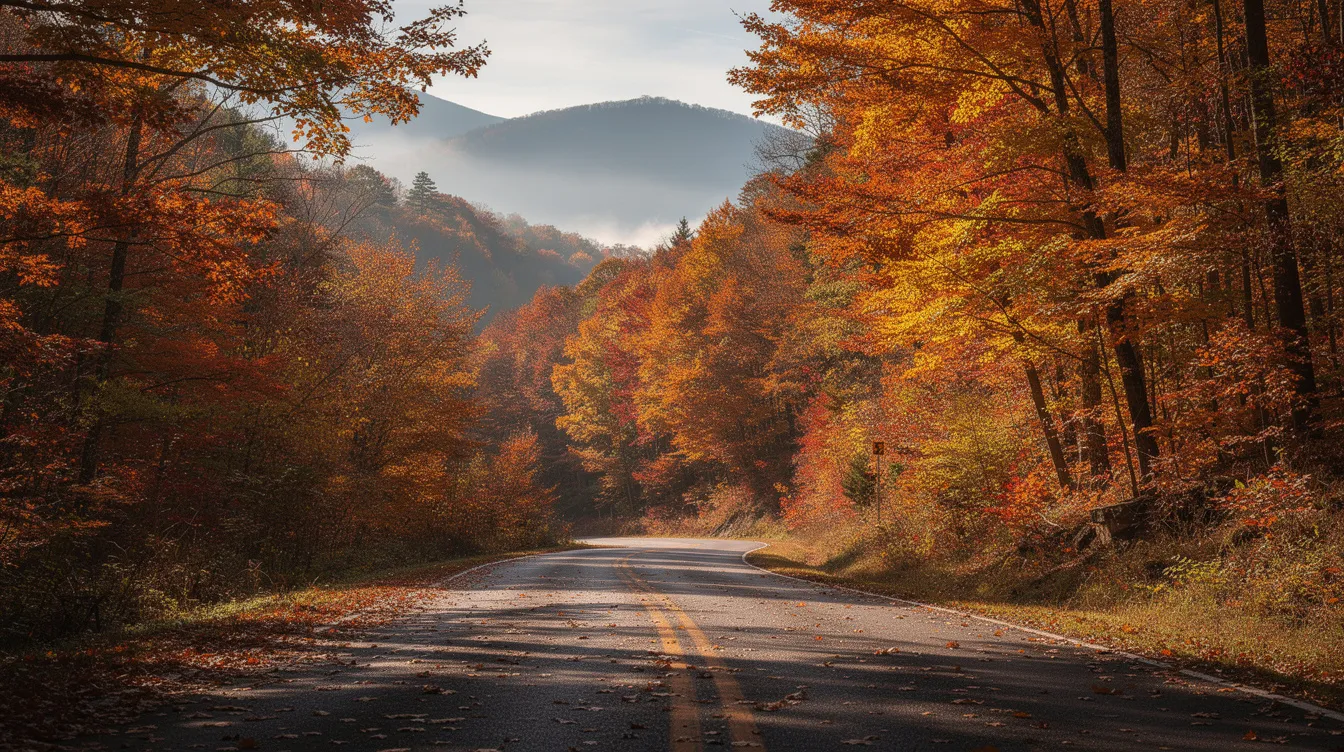
Seasonal note: This region shines with spring wildflowers or autumn foliage. A late-October 2026 trip catches peak color in the Appalachians - worth visiting if your calendar allows.
Day 11+: Final Push into the East Coast – New York City or New England
The final day or two rolls from Pennsylvania into the New York City region or New England. Skirt the worst of the I-95 corridor by using more northern approaches - the Hudson Valley, western Massachusetts, or Vermont offer beautiful driving before you drop southeast toward your destination.
Strategic timing matters for entering New York or Boston. Aim for midday or late evening arrivals to avoid rush hours. Pre-book garage or hotel valet that accepts low-clearance cars. Have a plan for once the car is parked so you can finally relax.
The ending imagery should mirror the start: dipping your toes in the Atlantic at Rockaway Beach, along Long Island, Cape Cod, or a Maine harbor town. Your car, now wearing the marks of a 3,000-mile journey - desert dust, mountain bugs, maybe a few new stone chips - has completed something significant.
Consider what you’ve crossed: how many landscapes, kitchens, and hotel lobbies in just 10–12 days. From the Pacific to the Atlantic, from Sierra granite to Appalachian green, from Kansas City barbecue to New York City skyline.
This is only one of many permutations. The Stable can help build a version aligned to your own car, tastes, and calendar.
End-of-trip logistics: Many owners of classics or high-value GTs ship their car home via enclosed transport from an east coast port or storage facility while flying back. This option is increasingly common and removes the pressure of a return drive if your schedule doesn’t allow another 10 days.
Must-See Stops from West to East
No single trip can hit everything, but certain categories of stops reward the effort: national parks, classic cities, wine regions, and car-culture touchpoints that resonate with drivers.
A selective west-to-east list:
Region | Must-See Stop | Driver’s Angle |
|---|---|---|
California | Yosemite National Park | Tioga Road’s high-elevation curves; Tunnel View at sunrise |
Utah | Arches or Zion National Park | Zion-Mount Carmel Highway; UT-128 along Colorado River |
Colorado | Rocky Mountain National Park | Trail Ridge Road; Independence Pass for experienced mountain drivers |
South Dakota | Black Hills and Badlands | Iron Mountain Road; Needles Highway - engineered for engagement |
Missouri | Kansas City | BBQ pilgrimage; art deco architecture; easy access to city jazz |
Missouri | St. Louis | Gateway Arch grounds; walkable revitalized neighborhoods |
Pennsylvania | Pittsburgh skyline | Approach from the Fort Pitt Tunnel for dramatic reveal |
East Coast | New York City or Boston | Endpoint celebration; ship car home or store |
The Stable avoids over-touristed, parking-nightmare stops at peak times. Midday on a July weekend at the Grand Canyon South Rim? That’s not our style. Instead, we recommend early or off-peak visits, lesser-known viewpoints, or entirely different but equally strong alternatives. |
For those running a more southerly route, detours through Santa Fe’s design-driven galleries and restaurants or a proper dinner in Charleston, South Carolina, fit naturally. The open road rewards flexibility.
Planning Your Driving Days and Pace
For most drivers, a comfortable daily range falls between 200–350 miles - roughly 4–7 hours of wheel time depending on road type. This pace leaves room for long lunches, scenic stops, and checking into a hotel before dinner without feeling rushed.
Structuring individual days:
Start early. The best light, coolest temperatures, and emptiest roads come in the first hours after dawn.
Aim to be off the road before dark on twisty mountain sections. Wildlife activity increases at dusk, and fatigue compounds the risk.
Plan 10–15 minute breaks every two hours. Stretch, hydrate, check tire pressures if you’re running performance rubber.
Set a clear daily cut-off time. Knowing when you’ll stop prevents that creeping “just one more hour” fatigue that makes the final miles miserable.
Technical considerations:
Altitude, temperature, and tire pressure interact across this route. Long warm highway stretches across Nevada, Utah, and Kansas heat tires and affect handling. Big altitude shifts in the Sierra and Rockies change air density - monitor pressures and adjust cold pressures for elevation.
The average speed on interstates may sit well above posted limits (one documented stretch on I-70 showed most vehicles cruising significantly over 75 mph), but maintain awareness of local enforcement patterns.
Creating rhythm:
Alternate “long drive” days with “short drive plus exploration” days. The psychological distance between the Pacific and the Mississippi is vast. Breaking that into digestible segments - some focused on covering ground, others on experiencing a place - keeps the trip feeling like a holiday rather than a delivery run.
Use time zone crossings strategically. Moving from Pacific to Mountain to Central to Eastern, you gain or lose hours. Schedule key dinner reservations or sunrise photo stops with these shifts in mind.
Where to Stay: Car-Forward Stays Across the Country
Where you sleep matters as much as the road you drove to get there - and a good travel pillow makes a real difference on multi-day drives. The Stable prioritizes accommodations that combine design, good food and drink, and practical car considerations - secure parking, easy arrival and departure, sometimes even EV charging - mirroring the philosophy behind our upcoming curated stays collection for car enthusiasts.
Illustrative examples along the SF–NYC line:
Region/Stop | Accommodation Type | Key Features |
|---|---|---|
Sierra foothills/Yosemite gateway | Boutique lodges with secure lots and walking-distance dining | Avoid steep, tight parking garage ramps |
Moab or Springdale (Zion) | Stylish desert lodges designed for road travelers | Covered parking for heat protection |
Denver | Design hotels in LoHi or RiNo with valet understanding of low sports cars and valuable vehicles | Valet operations that understand low-clearance cars |
Kansas City and St. Louis | Heritage properties in revitalized neighborhoods; boutique hotels near walkable restaurant districts | Walkable restaurant districts, easier parking |
Appalachia/Pennsylvania farm country | Townhouse-style inns or renovated B&Bs with character and easier parking than urban high-rises | Characterful stays, easier parking |
What a car-forward traveler should look for:
Private garages or monitored lots (critical for classics and high-value cars)
No tight underground ramps that scrape splitters and spoilers
Proximity to early-morning fuel or charging
Walking access to restaurants so the car can rest for the evening
Consider a mix of stays: two or three-night stops in key hubs with single-night hops elsewhere. This creates rhythm - anchor destinations punctuate otherwise linear travel days. A few stops become memorable, rather than everything blurring together.
The Stable is developing curated stays and hotel partnerships where rooms, parking, and route start-points sync seamlessly for drivers who want a frictionless road trip experience.
Preparing Your Car for a Cross-Country Run
A cross-country road trip requires careful planning and vehicle preparation, including service checks, flexible itineraries, and packing essentials. It is advised to service your vehicle before embarking on a long road trip, including checks on the oil, tires, and fluids.
A west coast to east coast drive represents serious mileage - even for modern cars, and absolutely demands proper prep for classics and performance machinery. This is non-negotiable.
Pre-trip checklist:
Recent service: Fresh oil, coolant flush if due, transmission and differential fluids checked or changed
Brake inspection: Fresh pads if below 50%, brake fluid check (particularly important for mountain descents)
Belt and hose inspection: Look for cracks, wear, age-related deterioration
Tire assessment: Check tread depth and tire age (sidewall date codes); old rubber degrades regardless of tread remaining
Spare or repair kit: Confirm what you’re carrying and that it works
EV and plug-in hybrid considerations:
Verify DC fast-charging speeds your vehicle actually achieves (not just theoretical maximums)
Research known weak points on long interstate legs for your specific model
Install any pending software updates before departure - these can affect range or charging behavior
Load management:
Pack light but high-quality. Overloading suspension compromises handling and puts stress on components over thousands of miles.
Soft duffels fit odd-shaped boots better than hard cases.
Keep the cabin civilized: proper phone mounts, cable management, accessible storage for sunglasses, cameras, and snacks.
Insurance and backup:
Confirm your coverage works across multiple states.
Carry a simple tool roll, tire pressure gauge, portable inflator, and jump pack - even in new cars.
The hours between breakdowns and help in remote Nevada or West Texas stretch longer than you’d expect.
Callout:
A cross-country road trip requires careful planning and vehicle preparation, including service checks, flexible itineraries, and packing essentials. It is advised to service your vehicle before embarking on a long road trip, including checks on the oil, tires, and fluids. Download offline maps before your trip, as many areas may have limited cell service. Packing snacks and water is crucial for long drives, and it's essential to pack an emergency kit that includes items like flares, first-aid supplies, tire tools, food, water, and cash for unexpected situations.
Packing and On-Road Essentials for a Luxury Road Trip
This isn’t a camping checklist. It’s a refined packing overview for a couple traveling in a coupe, roadster, or GT car and staying in hotels - space is limited, but comfort matters, and the right curated driving and travel essentials make a noticeable difference day to day.
Luggage approach:
Soft duffels that conform to odd-shaped boots and trunks
Clothing that layers well from cool Sierra mornings to warm desert afternoons to Appalachian evenings
One small “day bag” for short hikes, city walks, museum visits
Car-side essentials:
Microfiber towels and quick detailer for bug removal and dust
Compact glass cleaner
Portable tire inflator
First-aid kit
Emergency snacks and water (Nevada and Utah between fuel stops can be lonely)
USB-powered torch or headlamp
Tech setup:
Navigation apps with offline maps downloaded (signal drops across Nevada, Utah, Wyoming, and West Texas)
Rally Point links saved in Google Maps or Apple Maps
Power banks and quality in-car chargers
Backup paper atlas for the truly remote stretches
Comfort upgrades aligned with The Stable’s gear-review philosophy:
Quality driving gloves for older steering wheels or long hours behind the wheel
Compact travel espresso options (a proper morning ritual matters)
Noise-cancelling earbuds for passengers during long plains crossings
Curated playlist or podcast list - the right soundtrack transforms mundane miles
Callout:
A cross-country road trip requires careful planning and vehicle preparation, including service checks, flexible itineraries, and packing essentials. Download offline maps before your trip, as many areas may have limited cell service. Packing snacks and water is crucial for long drives, and it's essential to pack an emergency kit that includes items like flares, first-aid supplies, tire tools, food, water, and cash for unexpected situations.
How The Stable Can Help Plan Your Coast-to-Coast Drive
The Stable exists for exactly this kind of trip: curated Drive Packs for specific regions, bespoke route builds for end-to-end journeys, and editorial guidance that blends driving passion with travel taste - all rooted in our drives, stays, gear, and journal philosophy.
How a bespoke coast-to-coast plan comes together:
Initial consultation on car type and dates
Discussion of route-style preferences - desert vs. mountains vs. cities
Alignment on daily mileage comfort and driving intensity
Understanding of favorite hotel styles and restaurant preferences
What a finished Stable coast-to-coast pack includes:
Mapped route with Rally Points highlighting the best roads and key stops
PDF roadbook with turn-by-turn highlights and background notes
Recommended hotel shortlist per night with indicative budgets
Curated hit-list of food, coffee, and wine stops that work with the driving plan
This isn’t a group tour. You travel on your own schedule in your own car, with your travel partner. The Stable’s planning removes friction and guesswork so you can focus on the drive and the company, not on wrestling with Google Maps or gambling on random restaurants - an approach shaped by our car-obsessed, road-focused origin story.
If you’re considering a 2026 cross-country drive - whether a desert-to-Atlantic run, a national-parks-heavy path, or a string of city-to-city hops connected by great driving roads - reach out for a custom build. Your car already knows how to cross a continent. Let The Stable show it the best way.
FAQ: Driving from West Coast to East Coast
How many days do I really need to drive from the West Coast to the East Coast?
The absolute minimum is 4–5 very hard days on interstates, covering 600–700 miles daily. That pace means gas stations, fast food, and fatigue. For a comfortable, experience-rich long road trip, most drivers should aim for 9–14 days depending on route complexity and how many two-lane back roads they want to include. The 10–12 day framework outlined here hits major highlights while leaving room to breathe.
How much does a coast-to-coast road trip cost for two people?
A realistic 2026-oriented budget assuming mid-to-high-end hotels, sit-down meals, and a petrol or diesel car runs approximately US$4,000–US$8,000 for 10–14 days for a couple. This breaks down roughly as: fuel ($100–$150/day), lodging ($130–$200/night), meals ($80–$150/day), and activities ($50–$100/day). Costs rise significantly with more luxury stays, heavy city dining, or bucket list experiences. As a baseline reference, East Coast road trip estimates run $175–$225 per day per person.
Is it safe to drive cross-country at night?
While interstates are well-lit around major cities, The Stable strongly recommends avoiding night driving on unfamiliar mountain or rural roads. Wildlife (deer, elk, livestock) becomes active at dusk. Fatigue compounds across long hours. Services become limited or nonexistent. Schedule your drives to maximize daylight - early starts mean early finishes, better light for photography, and safer conditions overall.
Can I do this trip in a classic car?
Many people do, but it requires extra preparation. Schedule a thorough pre-trip mechanical inspection. Set realistic daily mileage targets (200–250 miles may be more appropriate than 350). Carry appropriate spares and tools. Plan your route with proximity to specialist workshops in major hubs along the way, and draw inspiration from the cars we’ve owned and driven extensively. The Stable can help tailor mileage and stop choices specifically with an older car in mind, building in buffer days for the unexpected.
What if I don’t want to drive both directions?
Common one-way strategies include shipping the car back via enclosed transport from the east coast (a service many classic and high-value GT owners use regularly), storing it temporarily at a trusted facility for a later trip, or - for those not using their own vehicle - arranging a one-way rental. Planning your endpoint city with these logistics in mind avoids last-minute stress. The Stable can advise on shipping partners and storage options as part of bespoke route planning.
Before You Go: Gear We Recommend
The Stable tests and recommends road trip gear so you don't have to. A few essentials worth packing:
- Best First Aid Kits for Road Trips - compact, car-ready kits that cover everything from blisters to emergencies.
- Best Travel Bags for Road Trips - soft duffels and weekenders that fit awkward boots and small trunks.
- Best Dashcams for Road Trips - discreet, high-quality cameras that capture the drive and protect you on the road.
- Best Travel Pillows for Road Trips - neck pillows designed for car headrests, not airline seats.
Plan the next part of your trip
For regional alternatives, compare our road trip itinerary ideas. Before choosing a Yosemite crossing, check the National Park Service guidance on Tioga Road opening dates.