Planning a successful road trip—whether you're heading out solo, with family, or with friends—means more than just picking a destination. Road trips planning is the process of mapping your route, getting a vehicle inspection, and packing smart with snacks, chargers, and safety gear. Proper planning ensures safety, maximizes enjoyment, and helps avoid common pitfalls on the road. This guide is for anyone planning a road trip, whether solo, with family, or with friends, and is designed to help both first-timers and experienced travelers. Here, you'll find step-by-step advice to take you from your first spark of inspiration to the moment you turn the key and hit the highway.
Quick-Reference Road Trip Planning Checklist
Planning a successful road trip involves several key steps to ensure a smooth and enjoyable journey. Use this checklist as a summary and quick reference:
- Map your route ahead of time to avoid unnecessary detours and save time.
- Know your start and end dates to create a realistic and manageable itinerary.
- Get a vehicle inspection before departure to prevent breakdowns.
- Pack smart with snacks, chargers, and safety gear.
- Build a flexible itinerary to accommodate spontaneous stops and avoid overpacking your schedule.
- Share your location in real-time with a trusted contact for personal safety.
- Pre-download offline maps for areas with poor service.
- Budget for gas, accommodations, food, and unexpected expenses.
- Book key overnight stops and activities in advance where necessary.
Start With Your Road Trip Vision
Road trips planning is the foundation of a memorable and safe journey. It means mapping your route, getting a vehicle inspection, and packing smart with snacks, chargers, and safety gear. Knowing your start and end dates of the trip is crucial for planning a road trip, as it allows you to structure your itinerary and make necessary reservations. Planning your route ahead of time can help you avoid unnecessary detours and save time.
Planning matters more than ever in 2025 and beyond. Gas prices fluctuate between $3.50 and $4.00 per gallon depending on season and region. Popular national parks like Yosemite now require timed entry permits that fill up within hours of opening, sometimes six months in advance. And with traffic fatalities reaching record numbers in recent years, building safety into your trip itinerary is not optional. Knowing your driving limits is essential when planning a road trip. Set a maximum number of hours you are willing to spend behind the wheel each day to avoid fatigue. Driving drowsy is just as dangerous as driving intoxicated, so always ensure you get enough sleep before getting behind the wheel.
Consider the possibilities that open up with proper planning. A 7-day California Pacific Coast Highway drive from Los Angeles to San Francisco covers 650 miles of dramatic coastal cliffs, with highlights like Big Sur and Bixby Bridge best enjoyed in spring or fall when summer fog does not cut visibility in half. Or picture an autumn New England leaf-peeping loop through Vermont and New Hampshire, 500 miles over 7 to 10 days in late September through mid-October, when peak foliage draws three million visitors annually and colors shift day by day based on elevation, much like other curated scenic driving routes and car culture experiences.
This guide gives you concrete, step-by-step planning help right away. Not vague inspiration, but actual decisions and actions you can take today. We will cover everything from defining your road trip framework to choosing safe destinations, building a realistic schedule, optimizing your driving route with tools like Google Maps, selecting the right apps, booking overnight stops, preparing your packing list, and running through final checks before departure.
Your approach should match your travel style. Solo trips prioritize safety with well-lit stops and real-time alert apps. Couples focus on romantic scenic detours like Oregon Coast Highway's Haystack Rock. A family with kids benefits from limiting drives to 4 hours daily and building in interactive stops. Friend groups thrive with shared decision-making via collaborative map layers. Pet-friendly journeys require advance research on accommodations and vet checks. Whatever your situation, the steps ahead will help you plan road trips that actually work.

Define Your Road Trip Framework
Before you start browsing routes or downloading apps, you need a basic framework that guides every decision. Think of it as your trip's constitution. Without it, you risk an overloaded itinerary that leads to exhaustion rather than enjoyment. Studies show unstructured trips lead to significantly higher fatigue-related incidents on the road.
Start by nailing down your trip dates with specific constraints in mind. Knowing your start and end dates is crucial for effective road trips planning, and accurately choosing your starting and ending points ensures your itinerary is realistic and manageable:
- 10 to 14 day US Southwest loop: Late April works best when temperatures average 60 to 75 degrees Fahrenheit. June brings peaks over 100 degrees and monsoon flood risks. A route through Utah's Mighty 5 National Parks covers about 900 miles with stunning red rock formations.
- 4-day long weekend: July 4 to July 7 fits perfectly for Texas Hill Country, exploring wildflower blooms and wineries around Fredericksburg across 300 miles.
- Shoulder season adventures: September brings ideal conditions for a Munich to Dolomites round trip, avoiding August crowds on well-maintained autobahns.
If your road trip begins or ends with a flight, or combines flights and driving, be sure to integrate your flight details into your road trips planning. Organize flight information alongside your driving route, accommodations, and activities to streamline your travel logistics.
Ask yourself these specific planning questions:
| Question | Realistic Range |
|---|---|
| Total budget | $0.15 to $0.25 per mile for fuel, $100 to $200 nightly lodging, $50 daily food per person |
| How many days available | Factor in work schedules and recovery time |
| Who is driving | Assess license validity and fatigue tolerance (8 hours daily max) |
| Daily distance comfort | 300 to 500 miles at 65-70 mph, reduced 20% by traffic |
| Accommodation preference | Motels ($80-150), campgrounds ($20-50), Airbnbs for groups |
Decide on a rough geographic focus first. "Seattle to Yellowstone and back" gives you a 2,000-mile framework over 10 days via I-90 with geothermal features as your anchor. "Munich to Dolomites round trip in September" sets up 500 miles over 5 days on mountain roads.
Create a simple one-page framework document listing your start and ending point, exact dates, maximum 6 to 8 driving hours daily, and non-negotiable stops. Setting a maximum number of driving hours per day is important for comfort and safety. Research shows 60% of road trippers regret packed itineraries. Your framework prevents that by making realistic choices before you get caught up in adding "just one more stop."
With your framework in place, the next step is to choose safe and suitable destinations that match your travel style and comfort level.
Choose Safe And Suitable Destinations
Your destination choice directly shapes both safety and enjoyment, especially for solo travelers and those covering long distances. Solo road trippers face statistically higher risk of incidents, making research essential before committing to any route, and many find it helpful to start from expertly curated driving weekend itineraries that already balance distance, roads, and highlights.
Check official safety and travel information before finalizing destinations. In the United States, state Department of Transportation sites like Caltrans publish real-time road conditions, including closures from landslides that hit California Highway 1 an average of five times annually. For cross-border trips like driving from San Diego to Baja California, the US State Department rates areas by risk level. Equivalent resources exist for European journeys through the EU Reopen site.
Concrete safe, solo-friendly examples include:
- Summer Denver to Rocky Mountain National Park loop: About 400 miles over 5 days on US 36, with Trail Ridge Road reaching elevations of 12,000 feet. Allow time for acclimatization.
- Spring Lisbon to Porto coastal drive: 300 miles on well-traveled highways with frequent services and low crash rates.
- Autumn Blue Ridge Parkway: 469 miles of America's most visited linear park, with overlooks, tunnels, and gentle curves.
Research these factors before committing:
- Road conditions via 511 apps reporting real-time issues
- Late-night services availability (interstates offer 90% hotel availability versus 70% on rural highways)
- Crime rates in overnight towns via FBI data (rural stops tend 40% safer than urban)
- Seasonal weather risks like mandatory snow chains on I-70 Colorado between November and March
For first time solo road trippers, favor destinations with multiple accommodation options along the route. Collect ideas from travel blogs, official tourism boards like NPS.gov for 63 national parks, and other travelers' trip reports. As you plan, decide which attractions or sites to visit at each destination, and be sure to include these visited sites in your itinerary with details such as opening hours or official links to help maximize your experience. Then filter everything through your framework to match your budget, time, and comfort level.

Once you've chosen your destinations, it's time to build a road trip schedule you can keep and enjoy.
Build A Road Trip Schedule You Can Keep
Your schedule should protect both safety and fun, not just cover distance. Epic road trips fall apart when the itinerary demands too much driving time and leaves no room for the moments that make the journey memorable.
Set specific daily driving limits based on research, not wishful thinking:
| Traveler Type | Recommended Daily Driving | Maximum for Transit Days |
|---|---|---|
| Most travelers | 4 to 6 hours | 8 hours (occasional) |
| Families with kids | 3 to 4 hours | 5 hours |
| Solo drivers | 4 to 5 hours | 6 hours |
Balance travel and exploration by planning roughly 2 to 3 nights in major destinations like Yosemite National Park or larger cities instead of moving every night. Constant movement increases stress by about 50% according to traveler feedback surveys.
Here is a concrete example of a 7-day Los Angeles to San Francisco coastal road trip schedule:
Day 1 takes you 5 hours to Pismo Beach via Santa Barbara beaches, giving you afternoon time to explore. Day 2 covers 4 hours to San Luis Obispo with a stop at the quirky Madonna Inn. Day 3 requires 6 hours to Big Sur, including a detour to see elephant seals at Piedras Blancas. Day 4 becomes a rest day in Monterey to explore Cannery Row without rushing. Day 5 moves 3 hours to Half Moon Bay. Day 6 finishes with 4 hours to San Francisco and the Golden Gate. Day 7 stays local, giving you time to discover the city before heading home or continuing north.
Build buffer time into every schedule. Add at least one low-driving rest day for every 4 to 5 driving days. Tack on 30 to 60 extra minutes for any day including urban traffic (Los Angeles averages 30% delays), border crossings (Tijuana can mean 2-hour waits), or mountain passes (Rocky Mountain routes add 45 minutes easily).
Plan your preferred driving windows. Starting by 8 a.m. lets you arrive at lodging before sunset, which runs around 6 p.m. in summer latitudes. Adjust for specific months and locations. Late afternoon arrivals give you time to settle in and explore local restaurants before dark.
With your schedule in place, the next step is to plan and optimize your route using digital maps.
Plan And Optimize Your Route With Digital Maps
Digital mapping tools form the backbone of modern route planning. Google Maps holds roughly 70% of the US market share, making it the go-to road trip planner for most travelers. Apple Maps and built-in navigation systems offer alternatives, but the planning process remains similar.
Start by entering your origin and destination on Google Maps desktop. Add up to 10 intermediate stops by clicking "Add destination." For complex multi-week routes, create a custom My Maps layer with all planned stops pinned and color-coded by type: overnight stays in blue, scenic stops in green, fuel in red. For a more detailed approach to mapping your journey, see our guide on how to map a trip and optimize every mile.
Compare fastest versus most scenic options deliberately. The choice between US Highway 101 along the Oregon coast versus the faster I-5 adds significant hours but delivers coastal views, sea stacks, and charming towns. Know what you are trading before you decide. A successful road trip often means choosing the slower road with better character.
Check realistic driving times using Google Maps "Typical traffic" data. Tuesday at 8 a.m. often runs 20% faster than Friday afternoon. This feature helps you plan departure times that avoid the worst congestion and save hours across a multi-day trip.
Save your main route and key stops to a custom map. Download offline maps to your phone before departure, especially for rural areas and national parks where 40% signal loss is common. Lost connectivity should not mean lost directions.
Use Street View and satellite view to preview tricky spots. California State Route 1 near Big Sur features narrow curves with 10% grade drops that surprise drivers unfamiliar with coastal mountain roads. Google Earth lets you explore terrain in three dimensions, helping you understand passes, junctions, and remote gas stretches like the 200 miles between Moab and Page that require a full tank.

With your route mapped out, it's time to focus on budgeting and expenses to keep your trip enjoyable and affordable.
Budgeting and Expenses for Your Road Trip
A successful road trip starts with a realistic budget. Before you hit the open road, take time to estimate your trip costs so you can focus on the adventure, not the stress of overspending. Begin by listing out the major expenses: gas, accommodations, food, attractions, and any special activities you want to include in your trip itinerary. Use a road trip planner or a dedicated app to track your spending as you go. Many apps let you log receipts, monitor your daily budget, and even split costs with friends or family.
Gas is often one of the largest expenses, especially if your route covers long distances or remote areas where prices can spike. Use gas price comparison apps to locate the best deals at gas stations along your driving route. For accommodations, compare hotels, motels, and campgrounds, and look for free or low-cost options like national park campsites or rest areas where overnight parking is allowed. Booking in advance can help you lock in lower rates, but leaving a few nights flexible lets you take advantage of last-minute deals.
Don't forget to factor in vehicle maintenance and insurance. A pre-trip inspection may reveal small repairs that, if left unchecked, could become costly breakdowns on the road. Set aside a portion of your budget for unexpected expenses, whether it's a flat tire, a detour to a must-see attraction, or a spontaneous meal at a highly recommended restaurant.
To keep your road trip enjoyable and affordable, look for free attractions and points of interest along your route. Many national parks offer free entry days, and scenic drives often come with no extra cost beyond gas. By planning ahead, tracking your expenses, and using the right tools, you can create a memorable adventure that stays within your budget and leaves you inspired for your next trip.
With your budget set, you're ready to use road trip apps for fuel, lodging, and on-the-road adjustments.
Use Road Trip Apps For Fuel, Lodging And On The Road Adjustments
Apps complement early desktop planning by helping with fuel savings, navigation, booking, and adjustments while driving. They handle the dynamic elements that change after you hit the road, especially when paired with the right curated driving and travel essentials gear like mounts, chargers, and car care kits.
Organize your apps by category:
| Category | Purpose | Examples |
|---|---|---|
| Gas price comparison | Track prices varying up to $0.30 by station | GasBuddy and similar |
| Same-day lodging | Find motel deals 20-40% off | HotelTonight and booking apps |
| Campsite booking | Reserve national and state park sites | Recreation.gov |
| Central trip planning | Keep bookings, notes, routing in one place | Roadtrippers, TripIt |
| Offline navigation | Navigate without signal | Maps.me, downloaded Google Maps |
| Translation | International trips | Google Translate (100+ languages) |
Using a single central travel planner to keep bookings, notes, and routing reduces the need to juggle multiple tools while navigating gas stations and rest stops. Some apps let you visualize entire cross-country routes with all points of interest marked.
Set up accounts and download needed apps before departure. Pre-download offline navigation for areas with weak reception. For international road trips, grab translation apps that work offline.
Tech prep essentials:
- Reliable car charger (dual USB recommended)
- 20,000mAh power bank for backup (provides about 4 phone charges)
- Secure vent or dash mount to prevent distracted driving
- Printed backup of key reservation details and route overview
While apps are powerful, about 5% of trips face total device failure according to AAA data. Keep printed confirmations and a basic written backup of your route. A physical road atlas in the glove box weighs almost nothing and can save a trip.
With your digital tools ready, it's time to book overnight stops and key activities to lock in your plans.
Book Overnight Stops And Key Activities
Once your framework, destination, and main route are clear, lock in overnight stops and high-demand activities. This step turns your next trip from concept to commitment.
Plot realistic overnight points based on your daily driving limits. For example, splitting a Toronto to Quebec City drive (800 miles) with a night in Montreal on the A40 breaks the journey into manageable segments and lets you explore one of North America's most interesting cities.
Know when to book early:
- Summer weekends near national parks: Banff fills 90% by April according to Parks Canada
- Holiday weekends: Zion reaches 100% capacity for Memorial Day via Recreation.gov
- Festival periods: Large music festivals and local events fill hotels for miles around
- Timed entry attractions: Arches National Park requires advance reservations for 7 a.m. to 4 p.m. entry during peak season
Mix pre-booked nights in busy hubs (about 70% of your overnights) with a few flexible nights (about 30%) that can be adjusted on the road for spontaneity. If you discover an amazing town you want to explore longer, that flexibility matters.
Check cancellation policies on every booking. Many platforms offer free cancellation up to 24 or 48 hours before arrival. Keep all booking details organized in a single itinerary document or app like TripIt, which auto-imports confirmations from your email.
Pre-book limited-capacity activities that could fill up. Guided glacier hikes at Banff, ferry crossings, and timed entry permits for places like Arches fall into this category. These experiences often define the trip, so secure them before worrying about the best stops for lunch.
With your bookings secured, the next step is to prep your packing list and vehicle for a smooth journey.
Prep Your Packing List And Vehicle
Careful packing and vehicle preparation prevent problems that derail otherwise well-planned journeys. Consumer Reports data shows 25% of trips encounter mechanical issues, and AAA reports 30% of roadside breakdowns stem from tire failures alone. Preparation addresses both.
Document Essentials
- Valid driver's license
- Vehicle registration and insurance cards
- International Driving Permit if needed (available through AAA for $20, valid in 150 countries)
- Printed copies of reservation details
Clothing and Personal Items
- Layers for temperature swings (Southwest deserts can see 40-degree daily variation)
- Medications with 30-day backup supply
- Sunscreen (SPF 50 for high UV areas)
- Snacks and water (saves $20+ daily versus roadside stops)
Car Essentials
- Spare tire checked for proper pressure (35 psi typical)
- Jack rated for your vehicle weight
- Jumper cables (4-gauge recommended): Essential for restarting your car if the battery dies.
- Basic tool kit: Useful for minor repairs on the road.
- Reflective triangle and high-visibility vest (mandatory in EU countries): Increases your visibility and safety during roadside emergencies.
- Physical road atlas for backup: Ensures you have navigation if devices fail.
Tech Items
- Phone chargers (car and wall)
- Secure dash or vent mount
- Power bank (20,000mAh)
- Compact cooler for long stretches without services
Emergency Kit Importance: Pack an emergency kit that includes jumper cables, a flashlight, first-aid supplies, and a basic tool kit. Pre-download all of your destinations to offline Google Maps in case you go through bad service areas, ensuring you never lose your way. Share your location in real-time with a trusted contact for personal safety during the trip. For a curated list of road trip gear, see our weekend detailing kit and best driving sunglasses reviews.
Schedule a pre-trip vehicle check by a mechanic 1 to 2 weeks before departure. The inspection should cover oil level, coolant, brakes (pads typically need replacement around 40,000 miles), tire tread (minimum 4/32-inch depth), all lights, windshield wipers, and air conditioning for summer heat.
Adjust your packing list for particular trips. Winter driving through mountain passes demands chains. Summer desert routes call for extra water, insect repellent, and sun protection. Coastal trips in the Pacific Northwest might need rain gear even in summer. Track the weather forecast for your route and pack accordingly.
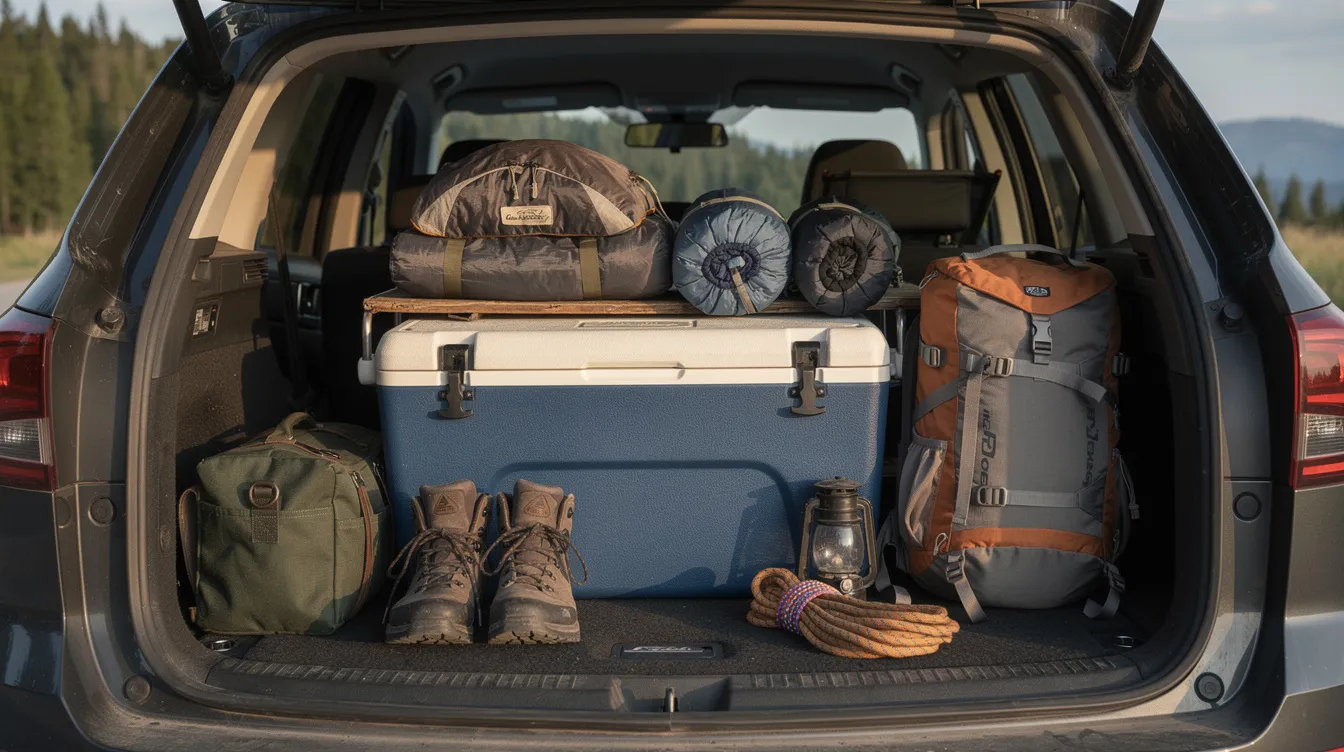
With your vehicle and gear ready, the next focus is on emergency preparedness to ensure you're ready for the unexpected.
Emergency Preparedness On The Road
Assembling Your Emergency Kit
No matter how carefully you plan, the unexpected can happen on any road trip, especially on epic road trips that take you far from home. Being prepared for emergencies is key to keeping your adventure safe and enjoyable. Start by assembling a roadside emergency kit for your vehicle, including essentials like a spare tire, jumper cables, a first-aid kit, flashlight, and basic tools. Each item serves a critical purpose: jumper cables for battery issues, a flashlight for visibility at night, first-aid supplies for treating injuries, and basic tools for minor repairs.
Make sure your car is in top condition before departure, and consider enrolling in a roadside assistance service for extra peace of mind.
Sharing Your Route
As you plan your route, use Google Maps or Google Earth to identify the locations of nearby gas stations, hospitals, and repair shops along your driving route. Mark these points of interest on your trip itinerary for easy access if you need them. Many road trip apps allow you to save emergency contacts and locations, so you're never scrambling for information when it matters most, and stories from driving experiences and wider car culture can offer practical lessons on how other travelers prepare for and handle unexpected moments on the road.
It's also wise to share your route and estimated driving time with a friend or family member, especially if you'll be traveling through remote areas. If plans change or you encounter unexpected weather or traffic, update your contacts so someone always knows your whereabouts.
By taking these steps, you'll be ready to handle whatever comes your way, whether it's a flat tire in the middle of nowhere or a sudden change in weather. Emergency preparedness isn't just about safety; it's about ensuring your road trip remains enjoyable and stress-free, no matter where the road leads. With the right planning and tools, you can focus on the adventure and discover the world with confidence.
With emergency plans in place, you're ready for final pre-departure checks and best practices on the road.
Final Pre Departure Checks And On The Road Best Practices
Day-before checklist:
- Fill the tank (gas price apps can locate savings nearby)
- Clean windshield and mirrors (improves visibility 10%)
- Load playlists, podcasts, and audiobooks (plan for 20+ hours of content)
- Confirm first-night lodging check-in time and address
- Share your route with a friend or family member
- Check weather forecasts along your route
Safe driving practices:
- Rotate drivers every 2 to 3 hours when traveling with others (reduces fatigue 40%)
- Take 10 to 15 minute breaks at least every 2 hours per FMCSA guidelines
- Avoid night driving in wildlife-heavy or rural areas (1.5 million deer collisions occur annually in the US)
- Stay alert for signs of drowsiness and pull over immediately if needed
Embrace flexibility. If weather turns bad, traffic collapses your schedule, or a town turns out more interesting than expected, adjust. Plans change on every trip, and the best travelers adapt rather than forcing a broken itinerary. Sometimes the unplanned stop becomes the highlight.
Review local rules before crossing borders or entering new regions:
- France tolls run about €0.20 per kilometer via Vinci Autoroutes
- London charges £15 daily for congestion zones
- Switzerland requires a 40 CHF yearly vignette for highway use
- Some US states have different speed limits and right-turn-on-red rules
Smart planning with realistic schedules and modern tools empowers you to enjoy the open road rather than fight it. The world opens up when you have done the work to explore it properly. Your vehicle becomes more than transportation. It becomes a way to discover new cities, chase the best American road trips, and create the journeys you will talk about for years.
The freedom of a road trip is not accidental. It is earned through preparation that leaves room for the unexpected. Build your framework, create your one-page plan, and hit the highway with confidence. Your next adventure is waiting.